Preclinical translational screening of palladium(II)-porphyrin photosensitizers across human and Oncopig bladder cancer cell lines - Scorecard - MDSpire

Preclinical translational screening of palladium(II)-porphyrin photosensitizers across human and Oncopig bladder cancer cell lines

  • By

  • Valentina G. Ferreira

  • Maria Eduarda Ehlert

  • Bruna S. Pacheco

  • Fernanda S. S. Souza

  • Isadora Tisoco

  • Lucas Damé Simões

  • Bernardo A. Iglesias

  • Claudia Ó. Pessoa

  • Fabiana K. Seixas

  • Maria Lucia Z. Dagli

  • Laurie A. Rund

  • Kyle M. Schachtschneider

  • Lawrence B. Schook

  • Tiago Veiras Collares

  • July 9, 2026

  • 0 min

Share

Clinical Scorecard: In Vitro Evaluation of Palladium(II)-Porphyrin Photosensitizers in Human and Oncopig Bladder Cancer Cell Lines

At a Glance

CategoryDetail
ConditionBladder Cancer
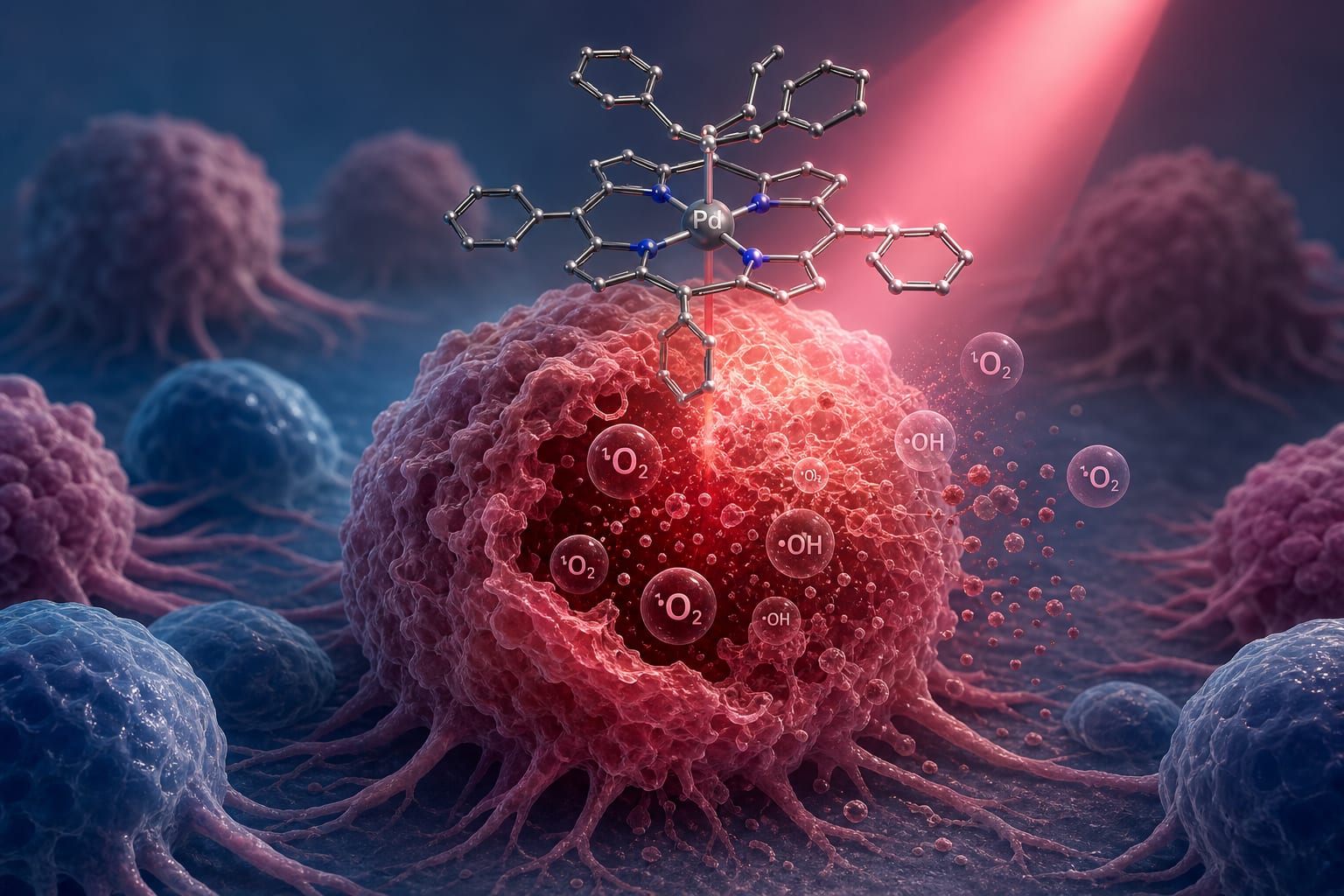
Key MechanismsPhotodynamic therapy (PDT) utilizing palladium(II)-porphyrins to induce reactive oxygen species (ROS) and apoptosis in cancer cells.
Target PopulationPatients with bladder cancer, including those with muscle-invasive forms.
Care SettingPreclinical research using in vitro models.

Key Highlights

  • Three palladium(II)-porphyrins showed light-dependent cytotoxicity in bladder cancer cell lines.
  • Oncopig-derived models closely mimic human bladder cancer responses.
  • PDT with palladium(II)-porphyrins demonstrated potential for localized tumor destruction.

Guideline-Based Recommendations

Diagnosis

  • Bladder cancer diagnosis should consider the high recurrence and progression rates.

Management

  • Novel therapies should be evaluated using preclinical models that replicate human disease.

Monitoring & Follow-up

  • Monitor ROS generation and apoptotic markers in response to PDT.

Risks

  • Conventional therapies may cause severe side effects and fail to ensure long-term control.

Patient & Prescribing Data

Patients with bladder cancer requiring new treatment options.

Palladium(II)-porphyrins may offer a promising alternative to conventional therapies.

Clinical Best Practices

  • Utilize Oncopig-derived models for early screening of therapeutic candidates.
  • Prioritize compounds based on mechanistic insights before in vivo studies.

Related Resources & Content

Original Source(s)

Related Content