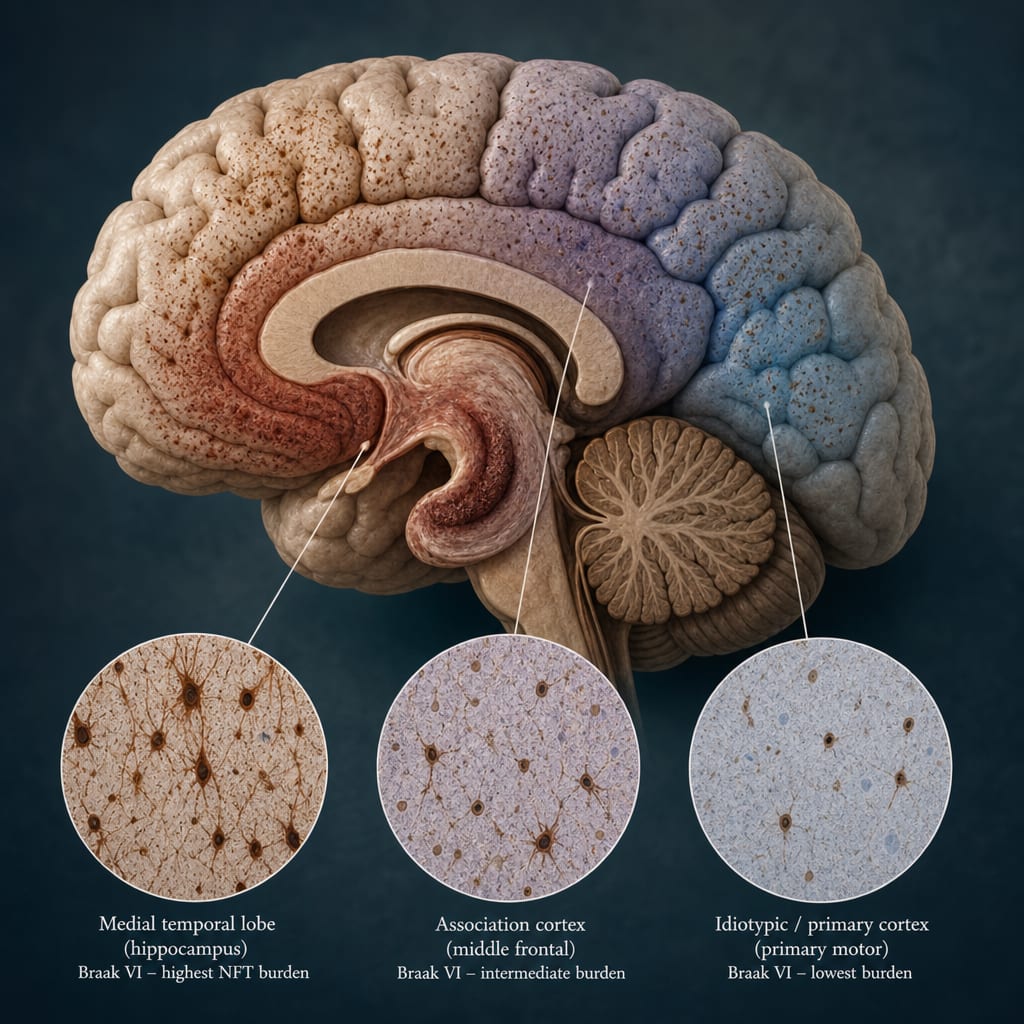
The Hidden Diversity of Amyloid Plaques
A multimodal MSI approach reveals how plaque-associated lipid signatures differ across brain regions in Alzheimer’s disease
-
By
-
Henry Thomas
-
April 7, 2026
-
Clinical Scorecard: The Hidden Diversity of Amyloid Plaques
At a Glance
| Category | Detail |
|---|
| Condition | Alzheimer's Disease |
| Key Mechanisms | Lipid dysregulation associated with amyloid plaques |
| Target Population | Individuals with Alzheimer's disease |
| Care Setting | Research laboratories |
Key Highlights
- Multimodal mass spectrometry imaging reveals regional heterogeneity of lipid signatures in amyloid plaques.
- Specific lipid profiles can predict the brain region of plaque origin.
- Lipid dysregulation in Alzheimer's disease is poorly understood despite historical recognition.
Guideline-Based Recommendations
Diagnosis
- Utilize multimodal imaging techniques to assess lipid profiles associated with amyloid plaques.
Management
- Investigate lipid metabolism pathways for potential therapeutic targets.
Monitoring & Follow-up
- Regularly assess lipid profiles in relation to plaque development and progression.
Risks
- Consider the impact of lipid dysregulation on neuroinflammation and disease progression.
Patient & Prescribing Data
Patients diagnosed with Alzheimer's disease
Understanding lipid profiles may inform treatment strategies targeting metabolic pathways.
Clinical Best Practices
- Employ advanced imaging techniques to analyze plaque-associated lipids.
- Use sound experimental design to minimize batch effects in lipid analysis.
References