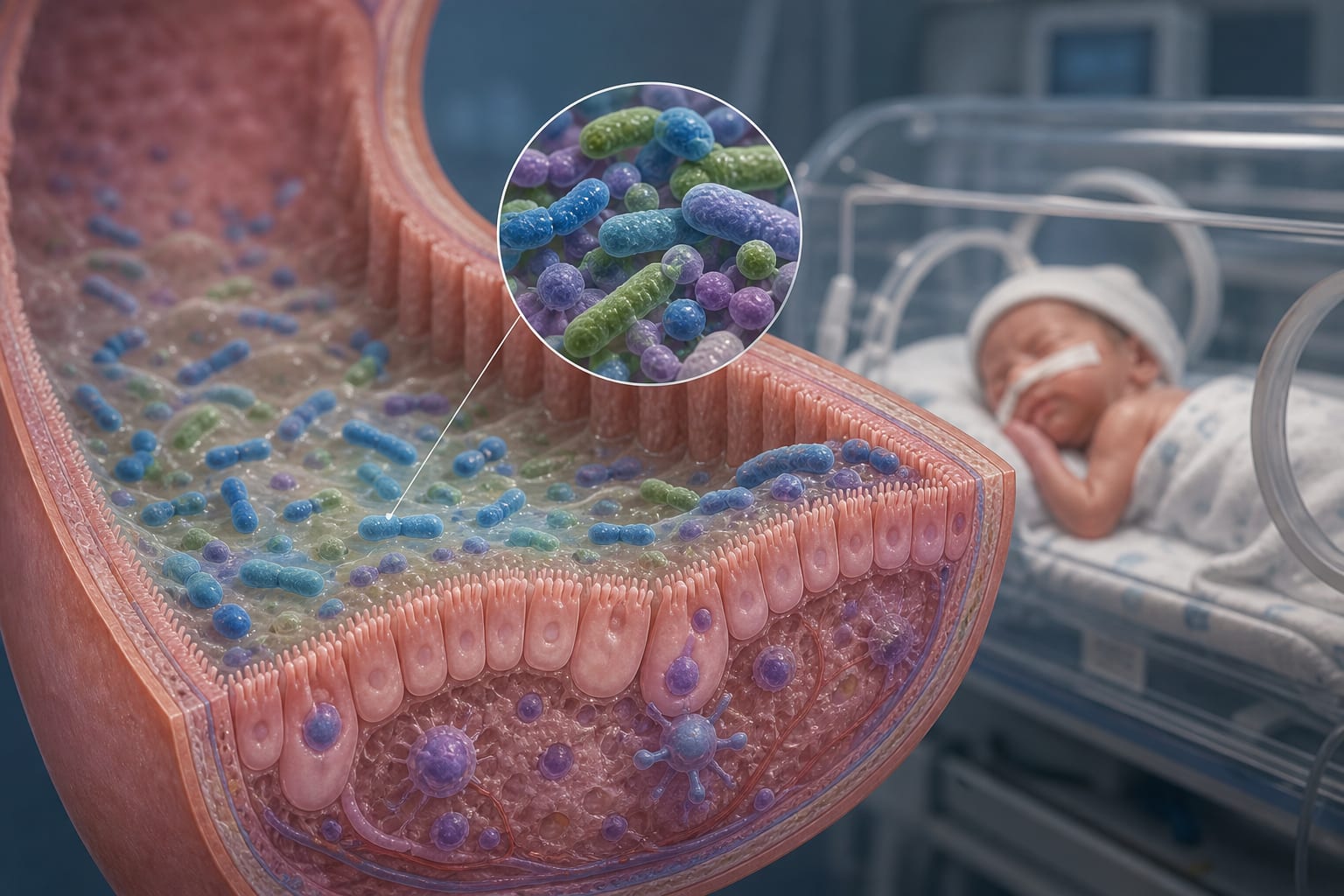
Impact of Probiotics on Mortality, Necrotizing Enterocolitis, and Sepsis in Extremely Preterm Infants
By
Ayoub Mitha
Sofia Söderquist Kruth
Emma Sinervo
Magnus Domellöf
Björn Brindefalk
Thomas Abrahamsson
Stefan Johansson
Alexander Rakow
September 23, 2026
Clinical Scorecard: Impact of Probiotics on Mortality, Necrotizing Enterocolitis, and Sepsis in Extremely Preterm Infants
At a Glance
Category Detail
Condition Necrotizing Enterocolitis (NEC) Key Mechanisms Probiotic supplementation may enhance immune function, reduce intestinal permeability, and suppress pathogenic bacteria. Target Population Extremely preterm infants (<28 weeks' gestation) Care Setting Neonatal Intensive Care Units (NICUs)
Key Highlights
Probiotics are being investigated to reduce NEC incidence in preterm infants. Certain probiotic strains may lower NEC incidence and all-cause mortality. Probiotic use varies significantly among neonatal units worldwide. Swedish NICUs adopted probiotic supplementation as standard care in 2020. Probiotic preparation includes Bifidobacterium infantis, Bifidobacterium lactis, and Streptococcus thermophilus. Guideline-Based Recommendations
Diagnosis
NEC defined as Bell stage 2 or 3, diagnosed clinically or radiologically. Management
Probiotic supplementation recommended for very preterm infants born at 28 to 31 weeks' gestation. Monitoring & Follow-up
Monitor for death and/or NEC and culture-proven late-onset sepsis. Risks
Concerns about product quality and safety may affect probiotic use. Patient & Prescribing Data
Very preterm infants born at 28 to 31 weeks' gestation.
Probiotics administered before day 4 of life and ceased at postmenstrual week 34.
Clinical Best Practices
Initiate enteral nutrition within hours after delivery. Use maternal or donor breast milk primarily for feeding. Adjust feed fortification based on breast milk analyses. Related Resources & Content