Enhancing Postoperative Outcomes After Metabolic Bariatric Surgery: a Pilot Study of Inhibitory Control Training, Transcranial Direct Current Stimulation and Psychosocial Aftercare - Scorecard - MDSpire
Advertisement
Enhancing Postoperative Outcomes After Metabolic Bariatric Surgery: a Pilot Study of Inhibitory Control Training, Transcranial Direct Current Stimulation and Psychosocial Aftercare
Clinical Scorecard: Improving Post-Surgical Results Following Metabolic Bariatric Surgery: A Preliminary Investigation of Inhibitory Control Training, Transcranial Direct Current Stimulation, and Psychosocial Support
At a Glance
Category
Detail
Condition
Metabolic Bariatric Surgery (MBS)
Key Mechanisms
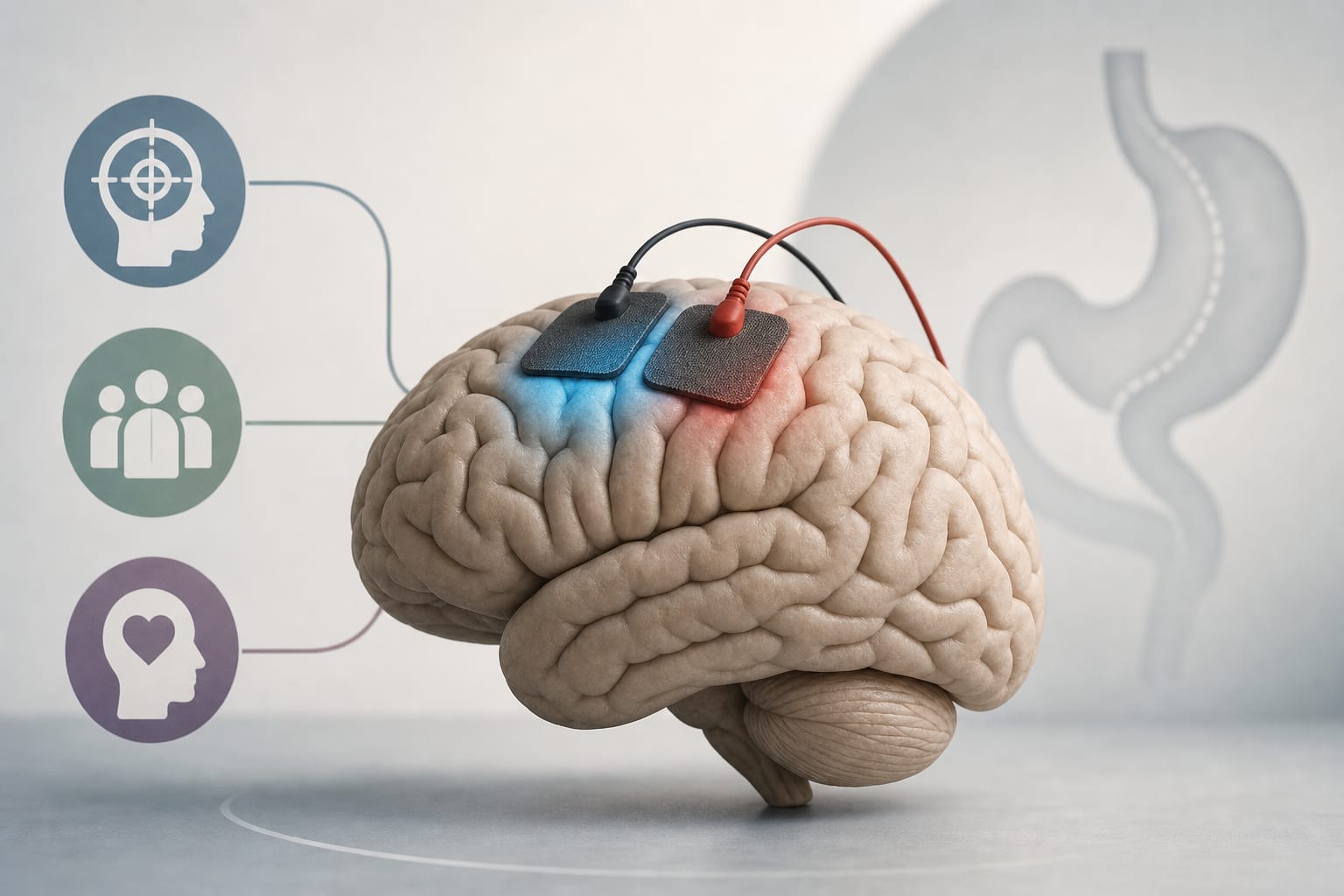
Inhibitory control training, transcranial direct current stimulation (tDCS), psychosocial support
Target Population
Patients ≥ 18 years who underwent sleeve gastrectomy within the past 18 months
Care Setting
Center for Obesity and Metabolic Surgery
Key Highlights
Postoperative follow-up programs for MBS are often inadequate.
Behavioral lifestyle interventions are not covered by public health insurance.
Evidence suggests impulsivity and inhibitory control deficits impact postoperative outcomes.
tDCS combined with inhibitory control training may improve impulsivity and psychosocial outcomes.
Intensive follow-up care is recommended within the first postoperative year.
Guideline-Based Recommendations
Diagnosis
Assess eating disorder psychopathology and mental disorder comorbidity through validated questionnaires.
Management
Implement tDCS combined with inhibitory control training and psychosocial support in the early postoperative phase.
Monitoring & Follow-up
Conduct assessments of weight, food-related cravings, and psychosocial outcomes at baseline and follow-up.
Risks
Potential for inadequate follow-up care leading to weight regain and recurrence of dysfunctional eating.
Patient & Prescribing Data
Patients who have undergone sleeve gastrectomy within the last 18 months.
Combination of tDCS and ICT may enhance treatment outcomes by addressing impulsivity and psychosocial factors.
Clinical Best Practices
Focus on holistic approaches that include psychosocial outcomes alongside weight loss.
Encourage adherence to follow-up care to prevent weight regain.
Utilize validated assessment tools for monitoring patient progress.
by Sarah Alica Rösch, Carsten Thiele, Therese Reinstaller, Tino Zähle, Kathrin Schag, Katrin Giel, Christian Plewnia, Johann Steiner, Florian Junne, Susanne Vogt