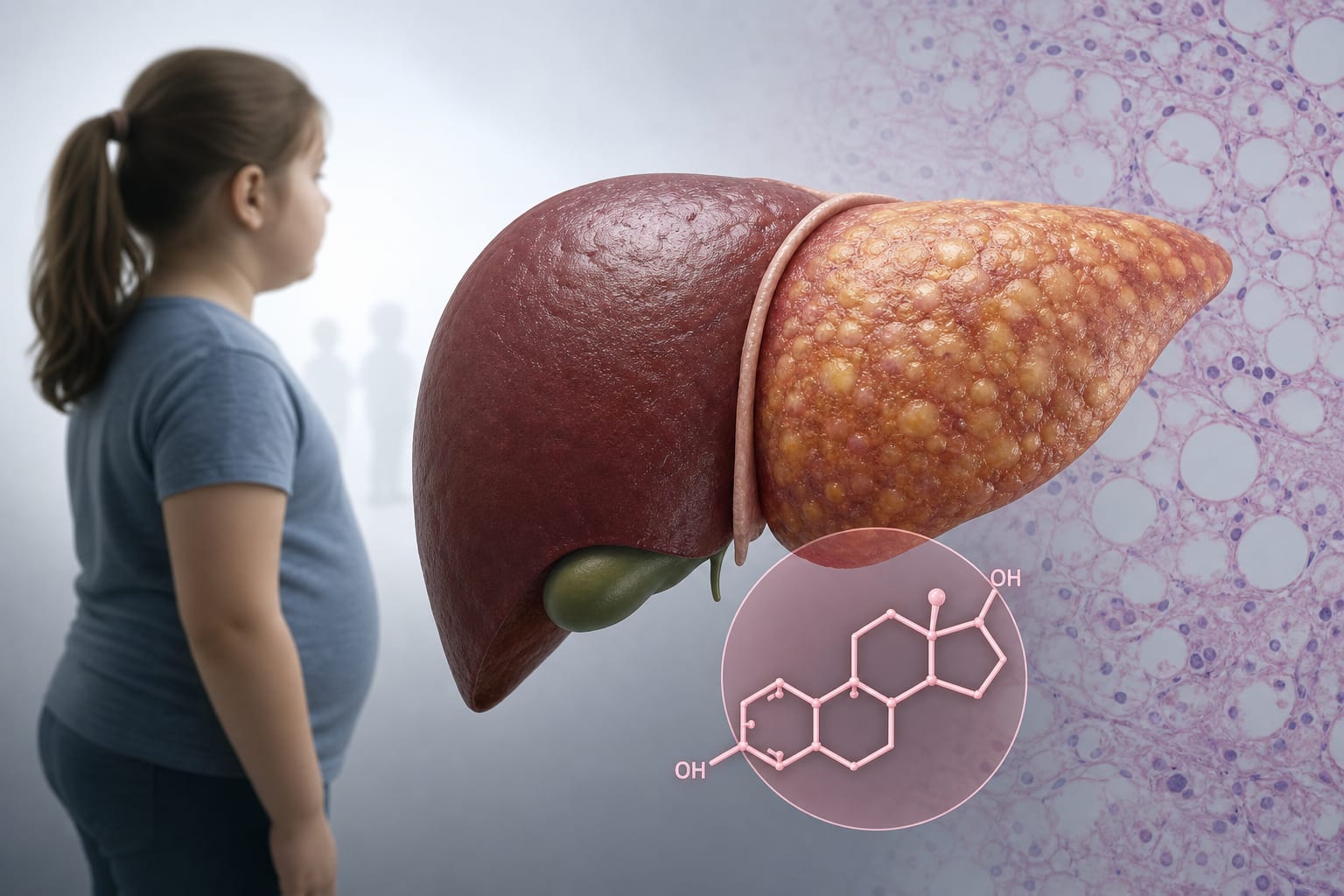
The Relationship Between Estradiol Levels and Metabolic Dysfunction-Associated Steatotic Liver Disease in Pediatric Patients
By
Judith Lubrecht
Robert Kleemann
Bjorn Winkens
Ger Koek
Annemieke Heijboer
Anita Vreugdenhil
July 6, 2026
Clinical Scorecard: The Relationship Between Estradiol Levels and Metabolic Dysfunction-Associated Steatotic Liver Disease in Pediatric Patients
At a Glance
Category Detail
Condition Metabolic dysfunction-associated steatotic liver disease (MASLD) Key Mechanisms Associations between sex hormones and MASLD parameters including ALT, hepatic steatosis, and Controlled Attenuation Parameter (CAP). Target Population Children and adolescents with overweight and obesity. Care Setting Tertiary care center (Maastricht UMC+)
Key Highlights
MASLD is the leading cause of chronic liver disease in children and adolescents. Estradiol, AMH, and SHBG inversely associate with MASLD parameters. Androgens including TT, FT, BioT, and DHEAS positively associate with MASLD parameters. The prevalence of MASLD is higher in males compared to females, particularly during puberty. A comprehensive serum sex hormone panel was utilized in the study. Guideline-Based Recommendations
Diagnosis
Assessment of serum ALT concentrations and hepatic steatosis via ultrasound. Management
Personalized care plans including lifestyle interventions for children with overweight and obesity. Monitoring & Follow-up
Regular follow-up on hormone levels and liver function tests. Risks
Increased risk of type II diabetes, cardiovascular disease, and liver transplant indications. Patient & Prescribing Data
Children aged 4–18 years with overweight, obesity, or severe obesity.
Lifestyle coaching and interventions tailored to individual health assessments.
Clinical Best Practices
Utilize mass spectrometry for accurate measurement of sex hormones. Conduct comprehensive health assessments before initiating lifestyle interventions. Monitor for comorbidities associated with MASLD. Related Resources & Content