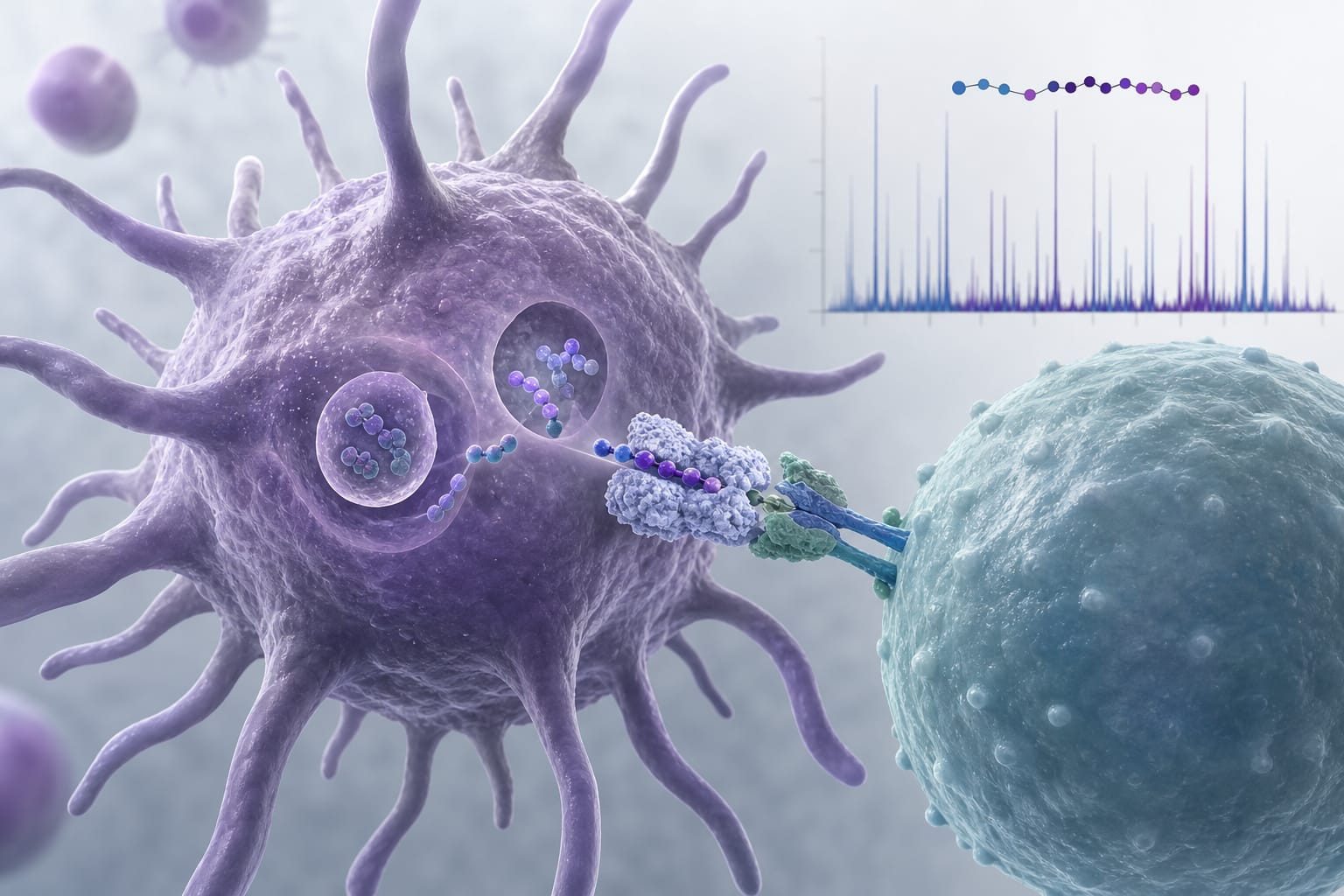
Clinical MAPPs: a personalized healthcare-driven assay for the direct identification of potential T cell epitopes in patients
By
Katharina Hartman
Guido Steiner
Cary M. Looney
Michel Siegel
Katharine Bray-French
Klaudia Brix
Sebastian Springer
Timothy P. Hickling
Niels Janssen
Axel Ducret
Céline Marban-Doran
July 7, 2026
Clinical Scorecard: Personalized Healthcare-Driven Assays for Direct Identification of Potential T Cell Epitopes in Patients Using Clinical MAPPs
At a Glance
Category Detail
Condition Immunogenicity of Therapeutic Monoclonal Antibodies Key Mechanisms Presentation of mAb-derived peptides by dendritic cells activating CD4+ T-helper cells. Target Population Patients undergoing treatment with therapeutic monoclonal antibodies. Care Setting Clinical trials and personalized healthcare settings.
Key Highlights
Introduction of Clinical MAPPs for personalized immunogenicity risk assessment. Utilizes low volume blood samples (10 mL) for analysis. Enables identification of MHC-II receptor-associated antibody-derived peptides. Facilitates monitoring of anti-drug antibody (ADA) onset in patients. Compares peptide presentation profiles between moDCs and naturally occurring DCs. Guideline-Based Recommendations
Diagnosis
Utilize Clinical MAPPs to identify potential immunogenicity risks before mAb treatment. Management
Implement personalized treatment plans based on ADA monitoring results. Monitoring & Follow-up
Assess ADA onset before and after mAb treatment using Clinical MAPPs. Risks
Consider the multifactorial causes of immunogenicity, including treatment modality and patient factors. Patient & Prescribing Data
Patients enrolled in clinical trials receiving therapeutic monoclonal antibodies.
Clinical MAPPs allows for tailored immunogenicity assessments to enhance treatment safety and efficacy.
Clinical Best Practices
Employ Clinical MAPPs for early prediction of immunogenicity risks. Use cryopreserved PBMCs for assay compatibility and robustness. Monitor patient-specific immune responses to optimize therapeutic outcomes. Related Resources & Content