Mesh vs. non-mesh repair of type I hiatal hernias: a propensity-score matching analysis of 6533 patients from the Herniamed registry - Scorecard - MDSpire
Advertisement
Mesh vs. non-mesh repair of type I hiatal hernias: a propensity-score matching analysis of 6533 patients from the Herniamed registry
Clinical Scorecard: Comparison of Mesh and Non-Mesh Techniques for Type I Hiatal Hernia Repair: A Propensity-Score Matched Study Involving 6,533 Patients from the Herniamed Database
At a Glance
Category
Detail
Condition
Type I hiatal hernia (sliding hernia) with associated gastroesophageal reflux disease (GERD)
Key Mechanisms
Dilation of the esophageal hiatus allowing gastroesophageal junction and stomach displacement; increased intra-abdominal pressure and congenital factors contribute
Target Population
Patients with type I hiatal hernia and GERD undergoing elective primary laparoscopic repair with fundoplication
Care Setting
Multicenter surgical settings in Germany, Austria, and Switzerland with follow-up in outpatient and primary care
Key Highlights
Type I hiatal hernias constitute 80–90% of hiatal hernias and are frequently associated with GERD.
Surgical repair typically involves cruroplasty and anti-reflux fundoplication (Nissen or Toupet).
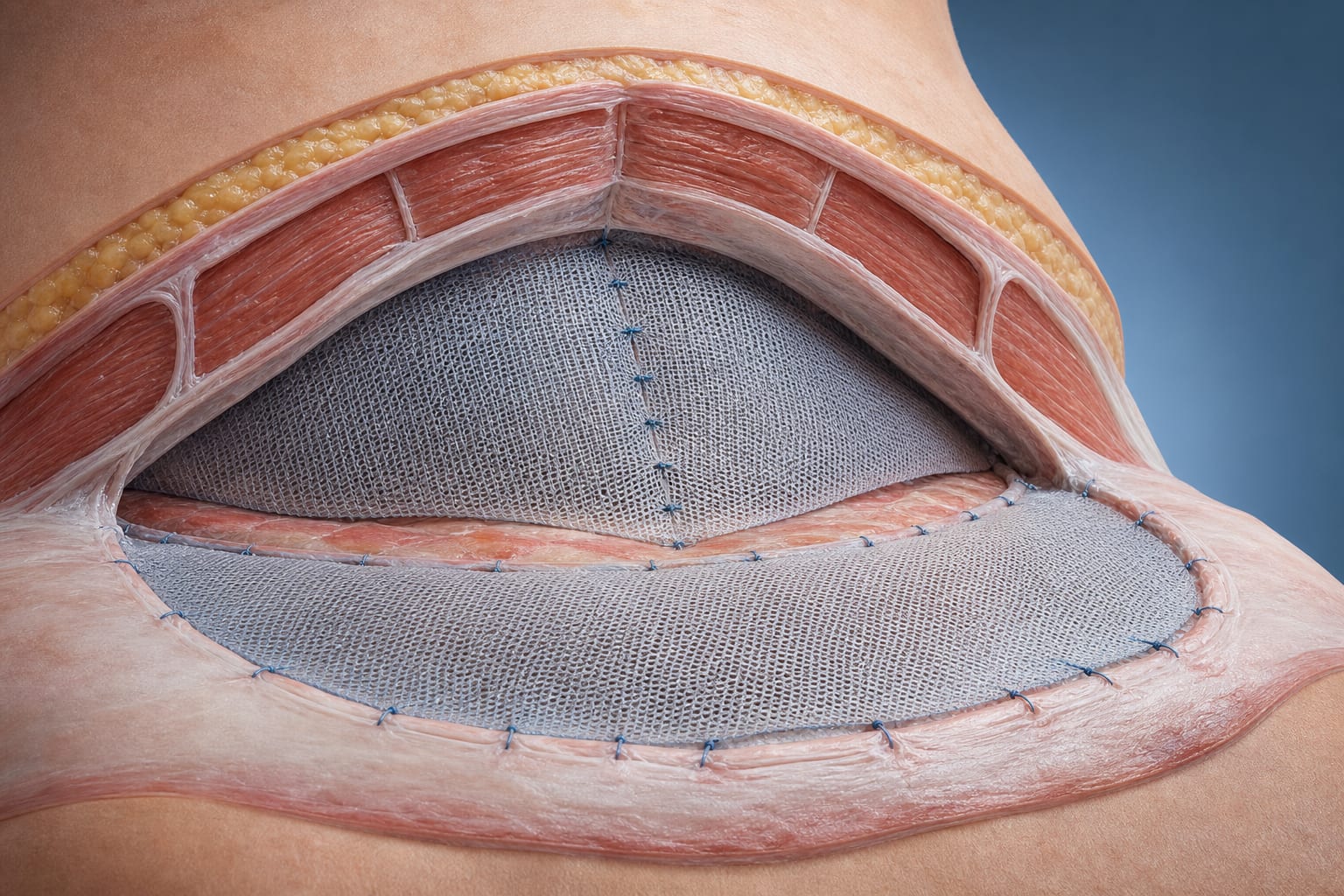
Mesh reinforcement of cruroplasty may reduce recurrence but carries risks such as dysphagia and esophageal erosion; routine use is not currently recommended.
Guideline-Based Recommendations
Diagnosis
Diagnosis based on clinical symptoms and hernia morphology.
Assessment of hiatal defect size and crura strength to guide surgical approach.
Management
Surgical treatment indicated when medical therapy for GERD fails.
Use of anti-reflux fundoplication (Nissen or Toupet) combined with cruroplasty.
Mesh augmentation reserved for patients with weak crura or larger hiatal defects due to potential mesh-related complications.
Monitoring & Follow-up
Postoperative complications monitored up to 30 days after surgery.
One-year follow-up includes assessment of recurrence, pain (at rest and on exertion), and chronic pain requiring treatment.
Clinical examination recommended if recurrence or complications are reported.
Risks
Mesh-associated complications include dysphagia and esophageal erosion.
Recurrence rates after pure suture cruroplasty can be as high as 59% at 5 years.
Potential for mesh-related complications necessitates patient-tailored decision-making.
Patient & Prescribing Data
6,533 patients undergoing elective primary laparoscopic type I hiatal hernia repair with fundoplication and complete 1-year follow-up
Propensity-score matched analysis comparing mesh versus non-mesh cruroplasty to evaluate perioperative outcomes and 1-year recurrence and complication rates
Clinical Best Practices
Individualize decision for mesh augmentation based on hiatal defect size, crura strength, and patient risk factors.
Employ anti-reflux fundoplication techniques (Nissen or Toupet) alongside cruroplasty for GERD symptom control.
Ensure thorough informed consent discussing potential benefits and risks of mesh use.
Utilize registry data and standardized follow-up protocols to monitor outcomes and complications.
Apply propensity-score matching in observational studies to reduce confounding in comparative effectiveness research.