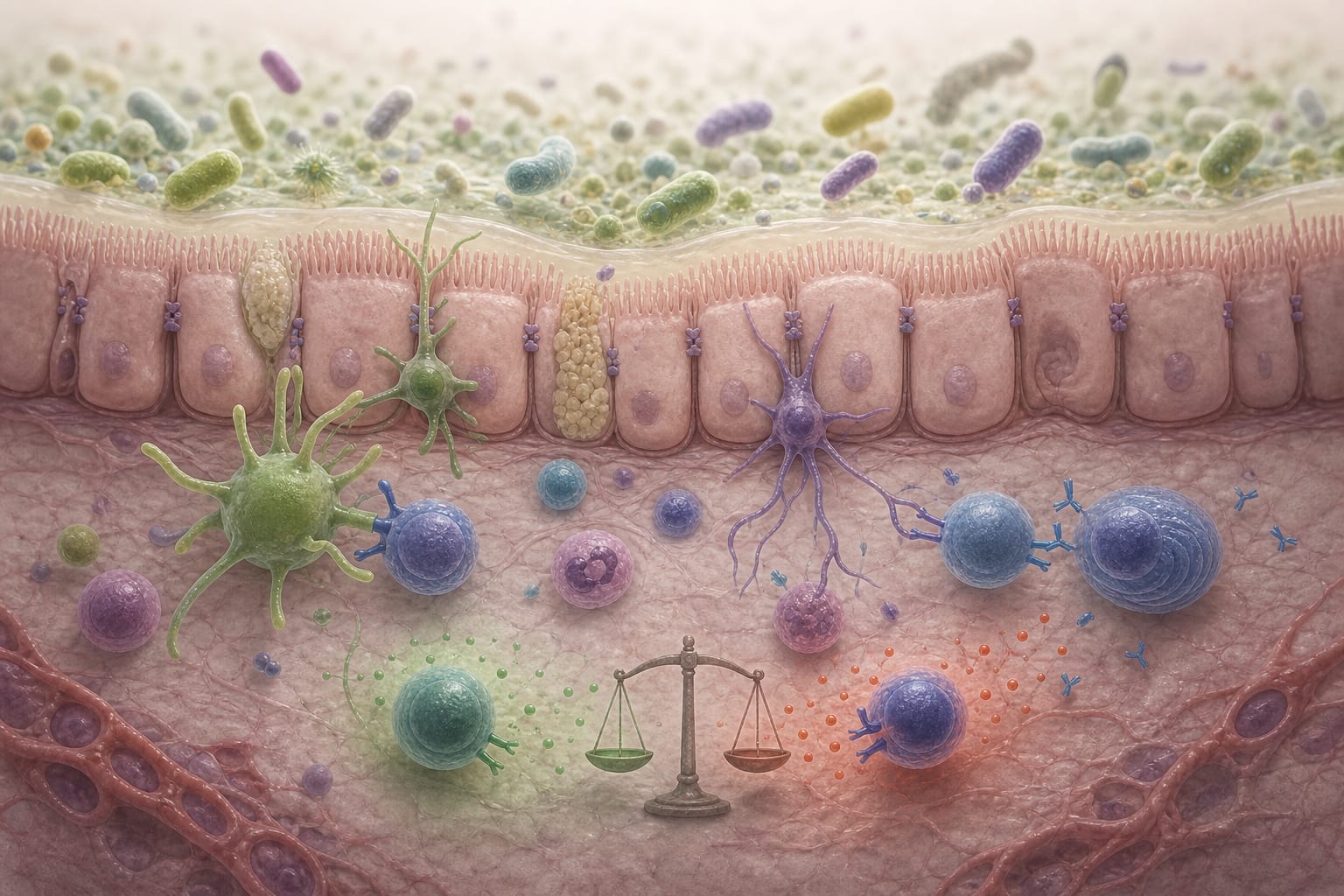
The Role of the Immune System in Regulating Physiological Processes
-
By
-
John V. Forrester
-
Lucia Kuffova
-
Andrew D. Dick
-
July 6, 2026
Clinical Scorecard: The Role of the Immune System in Regulating Physiological Processes
At a Glance
| Category | Detail |
|---|
| Condition | Immune System Function |
| Key Mechanisms | Self-Nonself Discrimination, Immune Tolerance, Receptor-Mediated Activation |
| Target Population | General Population |
| Care Setting | Immunology and Physiological Research |
Key Highlights
- Evolution of immune system concepts from Self-Nonself Discrimination to broader models.
- Immune tolerance allows for the coexistence of foreign antigens, such as those in the microbiome.
- Disease occurs when immune competency is impaired, leading to autoimmunity or infection.
- The immune system's primary role is to maintain physiological homeostasis.
- Tolerance to commensal microbiota is the norm, with immunogenicity being rare.
Guideline-Based Recommendations
Diagnosis
- Assess immune competency in patients with autoimmune diseases.
Management
- Focus on maintaining immune homeostasis to prevent disease.
Monitoring & Follow-up
- Monitor immune responses to both self and non-self antigens.
Risks
- Impaired immune competency increases the risk of autoimmune diseases and infections.
Patient & Prescribing Data
Individuals with autoimmune diseases or immune deficiencies.
Management strategies should consider the role of the microbiome in immune tolerance.
Clinical Best Practices
- Promote understanding of the immune system's role in health and disease.
- Encourage research into the microbiome's impact on immune responses.
- Implement strategies to enhance immune tolerance in clinical settings.
Related Resources & Content