Case Report: Conversion therapy for initially unresectable intrahepatic cholangiocarcinoma
-
By
-
Ying-Ao Liu
-
Qi Huang
-
Xiang Gao
-
Wei Gao
-
Zeliang Hu
-
Fangzhou Wang
-
Yuanxu Qu
-
Yamin Zheng
-
June 23, 2026
-
Clinical Scorecard: Clinical Case Study: Transformative Treatment Approaches for Initially Unresectable Intrahepatic Cholangiocarcinoma
At a Glance
| Category | Detail |
|---|
| Condition | Intrahepatic Cholangiocarcinoma (ICC) |
| Key Mechanisms | Involves immunotherapy, targeted therapies, and combinatorial treatment approaches. |
| Target Population | Patients with initially unresectable advanced ICC. |
| Care Setting | Oncology clinical practice. |
Key Highlights
- Gemcitabine and cisplatin is the first-line standard therapy for advanced ICC.
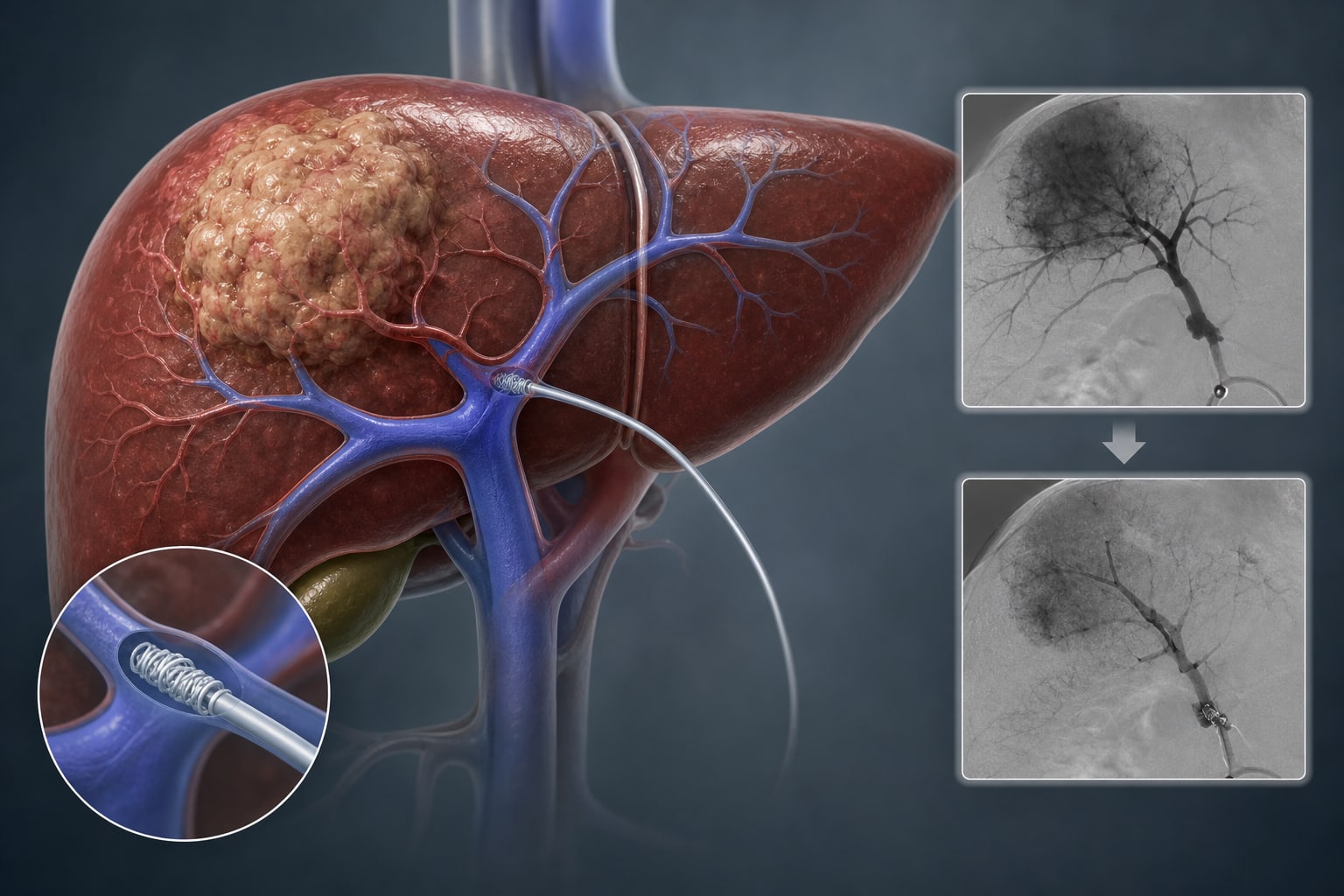
- Conversion therapy using PVE, surufatinib, sintilimab, and FOLFOX led to successful radical resection.
- The patient achieved 28 months of disease-free survival post-treatment.
Guideline-Based Recommendations
Diagnosis
- Pathological verification through needle biopsy is essential for diagnosis.
Management
- Utilize multimodal conversion therapy for unresectable ICC.
Monitoring & Follow-up
- Imaging assessments to evaluate tumor response and FLR volume.
Risks
- Advanced ICC has a grim prognosis with a median survival of less than two years.
Patient & Prescribing Data
71-year-old male with advanced ICC.
Combination of PVE, surufatinib, sintilimab, and FOLFOX was effective in achieving resectability.
Clinical Best Practices
- Consider PVE to stimulate FLR hyperplasia before surgical intervention.
- Integrate immunotherapy with chemotherapy for advanced ICC management.
Related Resources & Content