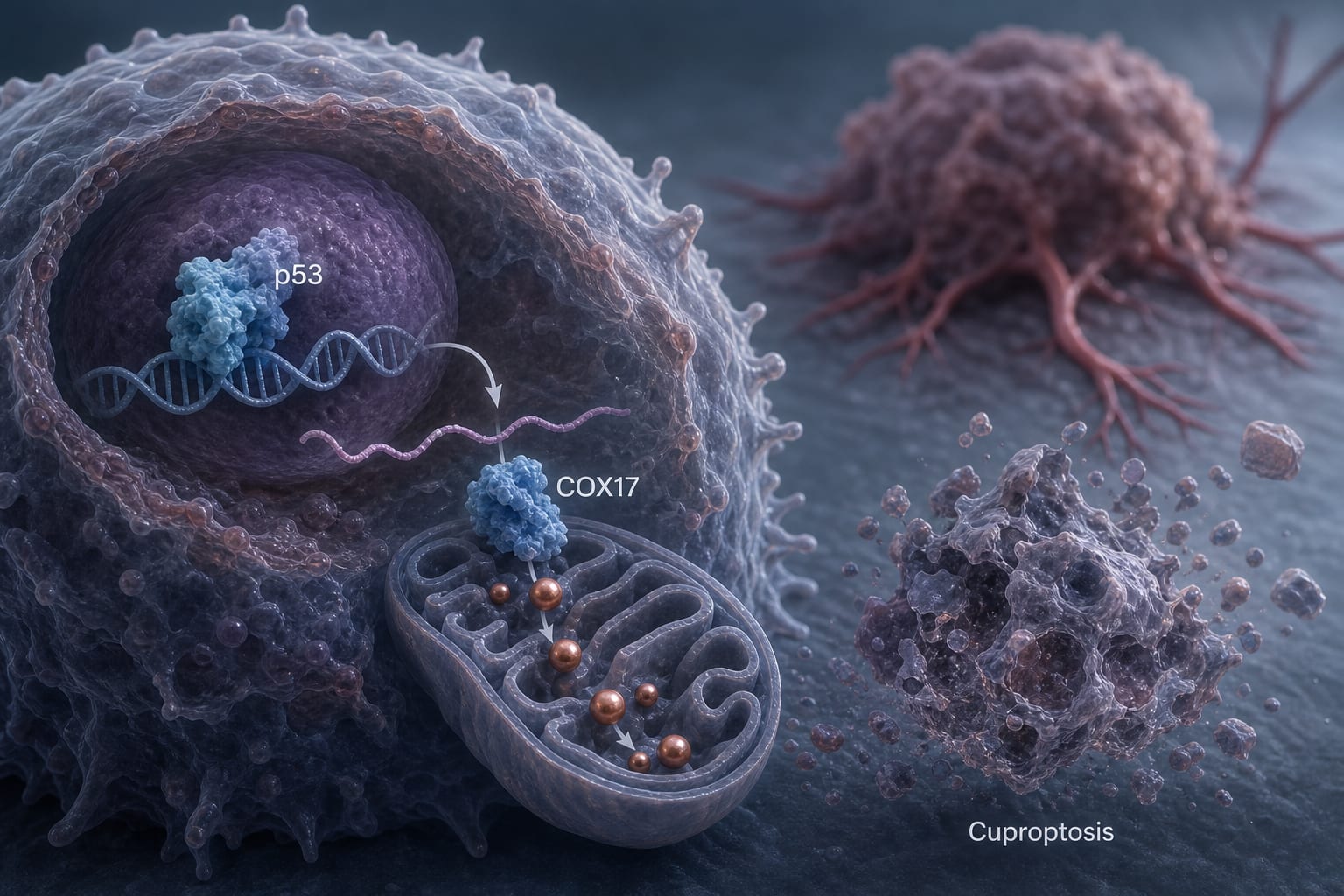
p53-associated regulation of COX17 enhances elesclomol-induced copper-associated cytotoxicity and suppresses gastric cancer growth
-
By
-
Qianling Li
-
Xiaoyin Dong
-
Yu Zhao
-
Yun Shen
-
Chenyang Yang
-
Yu Xi
-
June 15, 2026
-
Clinical Scorecard: Regulation of COX17 by p53 Enhances Copper-Dependent Cytotoxicity Induced by Elesclomol and Inhibits Growth of Gastric Cancer
At a Glance
| Category | Detail |
|---|
| Condition | Gastric Cancer |
| Key Mechanisms | p53 regulates COX17, enhancing copper accumulation and sensitivity to elesclomol-induced cytotoxicity. |
| Target Population | Patients with gastric cancer |
| Care Setting | Oncology research and clinical settings |
Key Highlights
- COX17 enhances sensitivity of AGS gastric cancer cells to elesclomol.
- p53 overexpression increases COX17 expression and suppresses malignant phenotypes.
- Elesclomol treatment leads to increased intracellular copper levels and cell death.
- Conditioned media from treated cells inhibits HUVEC tube formation.
- In vivo studies show elesclomol reduces tumor growth in AGS xenografts.
Guideline-Based Recommendations
Diagnosis
- Assess COX17 and p53 expression in gastric cancer tissues.
Management
- Consider elesclomol for patients with high COX17 expression.
Monitoring & Follow-up
- Monitor intracellular copper levels and tumor growth response.
Risks
- Potential for increased oxidative stress and cytotoxicity.
Patient & Prescribing Data
Patients with advanced gastric cancer showing limited response to conventional therapies.
Elesclomol may be effective in patients with COX17 overexpression.
Clinical Best Practices
- Evaluate p53 and COX17 status in gastric cancer patients.
- Incorporate copper metabolism assessment in treatment planning.
- Utilize elesclomol in clinical trials for gastric cancer.
Related Resources & Content