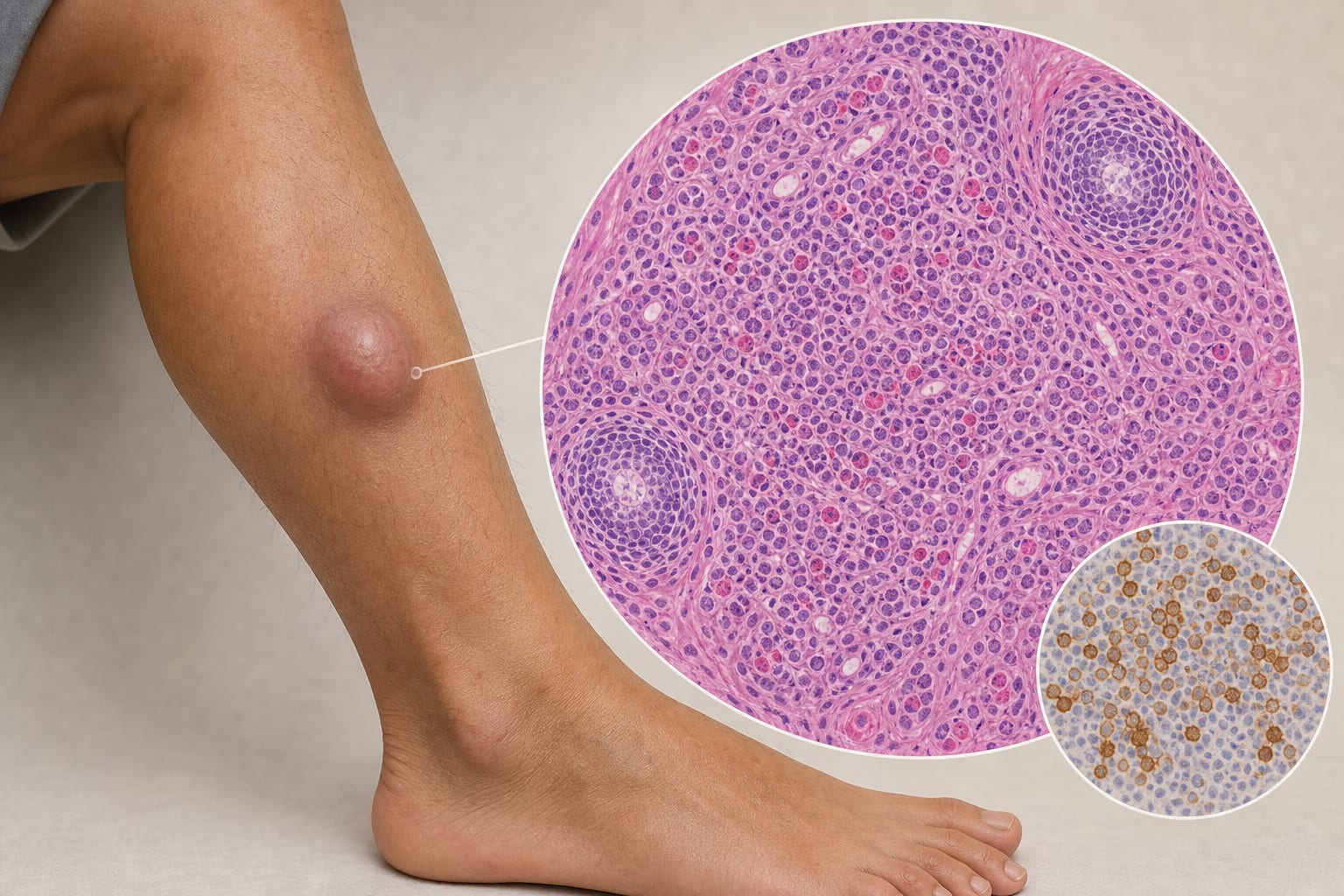
Kimura disease presenting as a right lower limb soft tissue tumor: a case report
-
By
-
Kun Hao
-
Feng Gao
-
June 22, 2026
-
Clinical Scorecard: Kimura disease manifesting as a soft tissue mass in the right lower leg: a case study
At a Glance
| Category | Detail |
|---|
| Condition | Kimura disease |
| Key Mechanisms | Dysregulated immune responses characterized by eosinophilic infiltration and elevated serum IgE levels. |
| Target Population | Adult males, particularly of Asian descent. |
| Care Setting | Clinical evaluation and histopathological examination. |
Key Highlights
- Kimura disease is a rare chronic inflammatory disorder with unclear pathogenesis.
- Typically presents as painless soft tissue masses, most commonly in the head and neck.
- Can manifest in atypical locations such as the extremities, leading to diagnostic challenges.
- Histopathological features include lymphoid hyperplasia, eosinophilic infiltration, and small vessel proliferation.
- Absence of peripheral eosinophilia and elevated IgE can occur in localized presentations.
Guideline-Based Recommendations
Diagnosis
- Histopathological examination is critical for diagnosis, especially in atypical presentations.
Management
- Surgical excision may be considered for symptomatic lesions.
Monitoring & Follow-up
- Regular follow-up to monitor for recurrence or new lesions.
Risks
- Potential for misdiagnosis due to overlapping features with other eosinophilic disorders.
Patient & Prescribing Data
Adult patients with localized soft tissue masses.
Treatment options may vary based on presentation and symptoms.
Clinical Best Practices
- Consider Kimura disease in differential diagnoses for soft tissue masses in the extremities.
- Utilize imaging studies to assess lesion characteristics before biopsy.
- Ensure comprehensive histopathological analysis to confirm diagnosis.
Related Resources & Content