Evaluation of cerebral hemodynamic assessment from time-of-flight magnetic resonance angiography using a topological network-based model with Transcranial Doppler measurements - Scorecard - MDSpire
Advertisement
Evaluation of cerebral hemodynamic assessment from time-of-flight magnetic resonance angiography using a topological network-based model with Transcranial Doppler measurements
Clinical Scorecard: Assessment of Cerebral Hemodynamics via Time-of-Flight Magnetic Resonance Angiography Utilizing a Topological Network Model and Transcranial Doppler Measurements
At a Glance
Category
Detail
Condition
Cerebrovascular diseases
Key Mechanisms
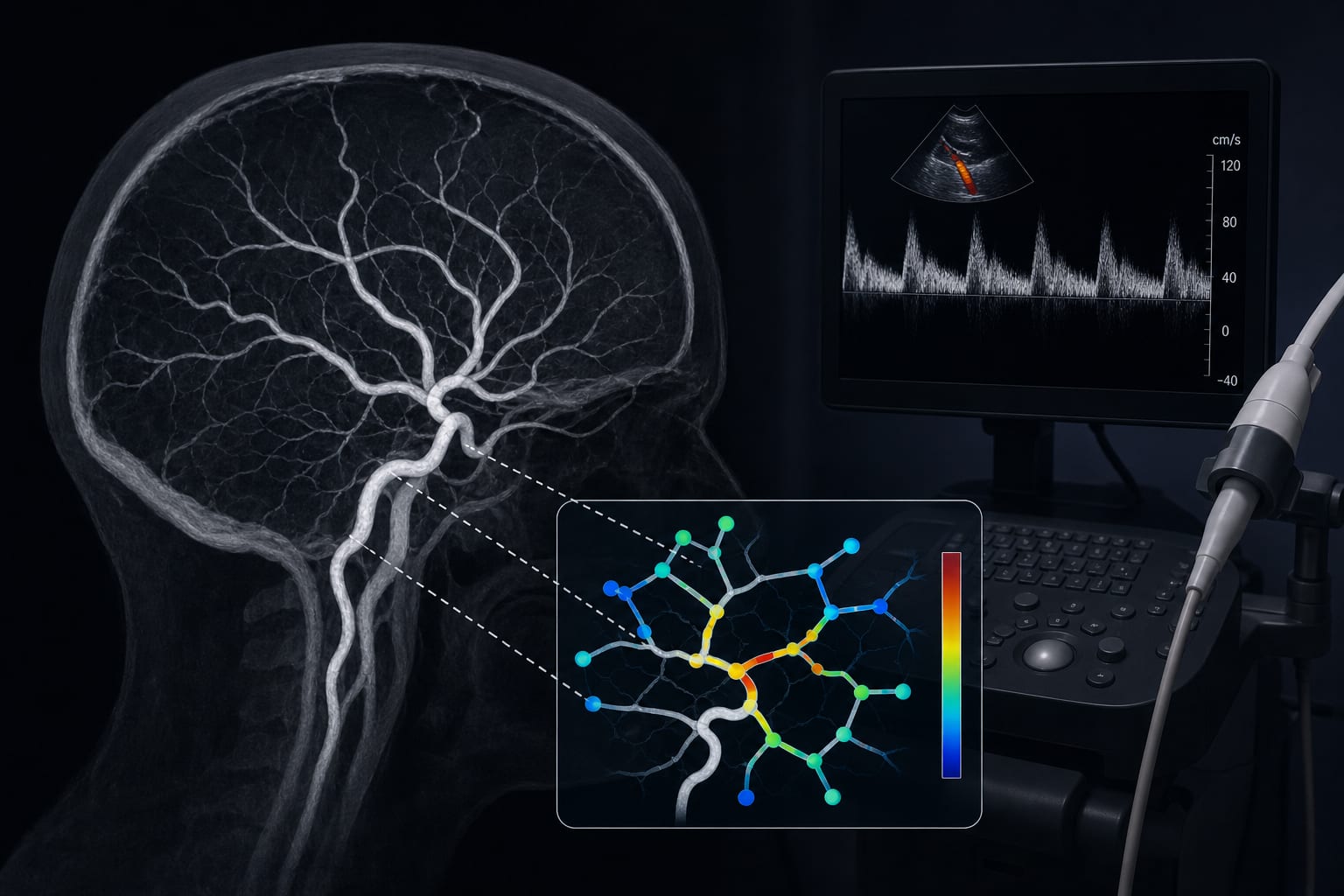
Quantitative measurement of cerebral hemodynamics using DNF and TCD
Target Population
Patients with cerebrovascular diseases
Care Setting
Clinical imaging and hemodynamic assessment
Key Highlights
DNF provides a non-invasive alternative for cerebrovascular assessment.
Significant correlation found between DNF-calculated velocities and TCD measurements.
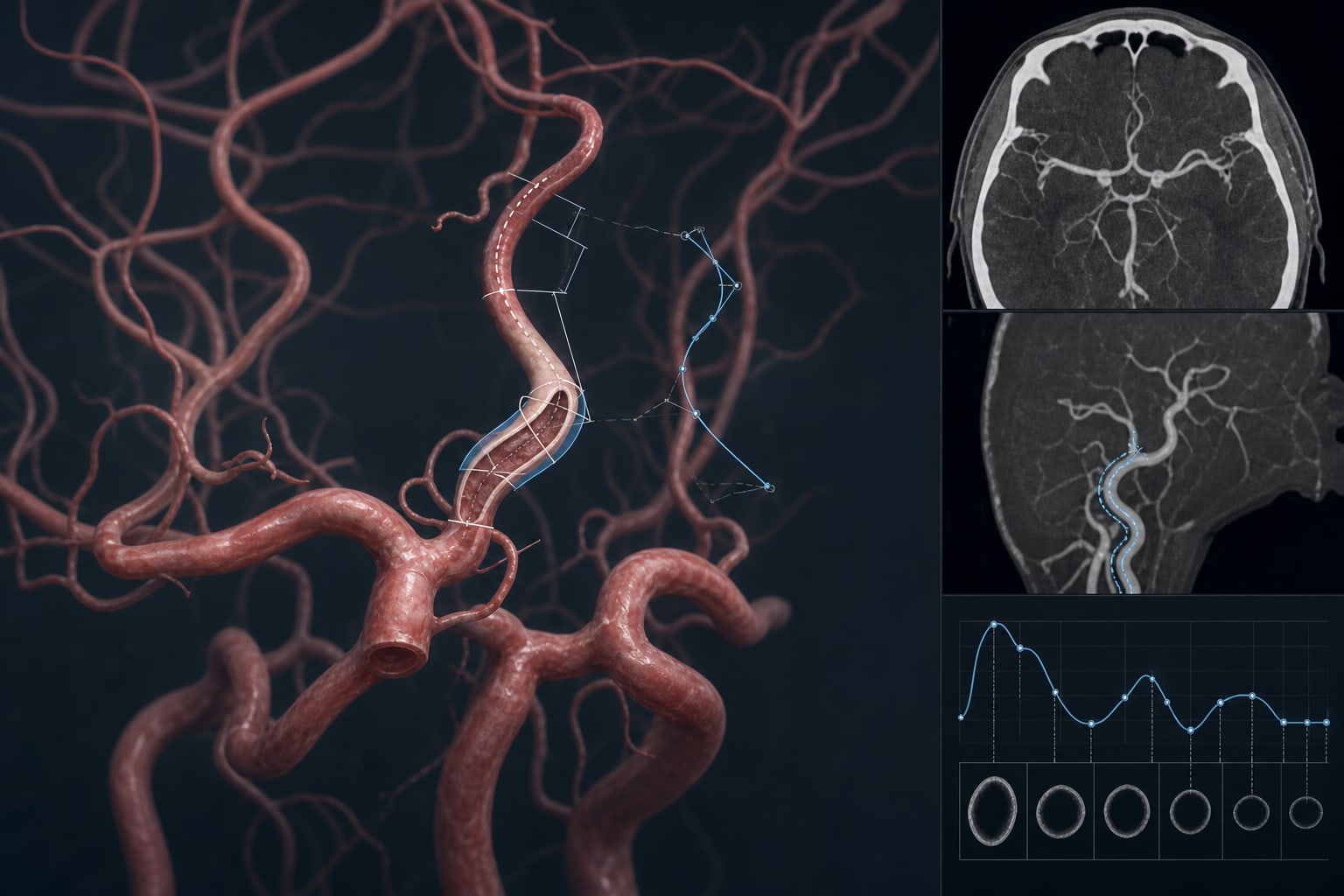
DNF integrates patient-specific vascular geometry with functional hemodynamics.
Guideline-Based Recommendations
Diagnosis
Utilize TCD for dynamic measurement of cerebral blood velocity.
Consider DNF for comprehensive assessment of cerebrovascular conditions.
Management
Assess stroke severity and neurological status through CBF evaluation.
Monitoring & Follow-up
Monitor hemodynamic parameters using DNF in conjunction with TCD.
Risks
TCD limitations include inadequate acoustic windows and operator dependency.
Patient & Prescribing Data
113 patients evaluated in a single-center retrospective study.
DNF offers robust hemodynamic parameter estimation without invasive procedures.
Clinical Best Practices
Employ DNF for patient-specific assessment of cerebral hemodynamics.
Use TCD as a reference for validating new computational tools.