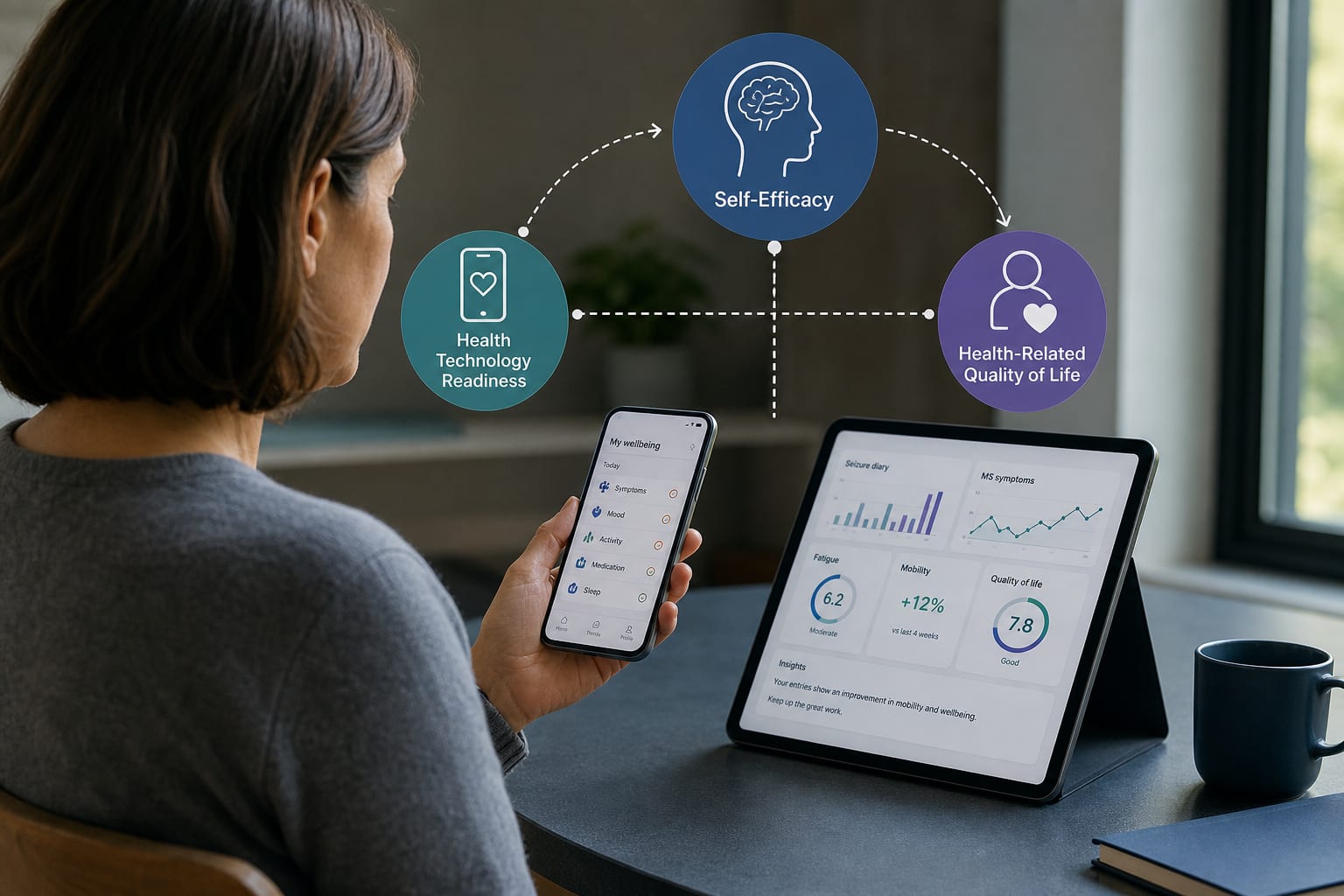
The Role of Self-Efficacy in Linking Health Technology Readiness to Quality of Life in Health: Findings from a Survey with Mediation Analysis
By
Anna Vahteristo
Virpi Jylhä
Hanna Kuusisto
June 19, 2026
Clinical Scorecard: The Role of Self-Efficacy in Linking Health Technology Readiness to Quality of Life in Health: Findings from a Survey with Mediation Analysis
At a Glance
Category Detail
Condition Chronic Neurological Conditions (Epilepsy, Multiple Sclerosis) Key Mechanisms Health Technology Readiness, Digital Health Literacy, Self-Efficacy Target Population Individuals diagnosed with epilepsy or multiple sclerosis Care Setting Digital Health Services for Chronic Disease Management
Key Highlights
Digital health supports self-care and shared decision-making in chronic diseases. Self-efficacy mediates the relationship between health technology readiness and health-related quality of life (HR-QoL). Digital health literacy is positively associated with patient engagement and HR-QoL. Social support enhances self-management and HR-QoL in chronic conditions. The study utilized a cross-sectional survey to assess relationships among key variables. Guideline-Based Recommendations
Diagnosis
Diagnosis of epilepsy or multiple sclerosis as inclusion criteria for the study. Management
Utilization of digital health applications for self-management of chronic conditions. Monitoring & Follow-up
Regular monitoring and treatment planning for individuals with preference-sensitive conditions. Risks
Lack of digital health literacy may hinder effective self-management. Patient & Prescribing Data
Individuals with chronic neurological conditions, specifically epilepsy and MS.
Engagement with digital health services is crucial for improving HR-QoL.
Clinical Best Practices
Encourage the use of digital health applications to enhance self-management. Promote social support to improve self-efficacy and HR-QoL. Assess health technology readiness to tailor interventions for chronic disease management. Related Resources & Content