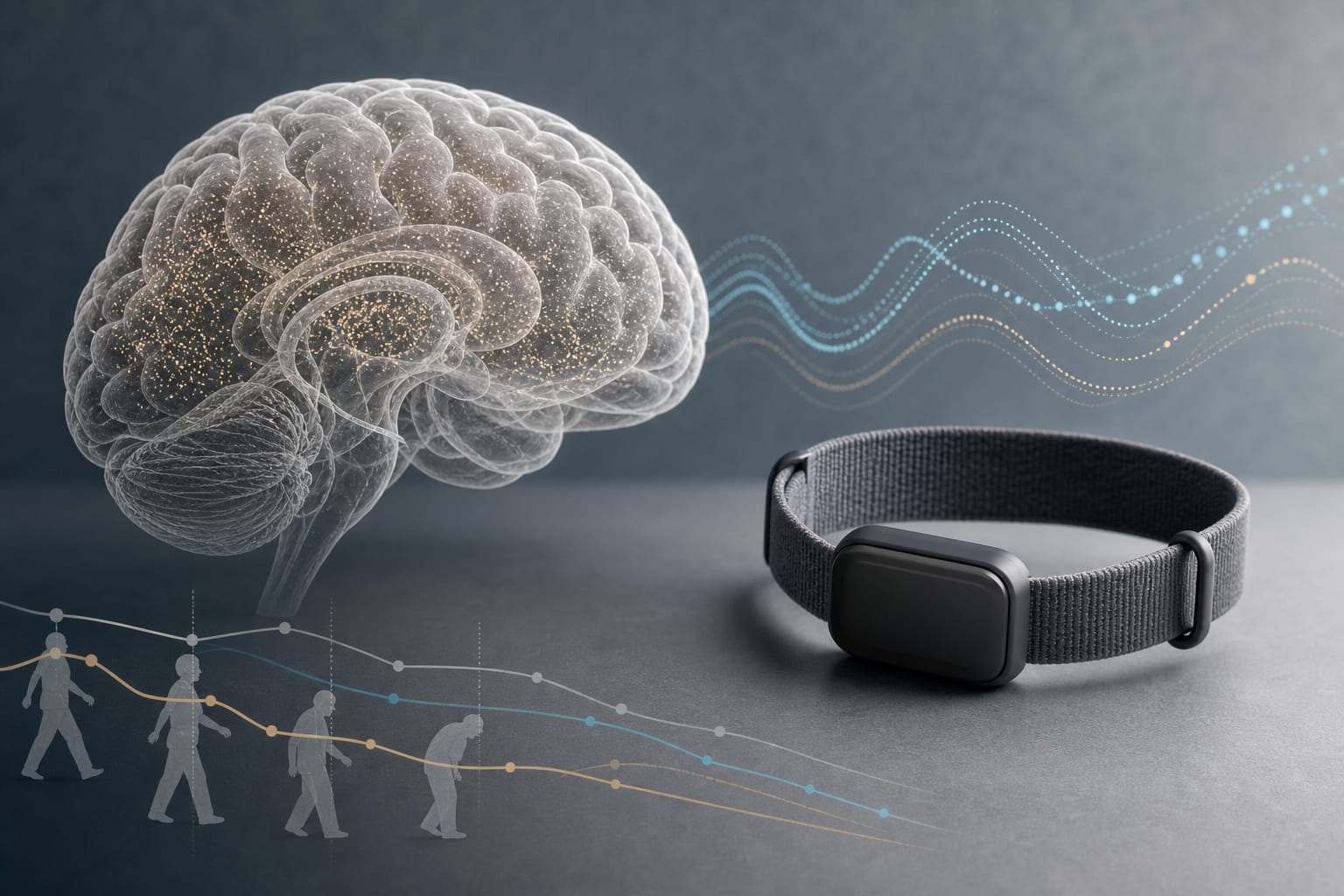
Cognitive Trajectories and Subsequent Accelerometer-Measured Movement Behavior in Older Adults
-
By
-
Mikaela Bloomberg
-
Laura Brocklebank
-
Clémence Cavaillès
-
Aiden Doherty
-
Séverine Sabia
-
Andrew Steptoe
-
May 19, 2026
-
Clinical Scorecard: Cognitive Patterns and Later Movement Behaviors Assessed by Accelerometers in Elderly Individuals
At a Glance
| Category | Detail |
|---|
| Condition | Dementia and cognitive decline in elderly individuals |
| Key Mechanisms | Association between movement behaviors (physical activity and sedentary behavior) and cognitive outcomes |
| Target Population | Adults aged 50 years and older |
| Care Setting | Community-dwelling adults in England |
Key Highlights
- More physical activity and less sedentary time linked to better cognitive performance.
- Cognitive decline may affect physical activity patterns.
- Study utilizes accelerometers for objective measurement of movement behaviors.
- Longitudinal analysis over 17 years using data from the English Longitudinal Study of Ageing (ELSA).
- Cognitive assessments focused on episodic memory and verbal fluency.
Guideline-Based Recommendations
Diagnosis
- Utilize cognitive testing to assess memory and fluency in older adults.
Management
- Encourage increased physical activity and reduced sedentary behavior to support cognitive health.
Monitoring & Follow-up
- Regularly monitor movement behaviors using accelerometers for objective data.
Risks
- Cognitive decline may lead to reduced physical activity, signaling potential functional decline.
Patient & Prescribing Data
Elderly individuals aged 50 years and older with varying cognitive health.
Interventions should focus on enhancing physical activity to mitigate cognitive decline.
Clinical Best Practices
- Incorporate objective movement behavior assessments in routine evaluations.
- Address both cognitive health and physical activity in care plans for older adults.
- Utilize longitudinal data to inform interventions targeting cognitive and physical health.
Related Resources & Content