Metabolism of Tryptophan and Its Role in Immune Tolerance Following Liver Transplantation
-
By
-
Wei Li
-
Ao Ren
-
July 16, 2026
Clinical Scorecard: Metabolism of Tryptophan and Its Role in Immune Tolerance Following Liver Transplantation
At a Glance
| Category | Detail |
|---|
| Condition | Liver Transplantation |
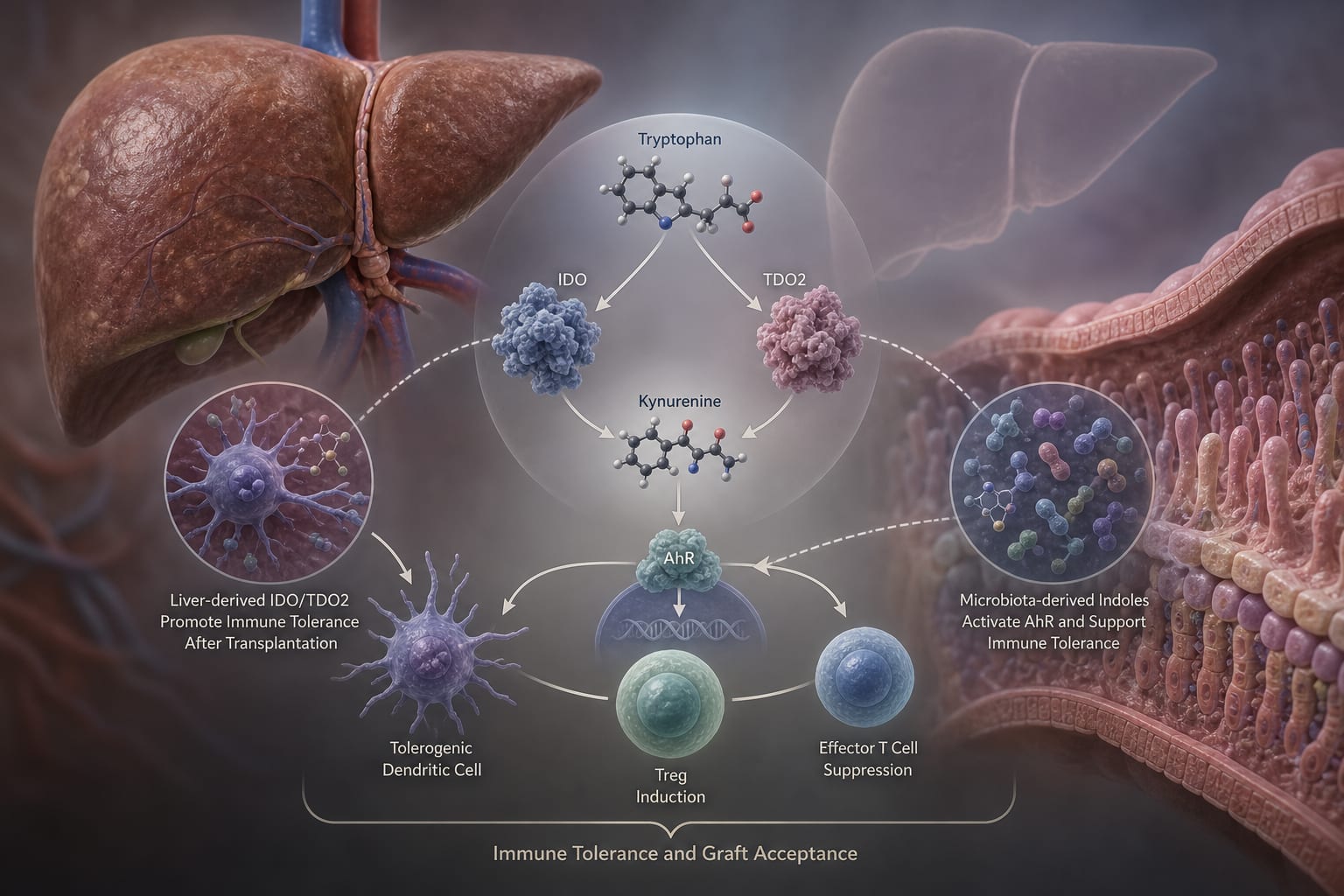
| Key Mechanisms | Tryptophan metabolism via IDO and TDO2 regulates immune tolerance. |
| Target Population | Patients undergoing liver transplantation. |
| Care Setting | Transplantation and immunology research. |
Key Highlights
- IDO and TDO2 play complementary roles in liver transplant immunity.
- Kynurenine acts as an endogenous ligand for AhR, influencing immune cell differentiation.
- The Kyn/Trp ratio is a reliable biomarker for assessing IDO activity.
- Tryptophan metabolism is crucial for maintaining immune tolerance post-transplant.
- Clinical translation of targeting Trp metabolism remains a preclinical research focus.
Guideline-Based Recommendations
Diagnosis
- Assess serum Kyn/Trp ratio to evaluate IDO activity.
Management
- Consider the roles of IDO and TDO2 in immunosuppressive strategies.
Monitoring & Follow-up
- Monitor for acute and chronic allograft rejection and immunosuppressive effects.
Risks
- Potential nephrotoxicity from prolonged immunosuppression.
Patient & Prescribing Data
Patients with end-stage liver disease undergoing transplantation.
Combined metabolite panels may provide better insights than single markers.
Clinical Best Practices
- Utilize IDO and TDO2 modulation as part of immunosuppressive therapy.
- Incorporate gut microbiota considerations in immune tolerance strategies.
Related Resources & Content