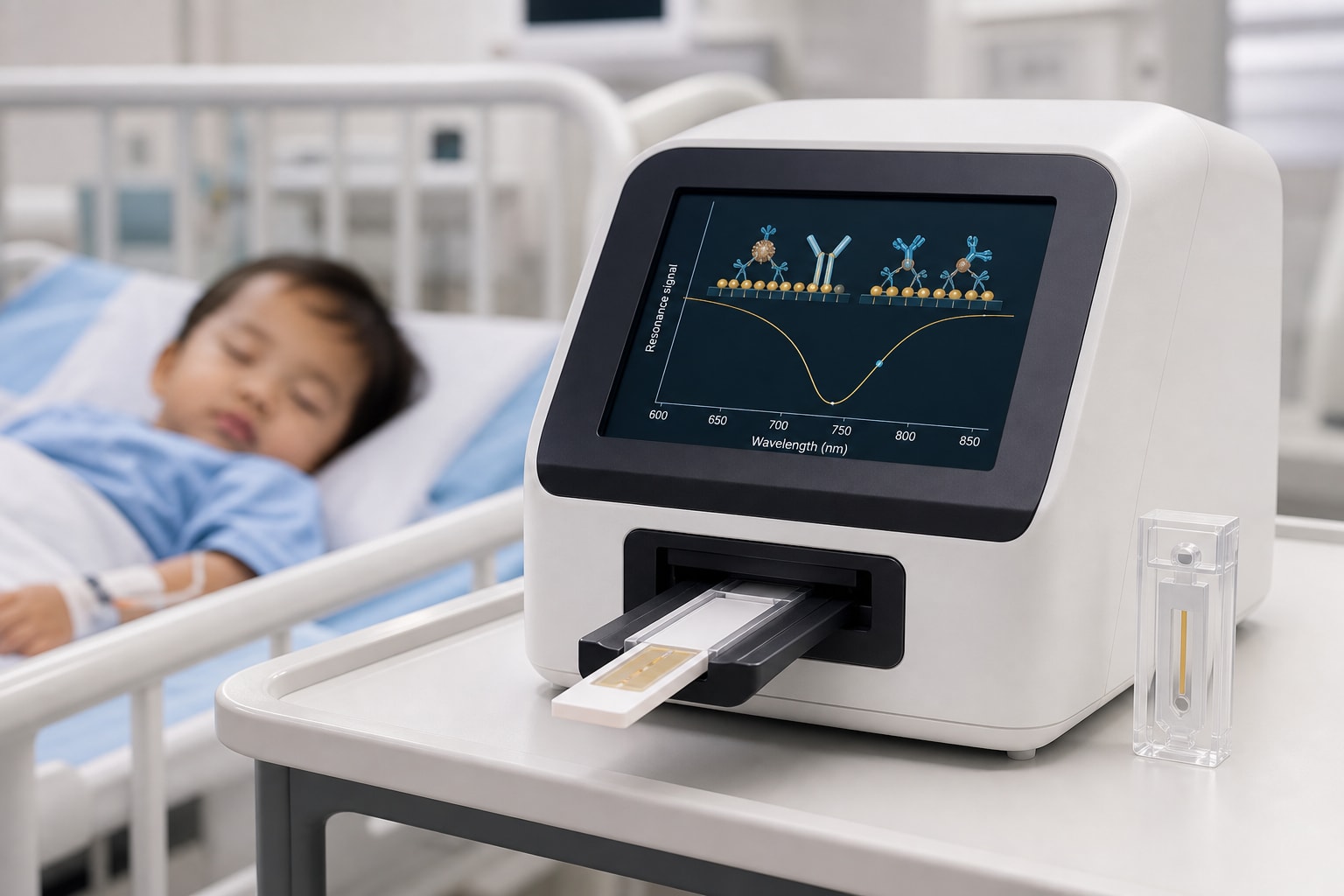
Localized surface plasmon resonance-based point-of-care testing for pediatric sepsis
-
By
-
Xiao Zhang
-
Jing Zhang
-
Minghao Wang
-
Zelin Liu
-
Zhibo Gai
-
Xia Li
-
July 16, 2026
Clinical Scorecard: Point-of-Care Diagnostic Testing for Pediatric Sepsis Utilizing Localized Surface Plasmon Resonance Technology
At a Glance
| Category | Detail |
|---|
| Condition | Pediatric Sepsis |
| Key Mechanisms | Localized Surface Plasmon Resonance (LSPR) technology for rapid, sensitive biomarker detection. |
| Target Population | Children at risk of sepsis. |
| Care Setting | Pediatric healthcare settings. |
Key Highlights
- Sepsis is a leading cause of child mortality worldwide.
- Conventional diagnostic methods are too slow, requiring 24-72 hours.
- LSPR-based point-of-care testing offers rapid, label-free detection.
- Current biomarkers lack sufficient sensitivity and specificity for sepsis diagnosis.
- The need for rapid diagnostic tools is critical for improving clinical outcomes.
Guideline-Based Recommendations
Diagnosis
- Utilize LSPR technology for rapid biomarker detection.
Management
- Initiate empiric broad-spectrum antimicrobial therapy while awaiting diagnostic results.
Monitoring & Follow-up
- Employ scoring systems like pSOFA and PELOD-2 for ongoing assessment.
Risks
- Increased risk of antimicrobial resistance due to empiric therapy.
Patient & Prescribing Data
Critically ill children in pediatric intensive care units.
Empiric therapy often initiated without definitive microbiological evidence.
Clinical Best Practices
- Implement point-of-care testing to reduce diagnostic delays.
- Integrate multiple biomarkers for a more comprehensive assessment.
- Regularly update clinical guidelines to reflect new evidence and technologies.
Related Resources & Content