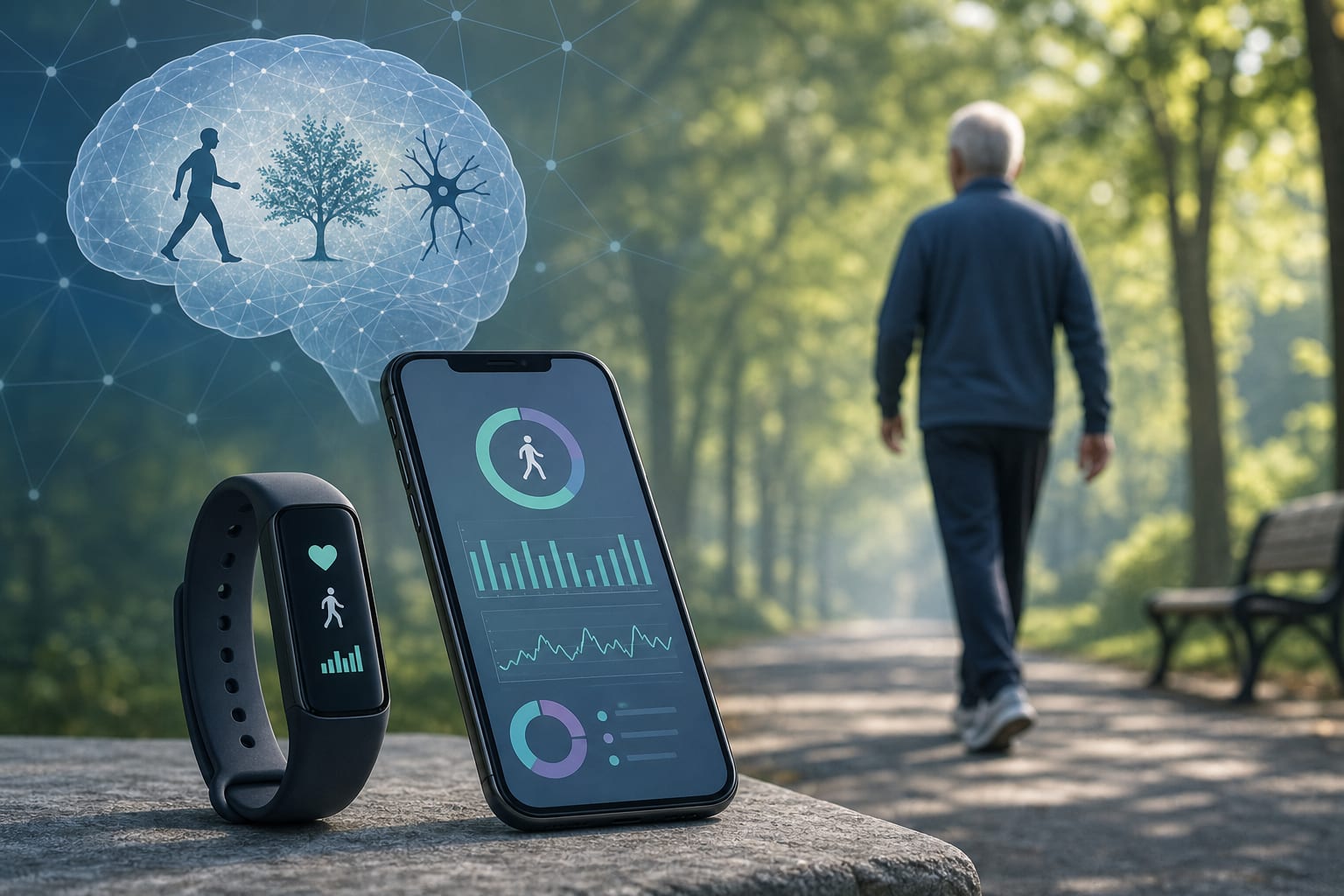
Application of digital health technologies in physical activity-based dementia prevention and management: A bibliometric analysis based on web of science core collection and scopus - Scorecard - MDSpire
Conexiant’s news site is now MDSpire News. Learn more
Advertisement
Digital Health Technologies for Physical Activity-Based Dementia Prevention and Care: A Bibliometric Analysis of Web of Science and Scopus Publications
Clinical Scorecard: Digital Health Technologies for Physical Activity-Based Dementia Prevention and Care: A Bibliometric Analysis of Web of Science and Scopus Publications
At a Glance
Category
Detail
Condition
Dementia prevention, intervention, and care involving physical activity and digital health technologies.
Key Mechanisms
The article describes digital tools—including wearable devices, activity trackers, mobile applications, online platforms, remote monitoring, virtual and augmented reality, exergaming, and serious games—as supporting monitoring, intervention delivery, behavioral support, rehabilitation, and long-term care.
Target Population
The excerpt discusses people with dementia or cognitive impairment in relation to prior intervention reviews, and dementia prevention and management more broadly; the bibliometric study analyzes publications, not patients.
Care Setting
The excerpt discusses prevention, early intervention, rehabilitation, and long-term care, including remote delivery; it does not specify particular clinical settings.
Key Highlights
The study uses bibliometric analysis of Web of Science Core Collection and Scopus publications.
Its objectives include describing publication trends, collaboration networks, co-citation patterns, keyword characteristics, and emerging research directions.
The article describes physical activity as a lifestyle intervention relevant to dementia prevention, early intervention, and long-term management.
Digital technologies discussed include activity trackers, mobile health applications, remote monitoring systems, virtual and augmented reality, exergaming, and serious games.
Guideline-Based Recommendations
Diagnosis
Management
Monitoring & Follow-up
Risks
Patient & Prescribing Data
People at risk of dementia and people living with dementia or cognitive impairment are discussed; the study itself analyzes publications rather than patient-level data.
The article describes digital technologies as tools for supporting physical activity-based prevention and care. It does not report patient-level prescribing or treatment-effect estimates.
Optical analysis of resection-margin tissue identified tumor infiltration as the strongest contributor to predictions of where glioblastoma later recurred.