PET/CT false-negative angioimmunoblastic T-cell lymphoma: a case report and literature review
-
By
-
Yiling Bai
-
Yisong Xiong
-
Hengning Lian
-
Guangqing Shi
-
Yue Teng
-
Lijie Ma
-
July 16, 2026
Clinical Scorecard: Case Report and Literature Review on False-Negative Findings in PET/CT for Angioimmunoblastic T-Cell Lymphoma
At a Glance
| Category | Detail |
|---|
| Condition | Angioimmunoblastic T-cell lymphoma (AITL) |
| Key Mechanisms | Heterogeneous clinical and immunologic manifestations; potential for false-negative PET/CT results. |
| Target Population | Patients with suspected angioimmunoblastic T-cell lymphoma. |
| Care Setting | Oncology and diagnostic imaging. |
Key Highlights
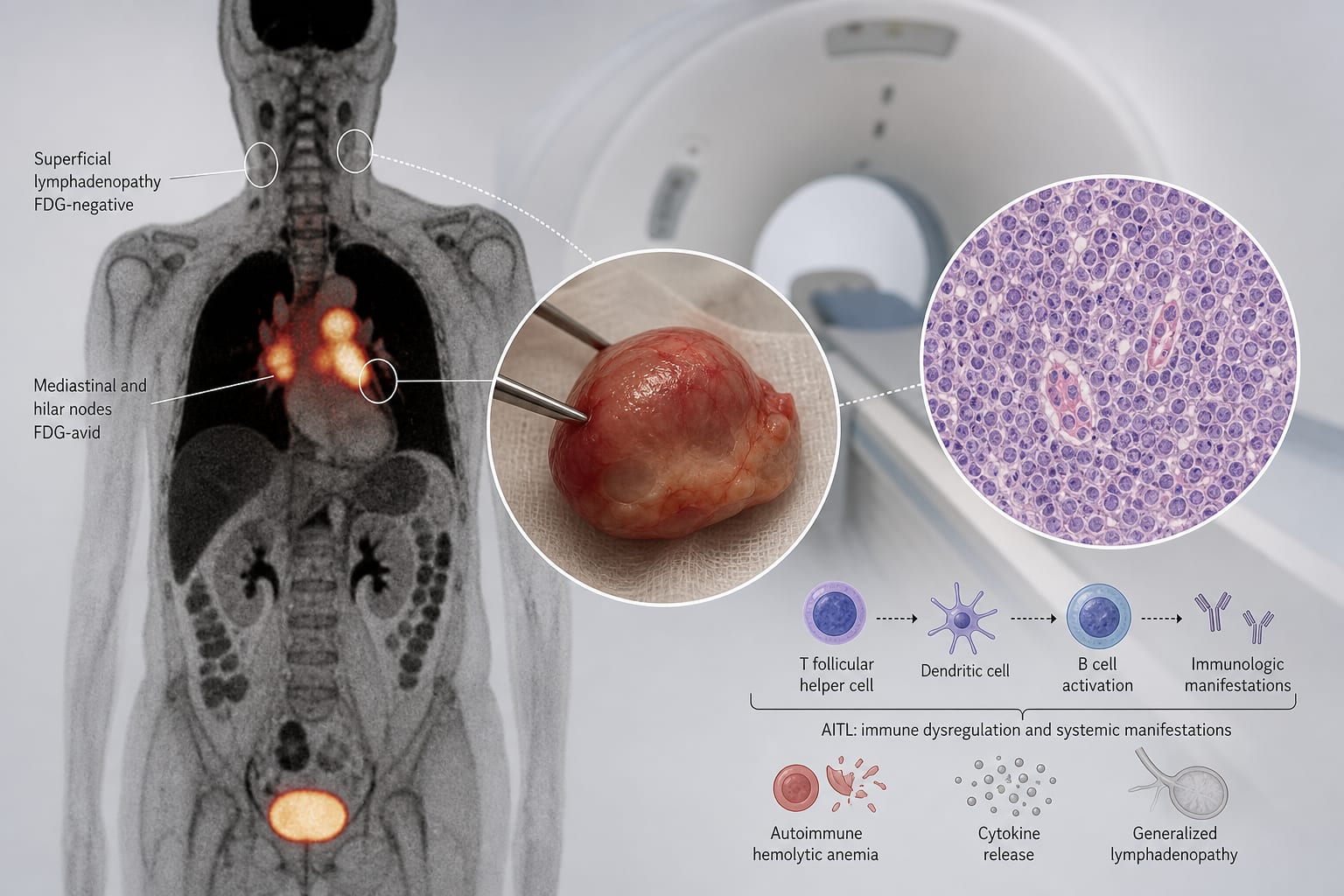
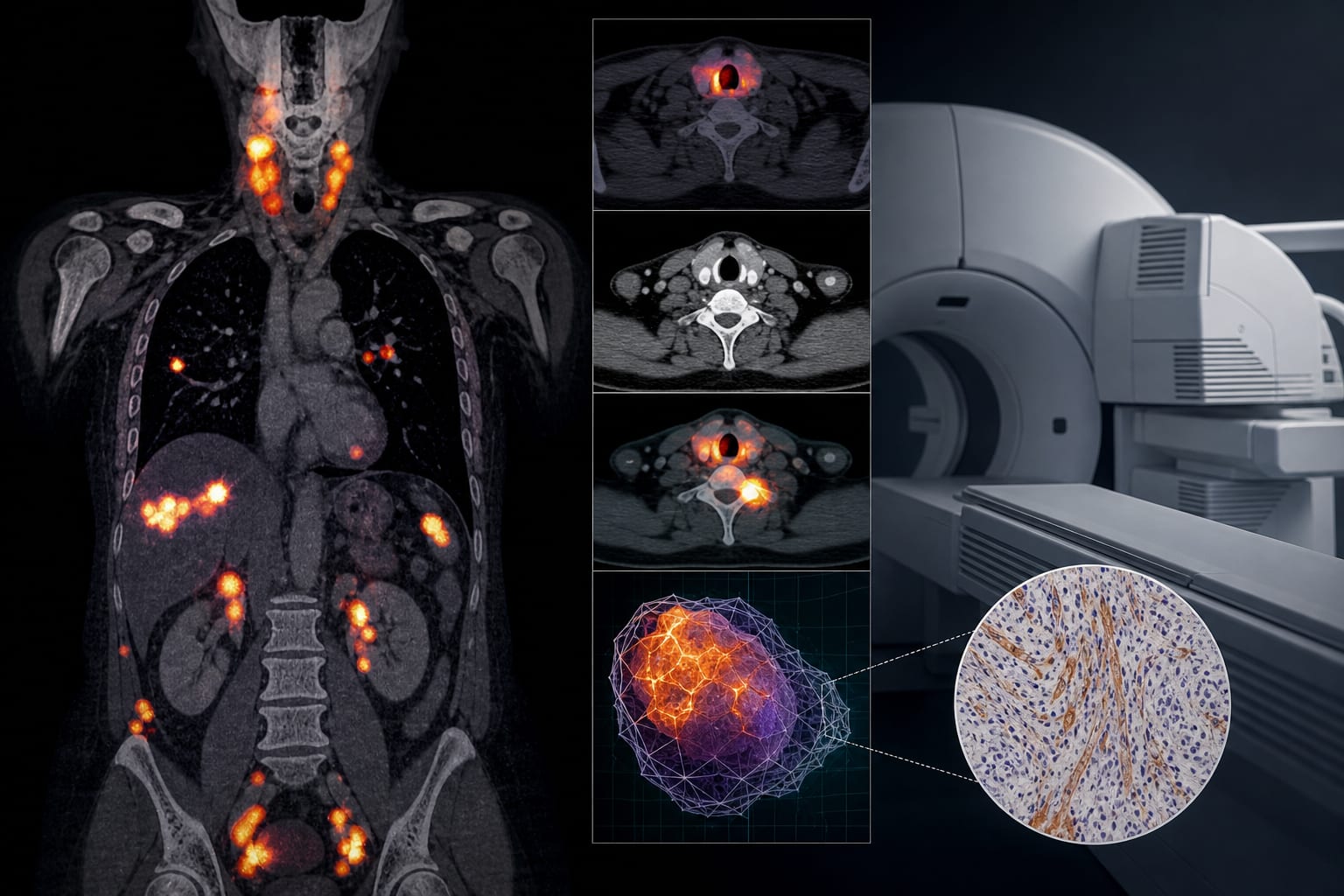
- AITL may exhibit false-negative findings on PET/CT despite abnormal lymph node morphology.
- Integration of clinical, laboratory, flow cytometry, and histopathologic data is crucial for accurate diagnosis.
- Initial biopsies of FDG-avid sites can be non-diagnostic, leading to diagnostic delays.
Guideline-Based Recommendations
Diagnosis
- Utilize multimodal clinical data for the diagnosis of AITL.
Management
- Consider excisional biopsy of superficial lymph nodes when PET/CT shows false-negative results.
Monitoring & Follow-up
- Monitor for systemic immune dysregulation and associated symptoms in AITL patients.
Risks
- Diagnostic delays may occur due to reliance on PET/CT imaging alone.
Patient & Prescribing Data
A 65-year-old female with AITL and systemic symptoms.
Definitive diagnosis may require integration of various diagnostic modalities.
Clinical Best Practices
- Perform thorough clinical evaluations alongside imaging studies.
- Utilize flow cytometry and histopathology for definitive diagnosis in suspected cases.
Related Resources & Content