Pharmacokinetic-guided versus weight-guided coagulation factor replacement in hemophilia patients undergoing arthroplasty: a retrospective real-world study on perioperative bleeding risk and economic outcomes - Scorecard - MDSpire
Conexiant’s news site is now MDSpire News. Learn more
Advertisement
Comparison of Pharmacokinetic-Based and Weight-Based Coagulation Factor Replacement in Hemophilia Patients Undergoing Joint Arthroplasty: A Retrospective Analysis of Perioperative Bleeding Risks and Economic Implications
Clinical Scorecard: Comparison of Pharmacokinetic-Based and Weight-Based Coagulation Factor Replacement in Hemophilia Patients Undergoing Joint Arthroplasty: A Retrospective Analysis of Perioperative Bleeding Risks and Economic Implications
At a Glance
Category
Detail
Condition
Hemophilia
Key Mechanisms
Coagulation factor replacement therapy
Target Population
Patients with hemophilia undergoing joint arthroplasty
Care Setting
Orthopedic surgical setting
Key Highlights
PK-guided therapy reduced median hospitalization costs compared to weight-guided therapy.
Lower median coagulation factor consumption observed in the PK-guided group.
No significant increase in perioperative bleeding risk with PK-guided therapy.
Guideline-Based Recommendations
Diagnosis
Diagnosis of hemophilia based on clinical manifestations, coagulation function tests, and genetic testing.
Management
Coagulation factor replacement therapy should be guided by WFH guidelines.
Monitoring & Follow-up
Quality of life assessed using SF-6Dv2 instrument preoperatively and at 12-month follow-up.
Risks
Higher perioperative bleeding risk in hemophilia patients compared to standard orthopedic surgery.
Patient & Prescribing Data
Thirty-three male patients with a median age of 39 years, predominantly with severe hemophilia.
PK-guided therapy introduced in 2020 showed clinical and economic advantages.
Clinical Best Practices
Utilize PK-guided coagulation factor replacement to optimize treatment outcomes.
Adhere to WFH guidelines for dosing and management of hemophilia patients.
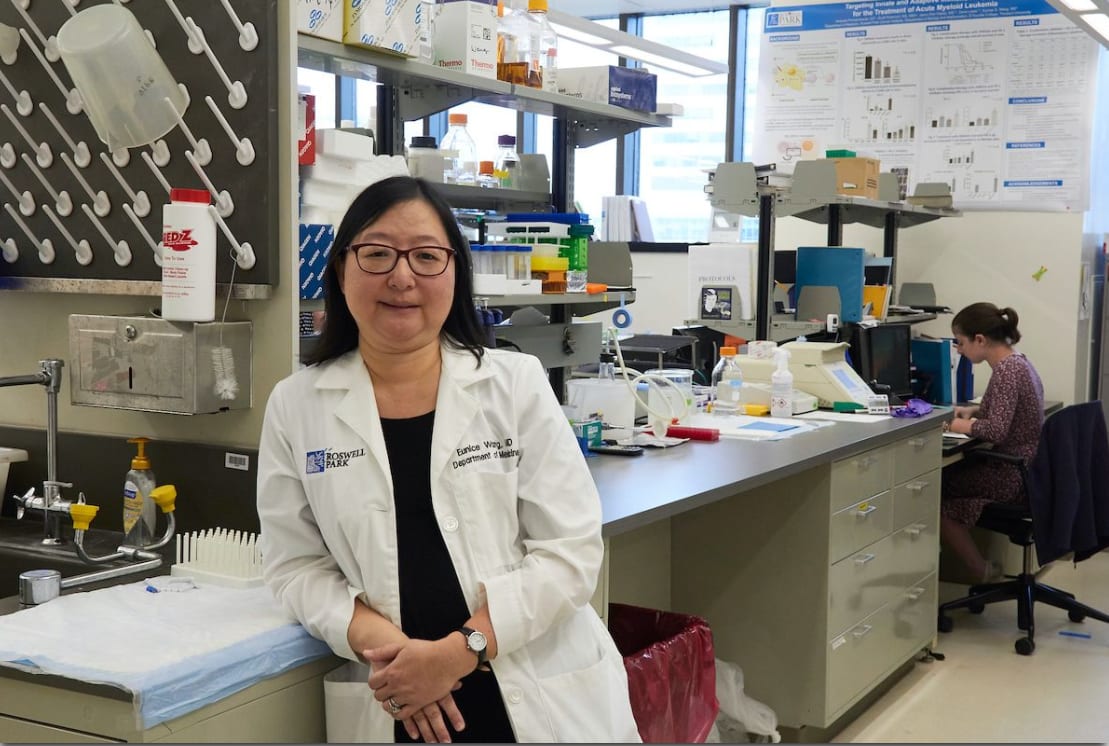
New research co-led by a Roswell Park Comprehensive Cancer Center leukemia expert highlights a promising investigational treatment approach using the targeted therapy ziftomenib for patients with a difficult-to-treat form of acute myeloid leukemia (AML).