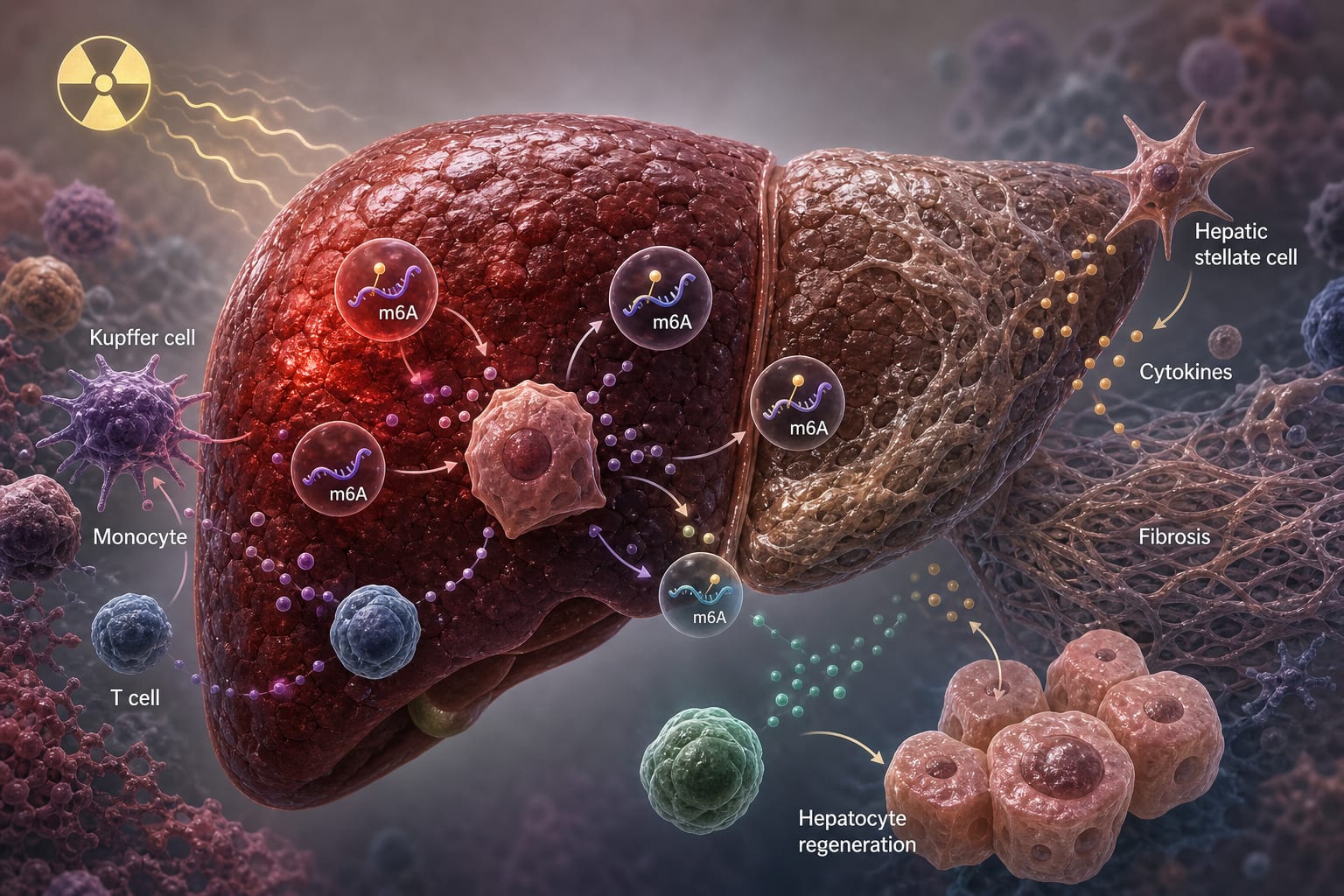
The role and therapeutic prospects of intercellular communication and RNA m6A modification in radiation-induced liver injury
-
By
-
Huicong Yan
-
Yuhang Wang
-
Cunyang Guo
-
Yifei Du
-
Fangqi Tian
-
Ping Xu
-
July 7, 2026
-
Clinical Scorecard: Intercellular Communication and RNA m6A Modifications: Their Impact and Therapeutic Potential in Radiation-Induced Liver Damage
At a Glance
| Category | Detail |
|---|
| Condition | Radiation-Induced Liver Injury (RILI) |
| Key Mechanisms | Intercellular communication and m6A RNA modifications |
| Target Population | Patients undergoing radiotherapy for abdominal and thoracic malignancies |
| Care Setting | Clinical management of radiation-induced complications |
Key Highlights
- RILI incidence ranges from 6% to 66% with cumulative doses of 30–35 Gy.
- RILI can progress from acute inflammation to chronic hepatic fibrosis.
- Intercellular communication and m6A modifications are crucial in RILI pathogenesis.
- Current management strategies include dose constraints and advanced radiotherapy techniques.
- Pharmacological therapies specifically targeting RILI are currently unavailable.
Guideline-Based Recommendations
Diagnosis
- Identify RILI based on clinical symptoms and radiation exposure history.
Management
- Employ rational dose constraints for normal liver tissue during radiotherapy.
Monitoring & Follow-up
- Monitor for symptoms of abdominal pain, hepatomegaly, and ascites post-radiotherapy.
Risks
- Consider factors such as radiation dose, liver volume irradiated, and pre-existing liver diseases.
Patient & Prescribing Data
Patients with abdominal and thoracic malignancies receiving radiotherapy.
Limited effective pharmacological options; focus on advanced radiotherapy techniques.
Clinical Best Practices
- Utilize advanced radiotherapy techniques like proton and heavy ion therapy to reduce RILI risk.
- Investigate molecular mechanisms of RILI for potential therapeutic targets.
Related Resources & Content