Targeting the ISG15+STAT1+ monocyte-driven inflammatory storm with Fedratinib in traumatic lung injury via the JAK2/STAT3/PIM1 axis - Scorecard - MDSpire

Targeting the ISG15+STAT1+ monocyte-driven inflammatory storm with Fedratinib in traumatic lung injury via the JAK2/STAT3/PIM1 axis

  • By

  • Kun Zhang

  • Dan Li

  • Le Gao

  • Mingwei Chen

  • June 19, 2026

  • 0 min

Share

Clinical Scorecard: Inhibiting the ISG15+STAT1+ Monocyte-Driven Inflammatory Response in Traumatic Lung Injury with Fedratinib through the JAK2/STAT3/PIM1 Pathway

At a Glance

CategoryDetail
ConditionTraumatic Lung Injury (TLI)
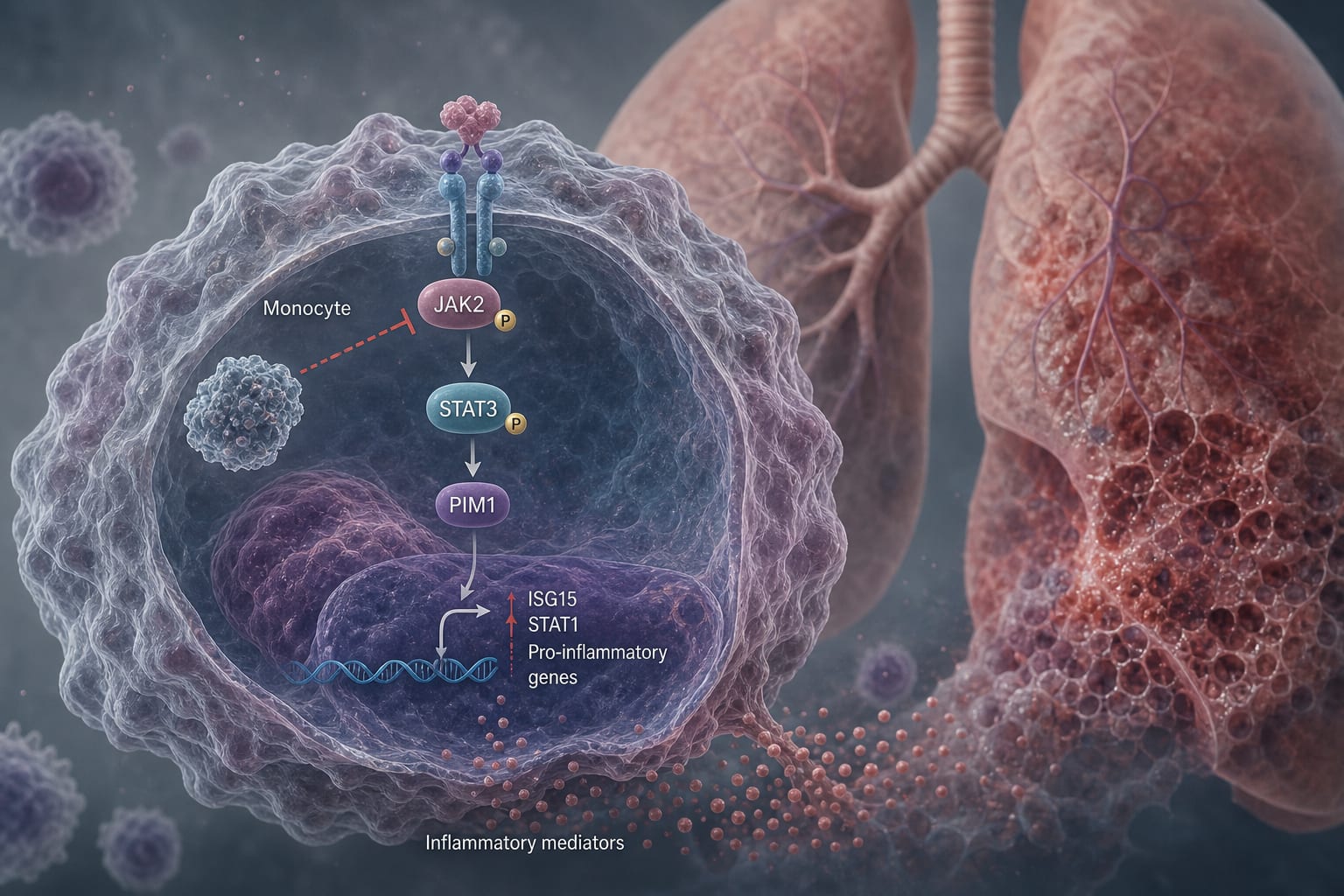
Key MechanismsISG15+STAT1+ monocyte-driven inflammatory response, JAK2/STAT3/PIM1 signaling pathway
Target PopulationTrauma patients at risk for ARDS
Care SettingClinical research and therapeutic intervention

Key Highlights

  • TLI can progress to ARDS with high mortality rates.
  • ISG15+STAT1+ monocytes are key drivers of inflammation in TLI.
  • PIM1 is identified as a core pathogenic gene in TLI.
  • Fedratinib effectively inhibits M1 polarization and inflammatory gene expression.
  • The JAK2/STAT3/PIM1 pathway is activated during the acute trauma phase.

Guideline-Based Recommendations

Diagnosis

  • Utilize single-cell RNA sequencing to analyze immune cell profiles in TLI.

Management

  • Consider Fedratinib for targeted treatment of TLI.

Monitoring & Follow-up

  • Monitor PIM1 expression levels as a potential risk factor for ARDS.

Risks

  • High mortality associated with progression from TLI to ARDS.

Patient & Prescribing Data

Patients with traumatic lung injury at risk for ARDS.

Fedratinib may reverse transcriptomic characteristics of TLI.

Clinical Best Practices

  • Implement precision intervention strategies based on immune cell profiling.
  • Focus on the dynamic balance of macrophage polarization in ARDS management.

Related Resources & Content

    Original Source(s)

    Related Content