How Widespread GLP-1 Advertising May Shape Body Image
-
By
-
Anna Zucker
-
October 19, 2026
Clinical Scorecard: How Widespread GLP-1 Advertising May Shape Body Image
At a Glance
| Category | Detail |
|---|---|
| Condition | Clinical topic addressed by the source article: How Widespread GLP-1 Advertising May Shape Body Image |
| Key Mechanisms | Mechanisms or clinical associations described in the source article. |
| Target Population | Population described in the source article. |
| Care Setting | Advertising appears on social media and television; online assessments may lead to telehealth prescriptions. |
Key Highlights
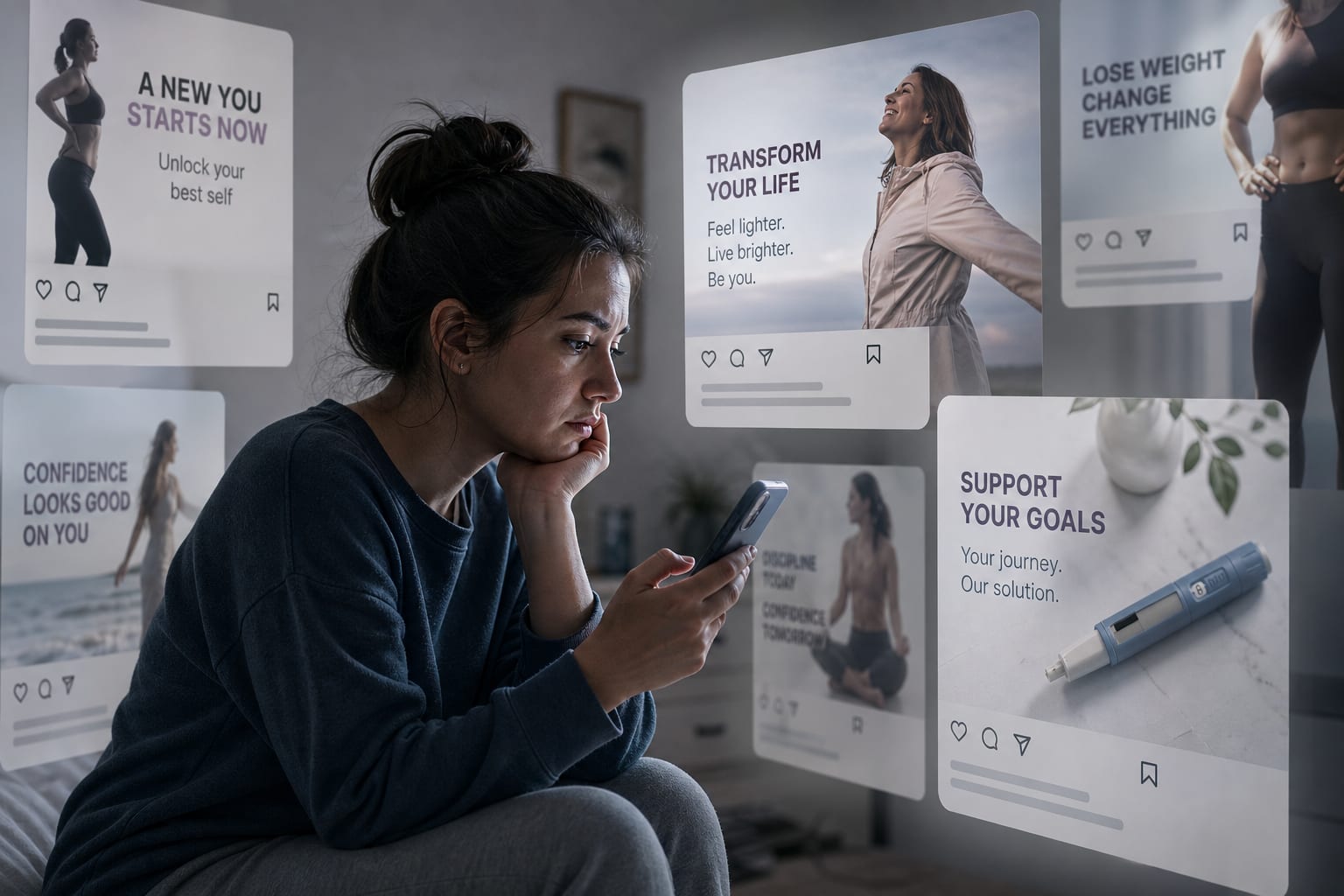
- A 2025 BMC Public Health study examined 90 FDA-approved GLP-1 advertisements on Facebook and Instagram and found emphasis on emotional and psychological effects, including confidence and transformation.
- Research remains limited on how repeated GLP-1 advertising exposure affects body image and disordered-eating outcomes.
- Clinicians raised concerns in open-ended responses to a NEDA community survey about unavoidable advertising and disordered-eating behaviors among clients.
- A 2026 Body Image article states that weight loss does not reliably produce a healthier psychological relationship with one’s body.
- The article says enhanced telehealth screening and more stringent advertising standards may protect vulnerable populations while avoiding stigma toward people who may benefit from treatment.
Guideline-Based Recommendations
Diagnosis
Management
- NEDA reports that clinicians may coach people with eating disorders or in recovery to limit exposure to material reinforcing comparison, body checking, or restriction.
- The article says enhanced telehealth screening and more stringent advertising standards may protect vulnerable populations.
Monitoring & Follow-up
- The 2026 Body Image article argues that body image warrants attention as a motivator, mediator, and moderator throughout GLP-1 treatment.
- The article urges investigation of whether internet-based GLP-1 access influences reasons for use and treatment participation, especially for appearance-related purposes.
Risks
- The article reports concerns about possible links between advertising, body dissatisfaction, and disordered-eating behaviors, while noting that research on specific effects remains limited.
- Dietitian Lauren Newman says GLP-1 medications carry risks, side effects, and potential downsides.
- The 2026 Body Image article states that weight loss may not resolve body dissatisfaction and may involve heightened monitoring or anxiety about weight regain.
Patient & Prescribing Data
Not reported as prescribing data in the source.
The article describes advertisements for FDA-approved GLP-1 products and compounded, non-FDA-approved versions, often directing consumers to online assessments and possible telehealth prescriptions. Dietitian Lauren Newman says the medications carry risks, side effects, and potential downsides.
Clinical Best Practices
- The 2026 Body Image article argues that body image warrants attention throughout GLP-1 treatment.
- NEDA reports that clinicians may coach people with eating disorders or in recovery to limit exposure to content reinforcing comparison, body checking, or restriction.
- Dietitian Lauren Newman says GLP-1 medications carry risks, side effects, and potential downsides.
- NEDA reports that some people continued to see GLP-1 advertisements after attempting to opt out.
Related Resources & Content
- BMC Public Health (2025) study of 90 GLP-1 advertisements on Facebook and Instagram
- Body Image (2026) article on body image in GLP-1 treatment
- National Eating Disorders Association community survey on social media and eating disorders
Based on findings from:
GLP-1 Ads Are Everywhere. What Are They Doing to Our Body Image?
Anna Zucker. Journal Of Medical Internet Research, 2026.
https://www.jmir.org/2026/1/e113477
This content is an AI-generated, fully rewritten summary based on a published scholarly article. It does not reproduce the original text and is not a substitute for the original publication. Readers are encouraged to consult the source for full context, data, and methodology.