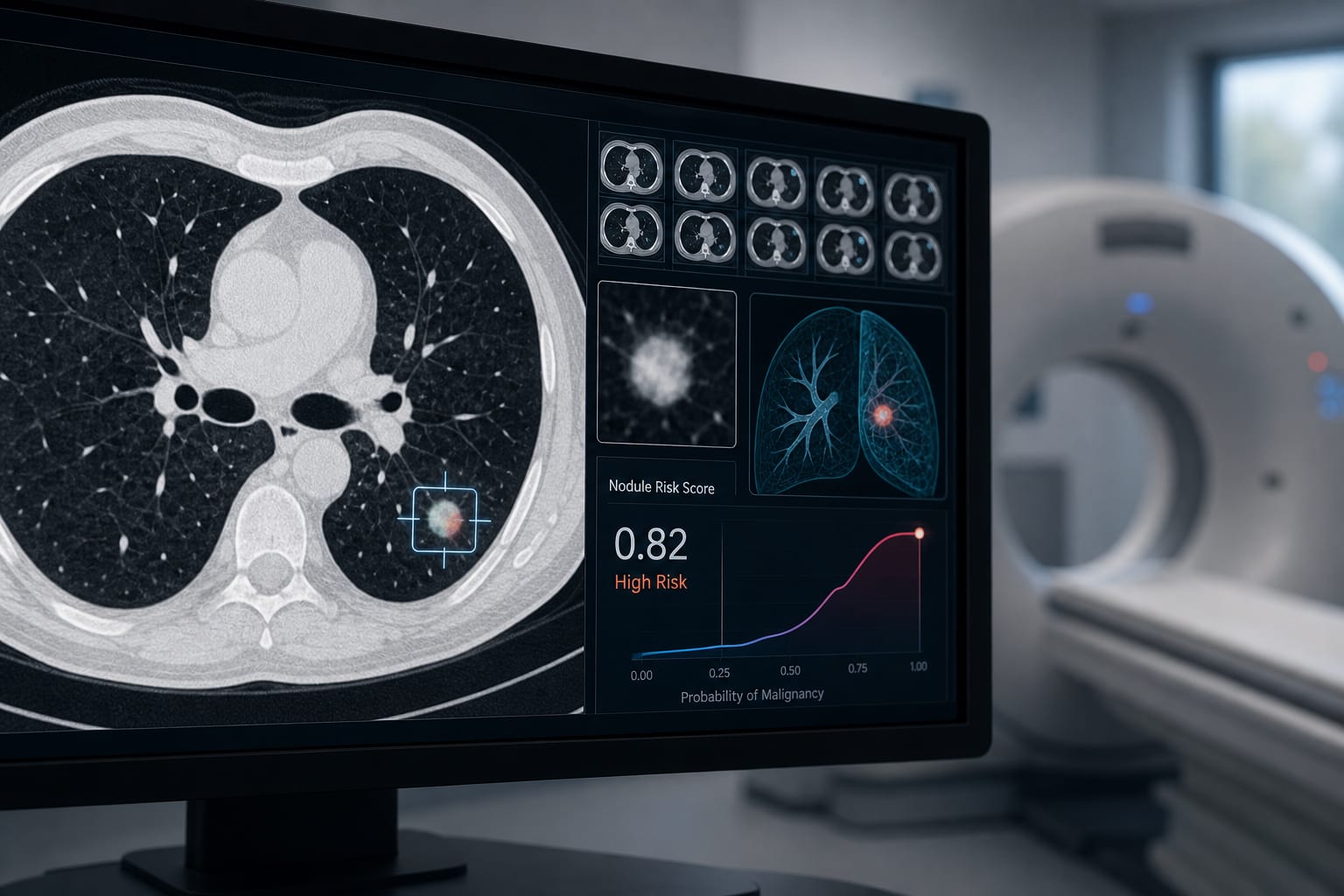
Editorial: Advancing diagnostic excellence in early lung cancer detection
-
By
-
Roger Y. Kim
-
Michael N. Kammer
-
Yeon Wook Kim
-
July 9, 2026
-
Clinical Scorecard: Editorial: Enhancing Diagnostic Precision for Early Detection of Lung Cancer
At a Glance
| Category | Detail |
|---|
| Condition | Lung Cancer |
| Key Mechanisms | Early detection through screening, risk assessment, and innovative diagnostic procedures. |
| Target Population | Individuals with a substantial smoking history and those with detected pulmonary nodules. |
| Care Setting | Clinical settings implementing lung cancer screening and diagnostic procedures. |
Key Highlights
- Lung cancer screening with low-dose CT reduces lung cancer-specific mortality.
- Pulmonary nodules require careful cancer risk assessment due to high benignity.
- Recent innovations in lung biopsy techniques aim to improve diagnostic accuracy.
Guideline-Based Recommendations
Diagnosis
- Utilize low-dose computed tomography for lung cancer screening in high-risk populations.
- Implement machine learning models for assessing pulmonary nodule cancer risk.
Management
- Consider advanced navigational techniques in bronchoscopy and needle biopsy for suspicious nodules.
Monitoring & Follow-up
- Monitor pulmonary nodules based on volume doubling time and other imaging characteristics.
Risks
- Acknowledge the procedural risks associated with lung biopsies.
Patient & Prescribing Data
Patients with suspected lung cancer or detected pulmonary nodules.
Education on screening and shared decision-making is crucial for effective management.
Clinical Best Practices
- Enhance clinician education on lung cancer screening guidelines.
- Utilize a standardized approach for diagnosing unique lung cancer subtypes.
Related Resources & Content