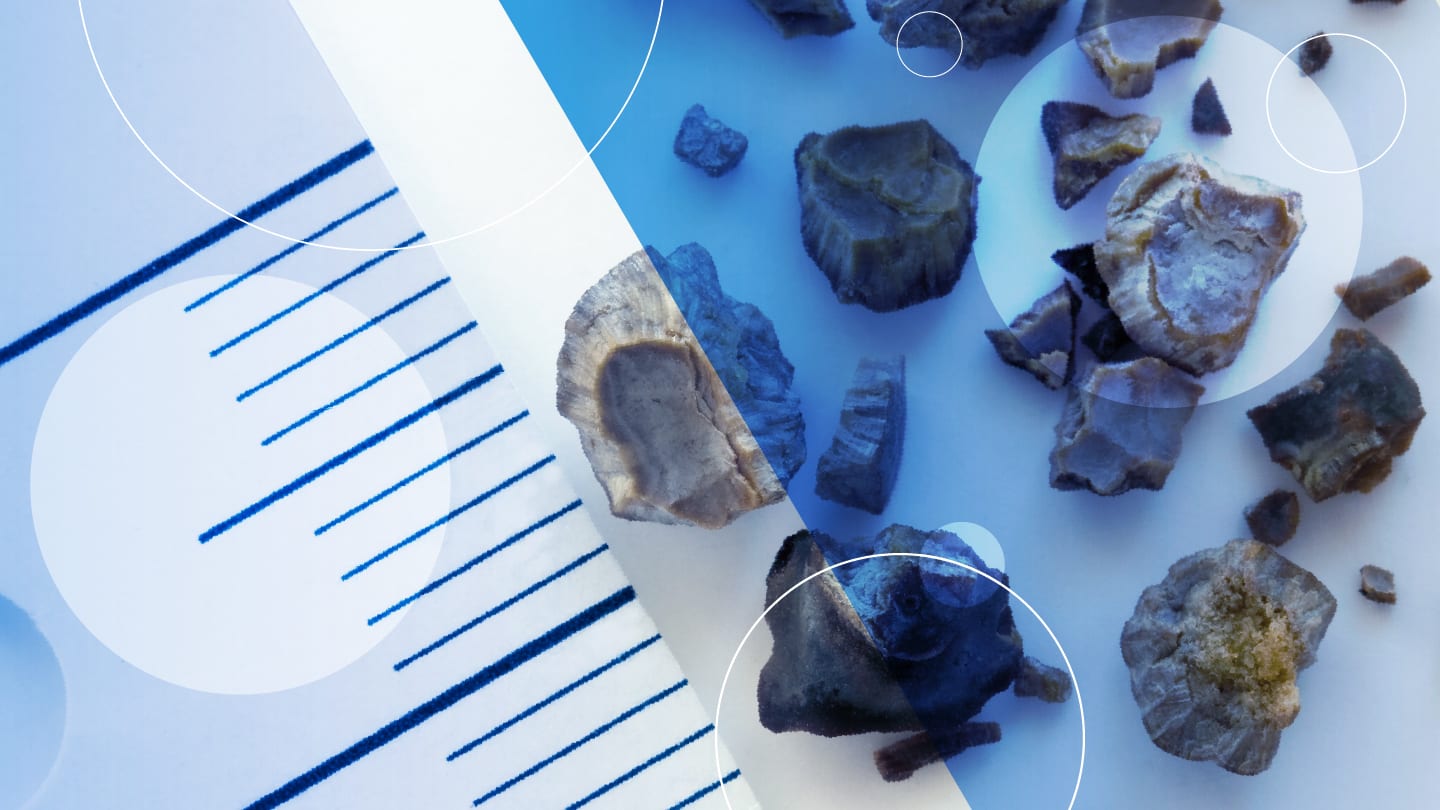
Clinical Scorecard: AI Improves Kidney Stone Identification
At a Glance
| Category | Detail |
|---|---|
| Condition | Kidney stones and prediction of stone composition |
| Key Mechanisms | An AI model combines age, sex, and 24-hour urine measurements to classify stones into four composition categories. |
| Target Population | Patients with kidney stones who have kidney stone analysis and 24-hour urine testing available; the model was developed using data from 13,000 patients and evaluated in 1,653. |
| Care Setting | Clinical evaluation and management of kidney stones, particularly when a stone is unavailable for direct laboratory analysis. |
Key Highlights
- The AI model correctly classified 73% of stones in an independent dataset, compared with 33% using urinary supersaturation calculations alone.
- The model predicted predominantly calcium oxalate, predominantly calcium phosphate, uric acid, and other stone compositions.
- The model used patient age, sex, and urinary measurements from tests already performed in routine care.
- Researchers state that AI predictions should supplement, not replace, direct stone analysis and established clinical assessments.
- Further evaluation is needed to determine whether clinical implementation improves treatment decisions or reduces recurrence.
Guideline-Based Recommendations
Diagnosis
- Direct laboratory analysis remains the most reliable method for establishing kidney stone composition.
- When a stone is unavailable, the AI model may provide composition predictions using age, sex, and 24-hour urine measurements.
Management
- Use AI predictions as supplementary diagnostic information, not as a replacement for direct stone analysis or established clinical assessments.
Monitoring & Follow-up
- The study evaluated model performance across age and sex groups and reported superior performance to supersaturation calculations in those groups.
- Further evaluation of clinical implementation is needed to assess effects on treatment decisions and recurrence.
Risks
- Stones may not be recovered after passage or surgical removal, limiting direct composition analysis.
- Urinary supersaturation calculations alone provide limited information about the composition of an existing stone.
Patient & Prescribing Data
The model was developed using 13,000 patients who had kidney stone analysis and 24-hour urine testing within 90 days between September 2015 and March 2024; it was evaluated in an independent dataset of 1,653 patients.
The article reports no prescribing regimen. It states that composition predictions could provide diagnostic information to help clinicians select treatments and recurrence-prevention strategies, but clinical implementation requires further evaluation.
Clinical Best Practices
- Use direct stone analysis when a stone is available, as it remains the most reliable method for determining composition.
- When direct analysis is unavailable, consider the AI model's predictions as supplementary information alongside established clinical assessments.
- Do not interpret urinary supersaturation calculations alone as definitive evidence of an existing stone's composition.
Related Resources & Content
Based on findings from:
AI Improves Kidney Stone Identification
The Pathologist, 2026.
https://www.thepathologist.com/issues/2026/articles/november/ai-improves-kidney-stone-identification/
This content is an AI-generated, fully rewritten summary based on a published scholarly article. It does not reproduce the original text and is not a substitute for the original publication. Readers are encouraged to consult the source for full context, data, and methodology.