Evaluating Co-Designed vs Researcher-Driven Personalized Feedback Formats in a Brief Digital Alcohol Use Intervention: Mixed Methods Study - Scorecard - MDSpire
Advertisement
Evaluating Co-Designed vs Researcher-Driven Personalized Feedback Formats in a Brief Digital Alcohol Use Intervention: Mixed Methods Study
Clinical Scorecard: Comparing Co-Designed and Researcher-Led Personalized Feedback Approaches in a Short Digital Intervention for Alcohol Use: A Mixed Methods Analysis
At a Glance
Category
Detail
Condition
Hazardous Drinking
Key Mechanisms
Personalized feedback through co-design and researcher-led approaches
Target Population
Youth aged 16 to 25 years
Care Setting
Digital health interventions
Key Highlights
Alcohol misuse accounts for 4.7% of global deaths and significant disability-adjusted life years lost.
Co-design engages stakeholders to improve digital health services and interventions.
Existing interventions have shown a 32% to 35% reduction in alcohol intake among hazardous drinkers.
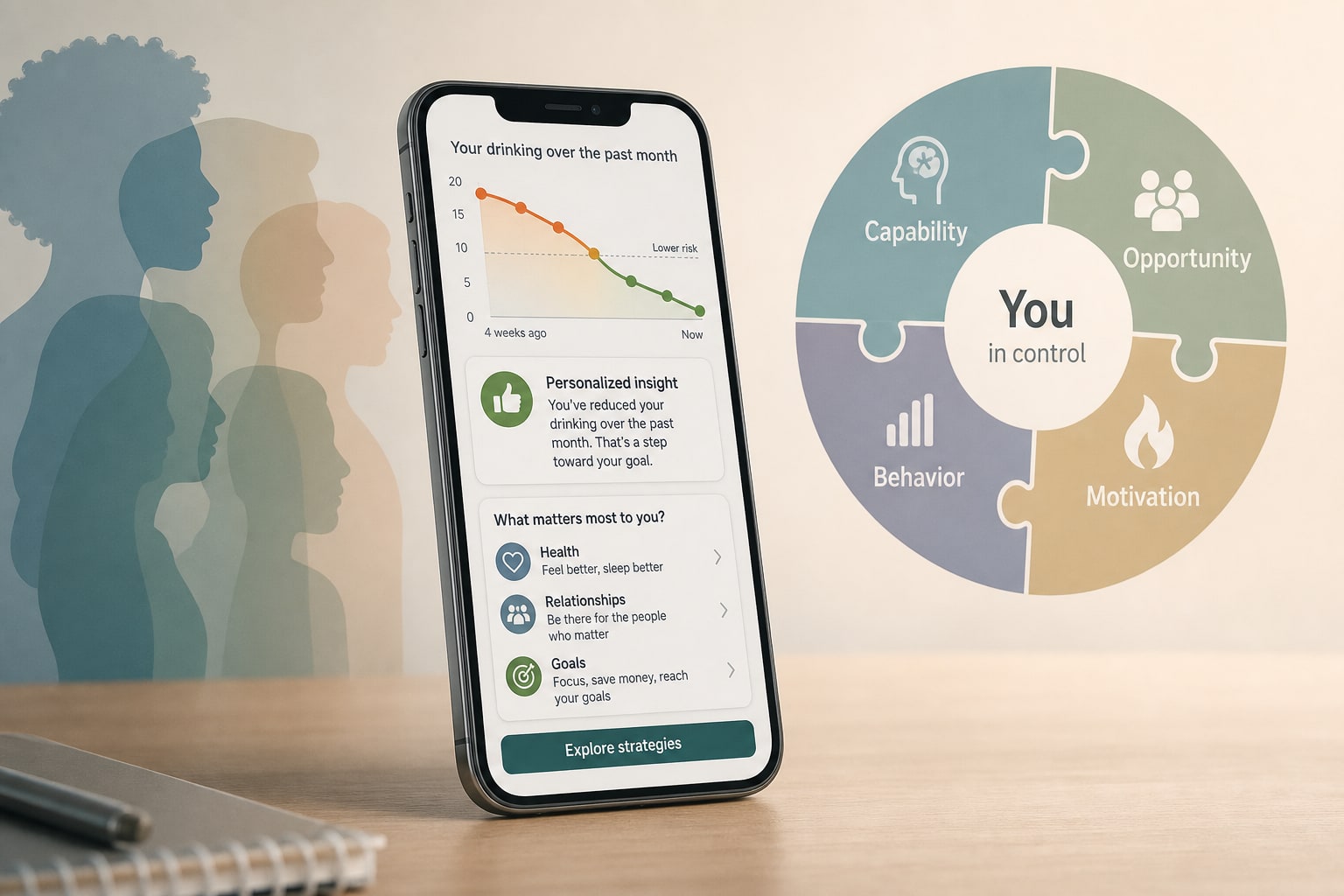
The COM-B model assesses behavior change based on capacity, opportunity, and motivation.
No prior studies have directly compared co-designed interventions with those developed without stakeholder input.
Guideline-Based Recommendations
Diagnosis
Identify hazardous drinking using WHO definitions.
Management
Implement brief digital interventions with personalized feedback.
Monitoring & Follow-up
Evaluate changes in alcohol intake behavior over time.
Risks
Consider the potential for alcohol-related health issues and social consequences.
Patient & Prescribing Data
Hazardous drinkers, particularly youth aged 16 to 25 years.
Personalized feedback can be enhanced through stakeholder involvement.
Clinical Best Practices
Engage youth in the co-design of health interventions to improve effectiveness.
Utilize the COM-B model for assessing behavior change interventions.
Incorporate feedback mechanisms to enhance user experience and outcomes.
Clinicians screened just one in three older patients for drug use, and discussed cannabis with fewer still—leaving women and minoritized groups out most.