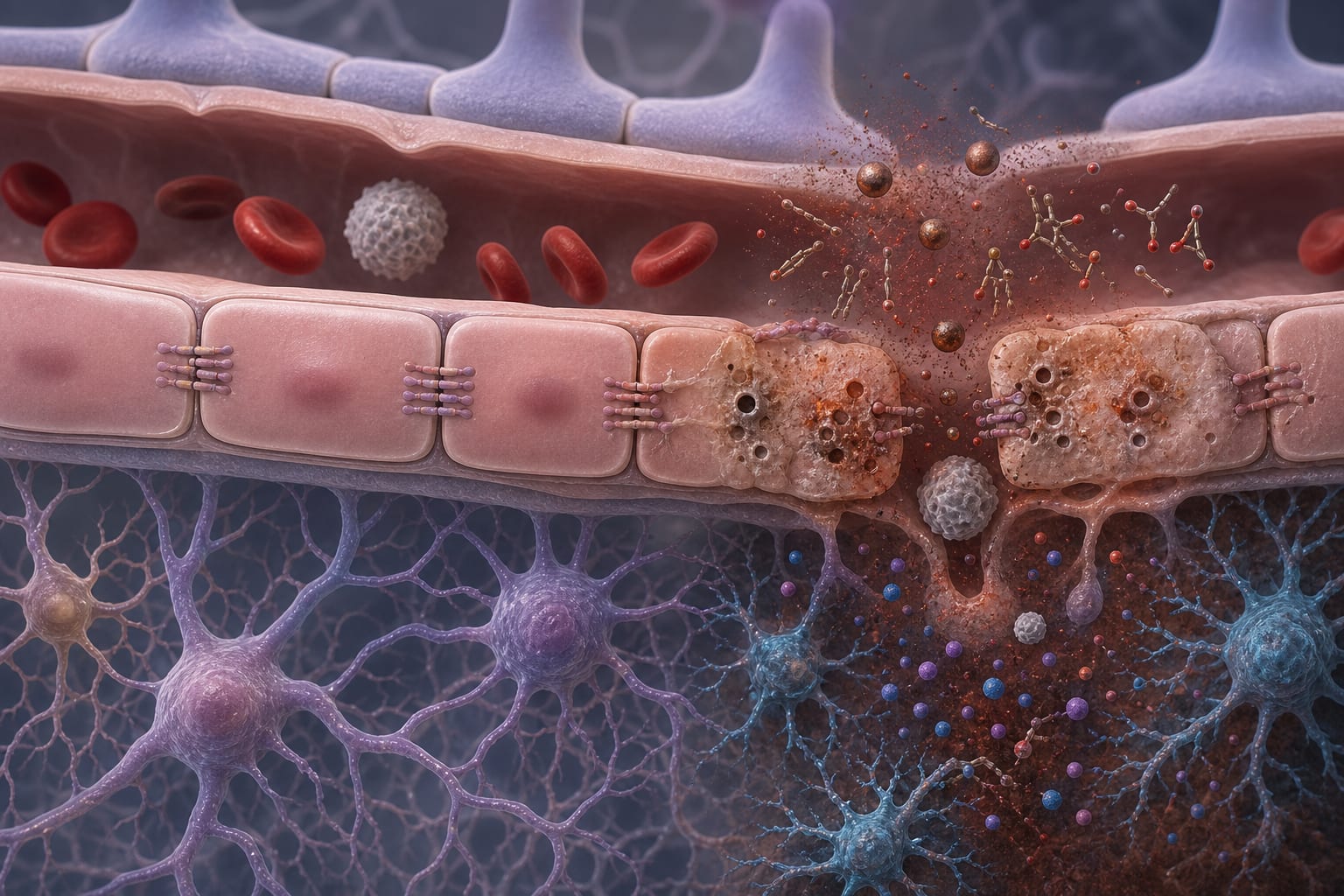
Endothelial ferroptosis in blood–brain barrier dysfunction and neuroinflammation: mechanisms and immune–vascular crosstalk
-
By
-
Yue Liu
-
Lei Yin
-
Peng Zhang
-
Wangwen Li
-
June 4, 2026
-
Clinical Scorecard: Ferroptosis in Endothelial Cells: Implications for Blood-Brain Barrier Integrity and Neuroinflammatory Responses
At a Glance
| Category | Detail |
|---|
| Condition | Ferroptosis in brain microvascular endothelial cells (BMECs) |
| Key Mechanisms | Iron handling, antioxidant defense (SLC7A11-GPX4 axis), lipid peroxidation, junctional remodeling |
| Target Population | Individuals with CNS disorders, including ischemic stroke and neurodegenerative diseases |
| Care Setting | Clinical and research settings focused on CNS pathology |
Key Highlights
- Ferroptosis contributes to BBB dysfunction and neuroinflammation.
- BMECs are uniquely vulnerable to ferroptotic stress.
- Endothelial ferroptosis may amplify immune responses at the neurovascular interface.
- Direct experimental evidence links BMEC ferroptosis to hypoxia-induced BBB injury.
- The review emphasizes the need for BMEC-specific models and biomarkers.
Guideline-Based Recommendations
Diagnosis
- Evaluate BMEC ferroptosis in the context of BBB dysfunction.
Management
- Consider therapeutic strategies targeting BMEC ferroptosis.
Monitoring & Follow-up
- Utilize BMEC-targeted delivery approaches and biomarkers for monitoring.
Risks
- Assess physiological risks of systemic or prolonged ferroptosis blockade.
Patient & Prescribing Data
Patients with CNS disorders, particularly those experiencing BBB dysfunction.
Therapeutic strategies should focus on modulating endothelial ferroptosis.
Clinical Best Practices
- Implement BMEC-specific models for research.
- Utilize human BBB systems for translational studies.
- Carefully evaluate biomarkers for endothelial ferroptosis.
Related Resources & Content