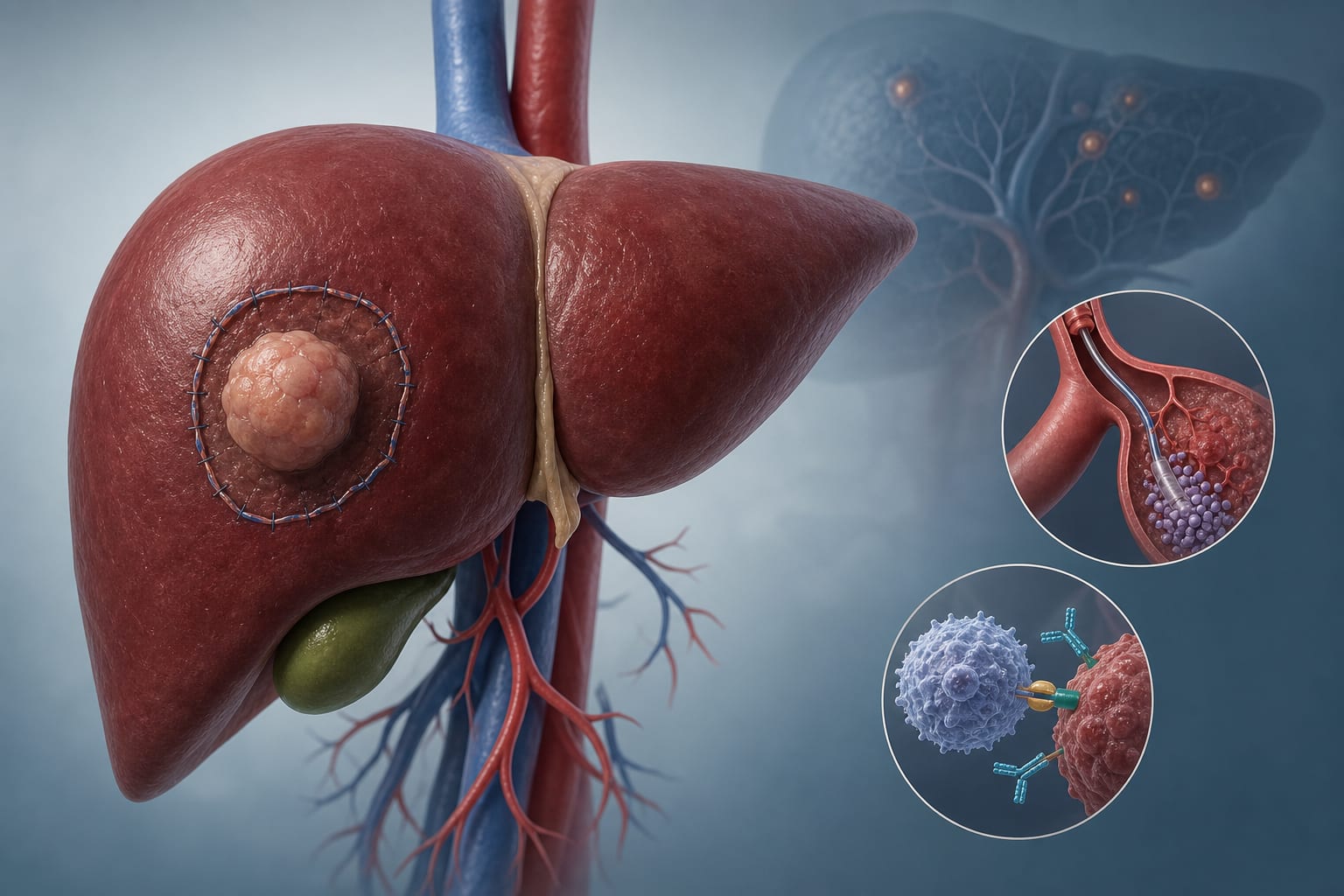
Comparative efficacy of postoperative adjuvant transcatheter arterial chemoembolization versus lenvatinib plus tislelizumab in patients with BCLC stage 0 -B hepatocellular carcinoma after radical resection - Scorecard - MDSpire
Advertisement
Comparative efficacy of postoperative adjuvant transcatheter arterial chemoembolization versus lenvatinib plus tislelizumab in patients with BCLC stage 0 -B hepatocellular carcinoma after radical resection
Clinical Scorecard: Efficacy Comparison of Postoperative Adjuvant Transcatheter Arterial Chemoembolization Versus Lenvatinib Combined with Tislelizumab in BCLC Stage 0-B Hepatocellular Carcinoma Patients Following Radical Resection
At a Glance
Category
Detail
Condition
Hepatocellular Carcinoma (HCC)
Key Mechanisms
Postoperative adjuvant transcatheter arterial chemoembolization (PA-TACE) and lenvatinib plus tislelizumab (PA-LT) improve recurrence-free survival (RFS) and overall survival (OS).
Target Population
Patients with BCLC stage 0–B HCC at high risk of recurrence following radical liver resection.
Care Setting
Retrospective evaluation in clinical centers.
Key Highlights
614 patients evaluated for RFS and OS after radical resection.
Both PA-TACE and PA-LT significantly improved RFS and OS compared to LR alone.
No significant differences in RFS or OS between PA-TACE and PA-LT groups.
Median RFS: 44.00 months (PA-TACE) vs. 40.50 months (PA-LT).
Median OS: 69.00 months (PA-TACE) vs. 65.00 months (PA-LT).
Guideline-Based Recommendations
Diagnosis
Histologically confirmed HCC with negative margins (R0 resection).
Presence of at least one recurrence risk factor.
Management
Consider PA-TACE or PA-LT for patients with high-risk recurrence factors post-resection.
Monitoring & Follow-up
Regular follow-up for recurrence assessment in patients post radical resection.
Risks
High recurrence rate of 50%–70% within 5 years after radical resection.
Patient & Prescribing Data
Patients with BCLC stage 0–B HCC and at least one high-risk recurrence factor.
Both PA-TACE and PA-LT have acceptable safety profiles with no severe adverse events reported.
Clinical Best Practices
Utilize propensity score matching to enhance study robustness.
Monitor for recurrence in patients with identified high-risk factors.
Harold Burstein, MD, PhD, and Ana C. Garrido-Castro, MD discuss results from the Saci-IO HR+ trial, which were presented at the 2026 ESMO Breast Cancer Congress.