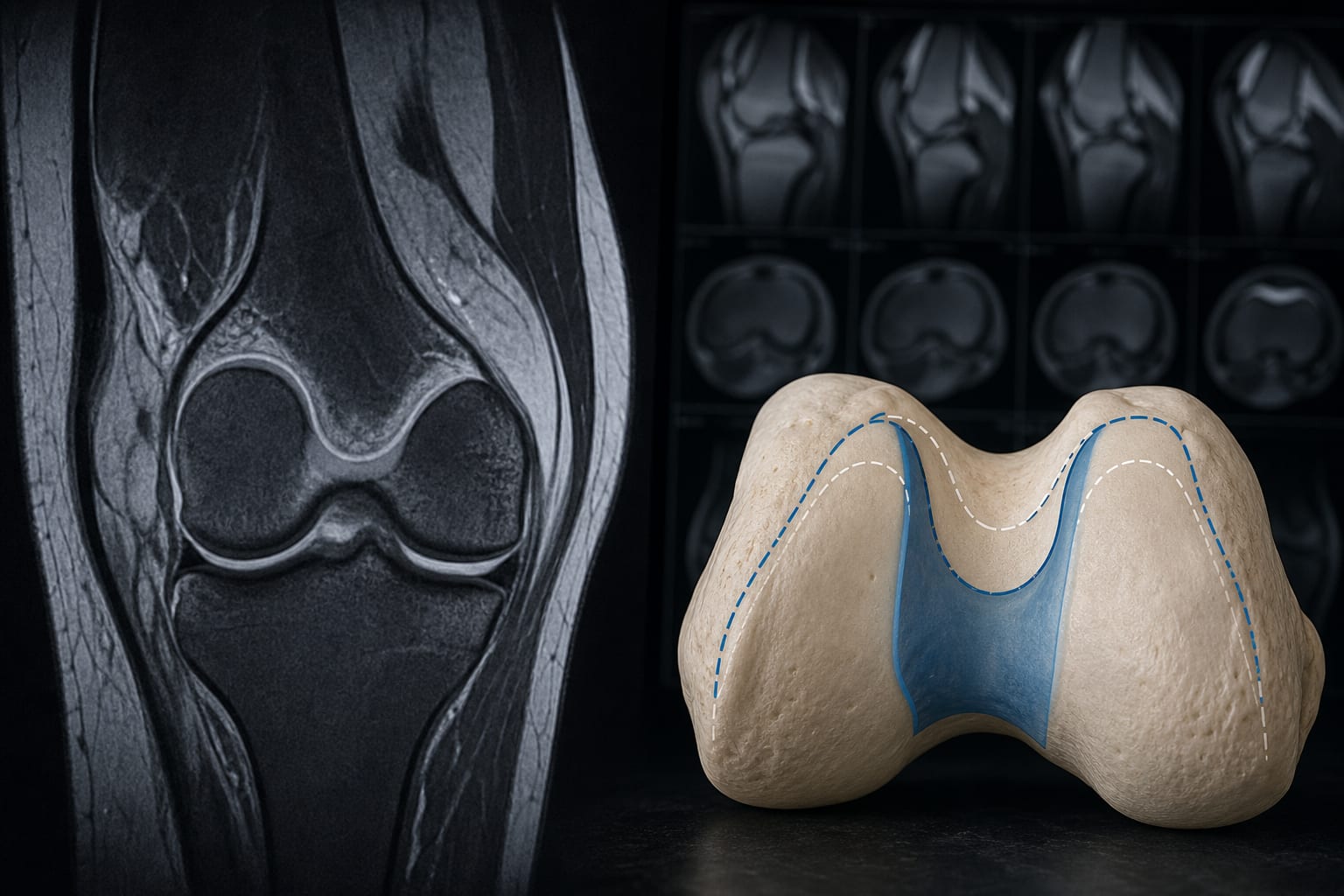
Clinical Scorecard: Post-surgical Changes and Developmental Enhancements in Femoral Trochlear Dysplasia Among Children with Habitual Patellar Dislocation
At a Glance
Category
Detail
Condition
Habitual Patellar Dislocation (HPD)
Key Mechanisms
Trochlear dysplasia (TD) as a primary causative factor for HPD; postoperative changes in trochlear morphology assessed via MRI.
Target Population
Children under 10 years old with HPD
Care Setting
Pediatric orthopedic surgery
Key Highlights
Significant postoperative improvements in trochlear morphology were observed.
Preoperative age and sulcus angle correlated positively with postoperative TD.
Younger age (<73.5 months) is associated with better postoperative outcomes.
Guideline-Based Recommendations
Diagnosis
MRI is recommended for assessing trochlear morphology in children with HPD.
Management
Surgical intervention is indicated for children with HPD, particularly those under 10 years.
Monitoring & Follow-up
Follow-up MRI assessments are necessary to evaluate postoperative trochlear development.
Risks
Preoperative age is an independent risk factor for poor trochlear development.
Patient & Prescribing Data
Pediatric patients diagnosed with HPD, aged 0 to 10 years.
Lateral retinacular release and MPFL reconstruction are common surgical techniques employed.
Clinical Best Practices
Early surgical intervention is recommended for better prognosis in trochlear remodeling.
Regular monitoring of trochlear morphology post-surgery is essential.