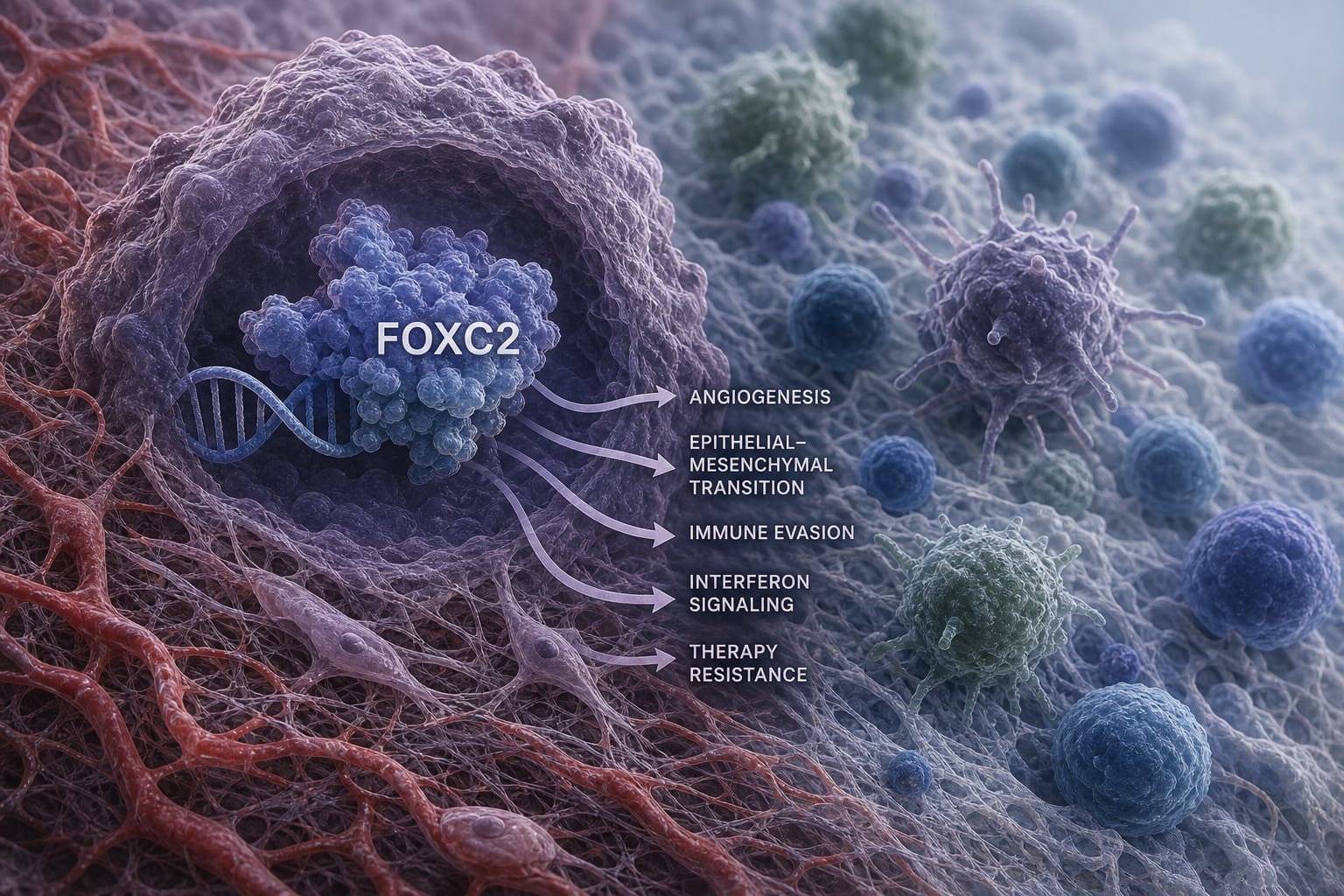
FOXC2: Evaluating Its Potential as a Predictive Biomarker for Cancer Immunotherapy
-
By
-
Kristian M. Hargadon
-
June 30, 2026
Clinical Scorecard: FOXC2: Evaluating Its Potential as a Predictive Biomarker for Cancer Immunotherapy
At a Glance
| Category | Detail |
|---|
| Condition | Cancer Immunotherapy |
| Key Mechanisms | FOXC2 dysregulation impacts tumor immune evasion and influences tumor immune microenvironment. |
| Target Population | Patients undergoing cancer immunotherapy, particularly melanoma patients. |
| Care Setting | Oncology |
Key Highlights
- FOXC2 is implicated in tumor angiogenesis, metabolic adaptation, and immune evasion.
- Elevated FOXC2 expression correlates with poor prognosis in melanoma patients treated with immunotherapy.
- FOXC2 dysregulation is linked to reduced CD8+ T cell infiltration in tumors.
- FOXC2 may drive resistance to both chemotherapy and immunotherapy.
- Future studies are needed to validate FOXC2's role as a predictive biomarker.
Guideline-Based Recommendations
Diagnosis
- Assess FOXC2 expression levels in tumor tissues for prognostic evaluation.
Management
- Consider FOXC2 status when determining treatment strategies for cancer immunotherapy.
Monitoring & Follow-up
- Monitor changes in FOXC2 expression during treatment to evaluate response.
Risks
- High FOXC2 expression may indicate a risk of poor response to immunotherapy.
Patient & Prescribing Data
Melanoma patients receiving immunotherapy.
FOXC2 expression may guide the selection of immunotherapeutic agents.
Clinical Best Practices
- Incorporate FOXC2 analysis in the evaluation of tumor samples.
- Utilize FOXC2 expression data to inform treatment decisions.
Related Resources & Content