Infections and CAR-T cells for the treatment of lymphoid malignancies: a narrative review
-
By
-
Carolina Secreto
-
Filippo Fasano
-
Davide Stella
-
Mattia Novo
-
Barbara Botto
-
Marco Cerrano
-
Roberto Freilone
-
Alessandro Busca
-
June 16, 2026
-
Clinical Scorecard: Infectious Complications and the Role of CAR-T Cell Therapy in Lymphoid Malignancies: A Comprehensive Review
At a Glance
| Category | Detail |
|---|
| Condition | |
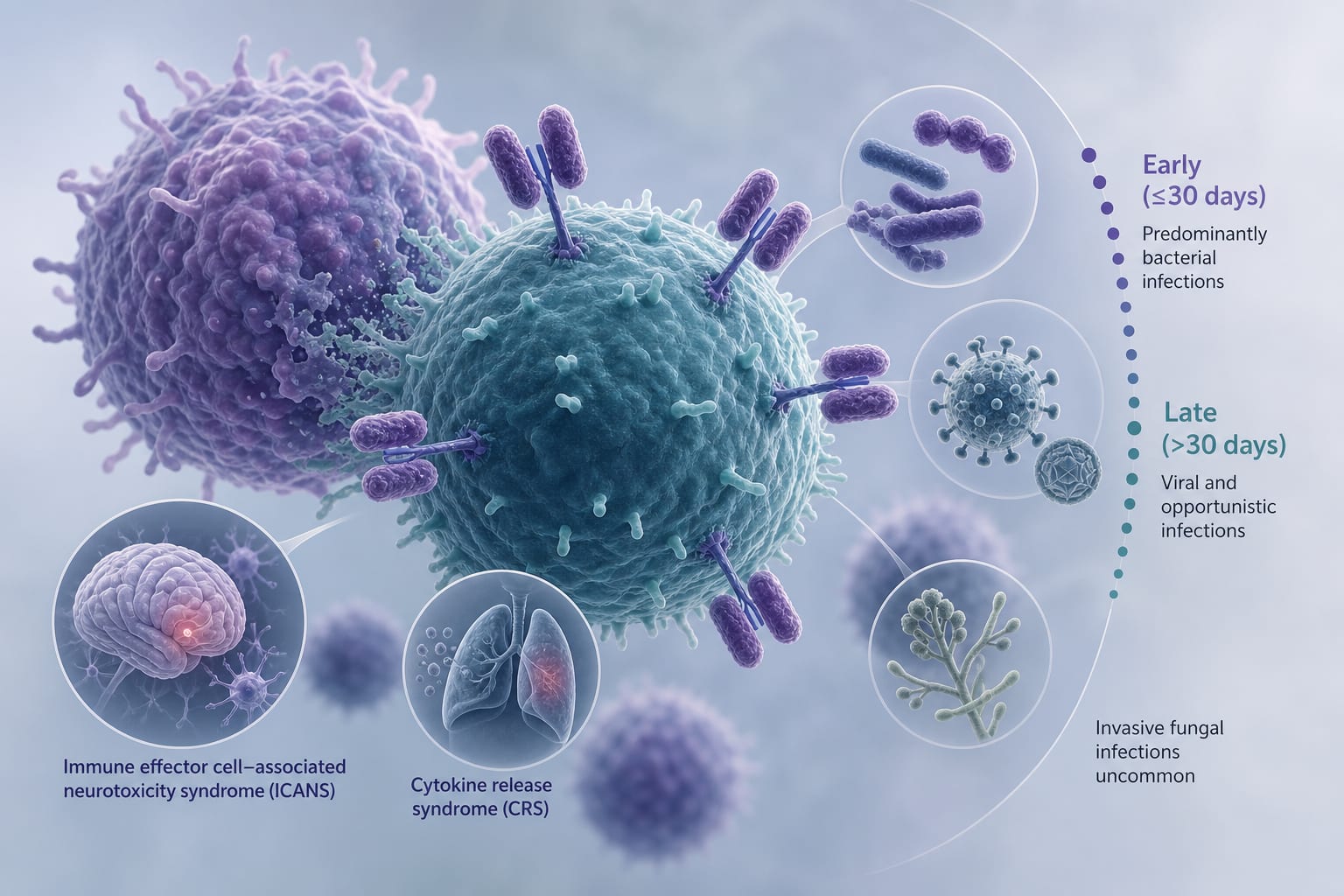
| Key Mechanisms | Biphasic infection pattern; early bacterial infections followed by late viral or opportunistic infections; invasive fungal infections are rare. |
| Target Population | |
| Care Setting | |
Key Highlights
- Infections are a major cause of non-relapse mortality in CAR-T therapy patients, attributed to infections.
Guideline-Based Recommendations
Diagnosis
Management
- Implement strategies to mitigate infectious risk, including prophylaxis with levofloxacin and fluconazole during neutropenia.
Monitoring & Follow-up
Risks
Patient & Prescribing Data
Patients with relapsed/refractory large B-cell lymphoma, mantle cell lymphoma, and follicular lymphoma.
Patients often have a history of multiple previous treatments and may present with hypogammaglobulinemia.
Clinical Best Practices
- Conduct thorough pre-treatment assessments for infection risk factors, including history of hypogammaglobulinemia.
- Ensure close outpatient follow-up for managing mild infections, as most infections are mild and managed in outpatient settings.
Related Resources & Content