Clinical Scorecard: Selection of Dissection Planes Based on Anatomy in Endoscopic Brow Lifts: A Comprehensive Review of Supraperiosteal, Subperiosteal, and Combined Techniques
At a Glance
Category
Detail
Condition
Endoscopic Brow Lift
Key Mechanisms
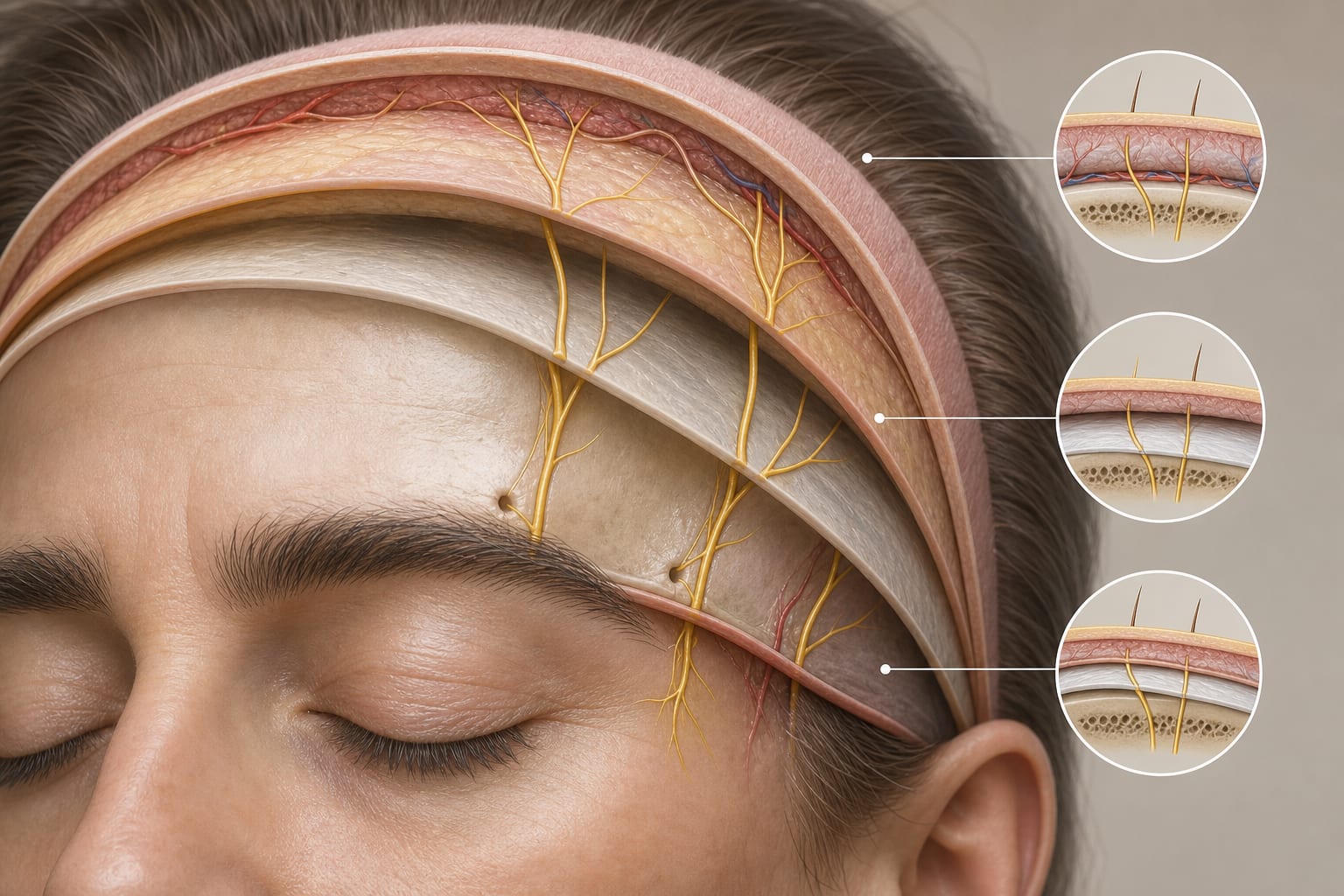
Supraperiosteal, subperiosteal, and combined techniques with varying anatomical relationships and risk of neurovascular injury.
Target Population
Patients seeking upper facial rejuvenation.
Care Setting
Minimally invasive surgical settings.
Key Highlights
Endoscopic brow lift offers reduced scarring and shorter recovery time compared to traditional methods.
Three principal dissection planes: supraperiosteal, subperiosteal, and combined approaches.
Anatomical variability of the supraorbital nerve complicates surgical standardization.
Multiplane approach may balance surgical efficacy and complication avoidance.
Nerve safety is a critical consideration in dissection plane selection.
Guideline-Based Recommendations
Diagnosis
Assess anatomical relationships and variations of the supraorbital nerve.
Management
Select dissection plane based on anatomical insights and clinical objectives.
Monitoring & Follow-up
Monitor for sensory complications post-surgery.
Risks
Consider risk of neurovascular injury, particularly to the supraorbital nerve.