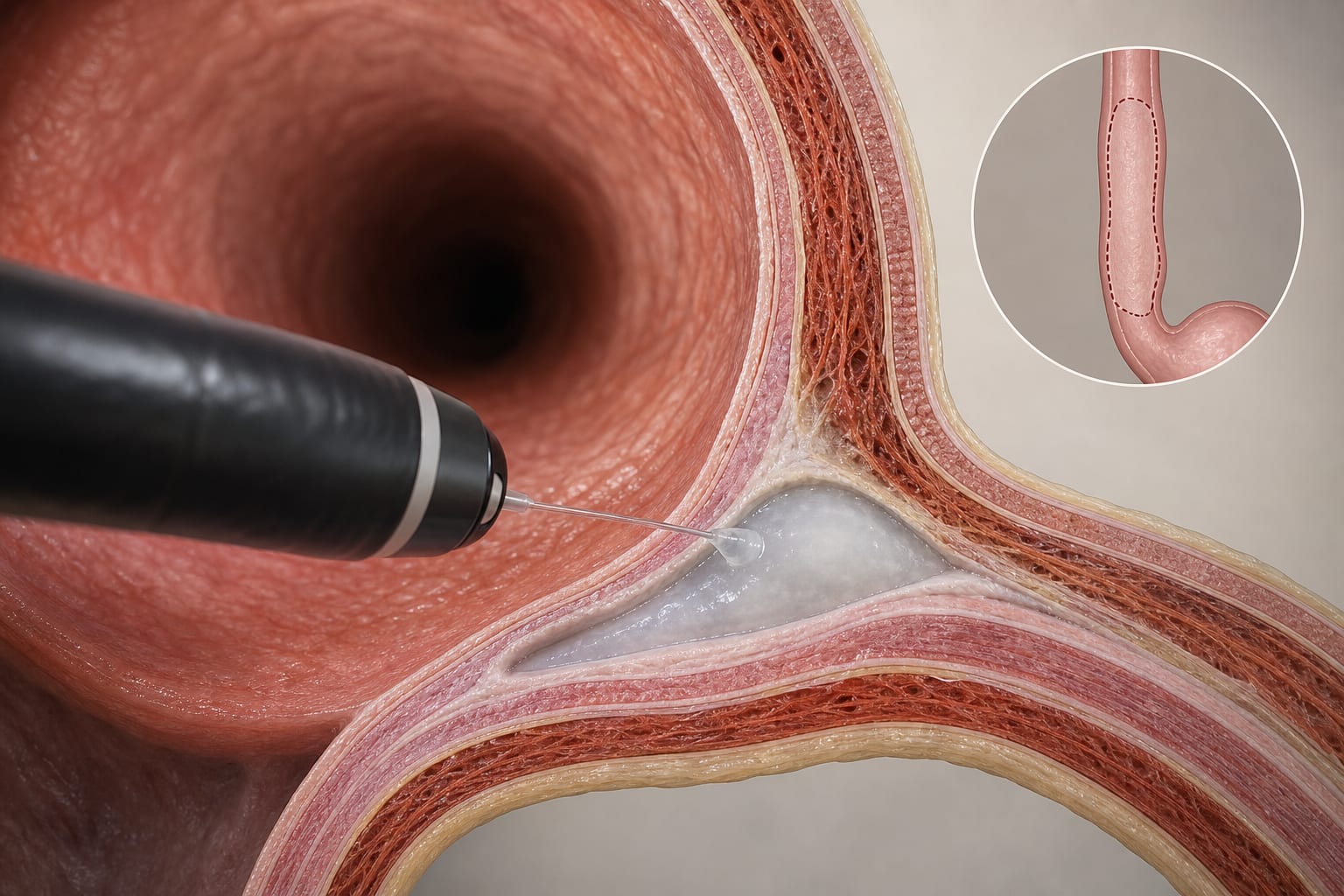
Risk factors for esophageal stricture after circumferential endoscopic submucosal dissection: a preliminary, multicenter, retrospective, case-control study
By
Yang Bai
Wei-Xing Yang
Min Qiao
Xin Yang
June 11, 2026
Clinical Scorecard: Identifying Risk Factors for Esophageal Stricture Following Circumferential Endoscopic Submucosal Dissection: A Preliminary Multicenter Retrospective Case-Control Investigation
At a Glance
Category Detail
Condition Key Mechanisms Longitudinal length of circumferential involvement and steroid-based prophylaxis (specific claims about SSPS should be removed). Target Population Care Setting
Key Highlights
Longitudinal length of circumferential involvement >50 mm is an independent risk factor for stricture (OR 9.10). Submucosal steroid pre-injection strategy (SSPS) shows significant protective effect compared to combined steroid therapy (CST) (OR 0.22). Stricture incidence remains high despite prophylactic measures. Subgroup analysis indicates extensive circumferential involvement is associated with stricture in CST but not in SSPS group. Guideline-Based Recommendations
Diagnosis
Confirm esophageal stricture via endoscopy 3 months post-cESD. Management
Consider SSPS as a prophylactic measure against post-cESD stricture (remove if unsupported). Monitoring & Follow-up
Regular endoscopic evaluation post-cESD to assess for stricture development. Risks
Potential for high incidence of esophageal stricture post-cESD. Patient & Prescribing Data
Patients with superficial esophageal cancer undergoing cESD
SSPS may mitigate stricture risk in high-risk lesions compared to CST
Clinical Best Practices
Assess longitudinal length of circumferential involvement during pre-procedure evaluations. Related Resources & Content