The immunosuppressive tumor microenvironment in glioblastoma
-
By
-
Jing Yang
-
Jie Li
-
Ming Jin
-
Yongping Lu
-
Li Zhang
-
July 2, 2026
-
Clinical Scorecard: The Role of an Immunosuppressive Microenvironment in Glioblastoma Tumors
At a Glance
| Category | Detail |
|---|
| Condition | Glioblastoma (GBM) |
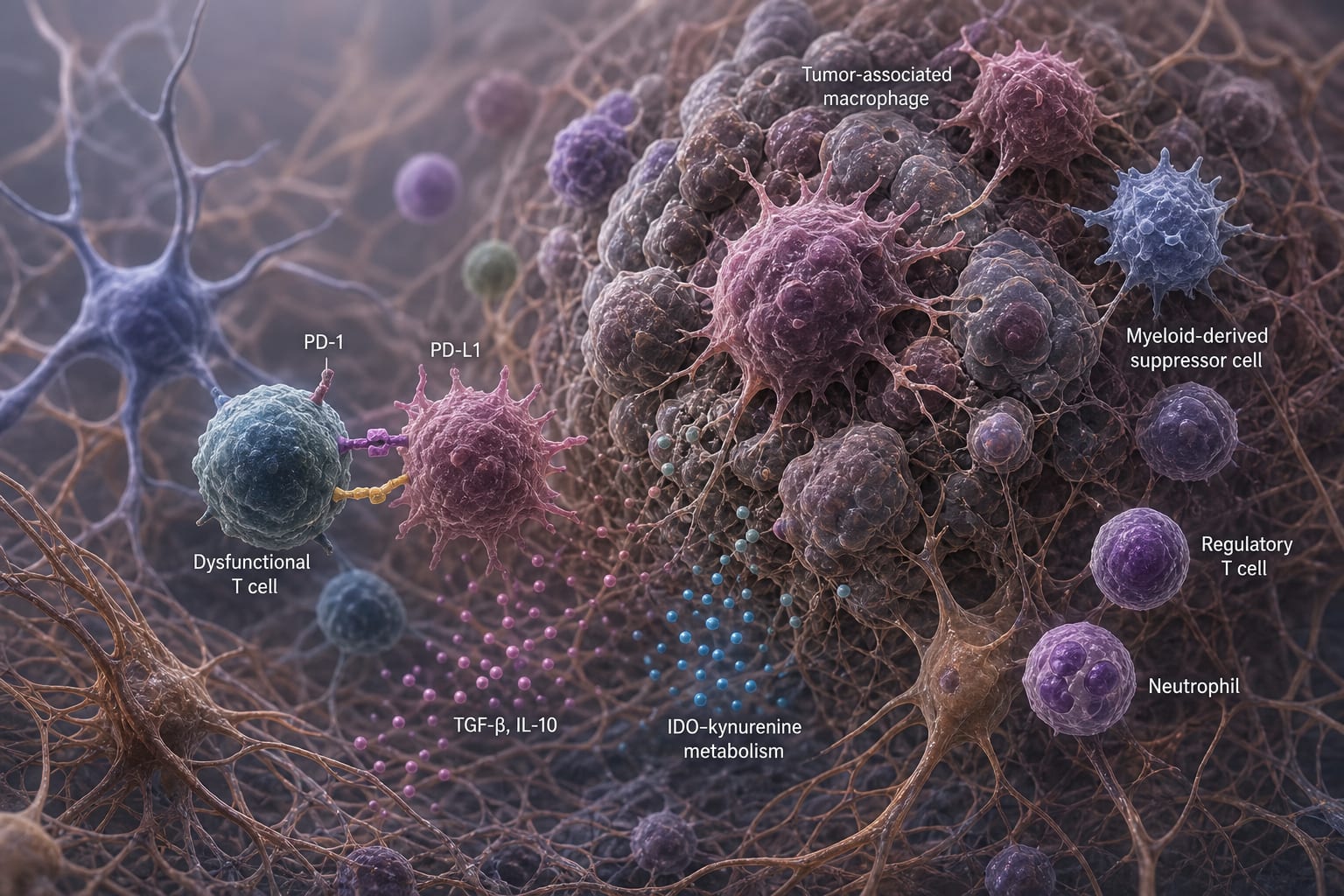
| Key Mechanisms | Immunosuppressive tumor microenvironment characterized by immune exclusion, defective antigen presentation, and myeloid dominance. |
| Target Population | Patients with glioblastoma, particularly those undergoing standard treatments like surgical resection and temozolomide. |
| Care Setting | Oncology and neurology clinics focusing on brain tumors. |
Key Highlights
- GBM is associated with poor clinical outcomes despite aggressive treatment.
- The tumor microenvironment is marked by immune suppression and exclusion.
- Key pathways involved in immune evasion include TGF-β/SMAD and IL-10/STAT3 signaling.
- Myeloid cells, including macrophages and neutrophils, play a crucial role in establishing immune suppression.
- Emerging therapies aim to reprogram the immune landscape of GBM.
Guideline-Based Recommendations
Diagnosis
- Diagnosis of GBM should include imaging and histopathological assessment.
Management
- Standard management includes surgical resection, radiotherapy, and temozolomide.
Monitoring & Follow-up
- Regular monitoring of treatment response and disease progression is essential.
Risks
- Risks include treatment resistance due to the immunosuppressive microenvironment.
Patient & Prescribing Data
Patients diagnosed with glioblastoma, particularly those with IDH-wildtype tumors.
Limited responses to immunotherapy due to the tumor's immunosuppressive characteristics.
Clinical Best Practices
- Tailor immunotherapy strategies to the specific immune landscape of the tumor subtype.
- Consider combination therapies that target multiple pathways of immune suppression.
Related Resources & Content