Clinical Scorecard: Outcomes of Infectious Diseases in Patients with End-Stage Renal Disease: Impact of Dialysis Modality on Patient Risk in the Hail Region
At a Glance
Category
Detail
Condition
End-Stage Renal Disease (ESRD)
Key Mechanisms
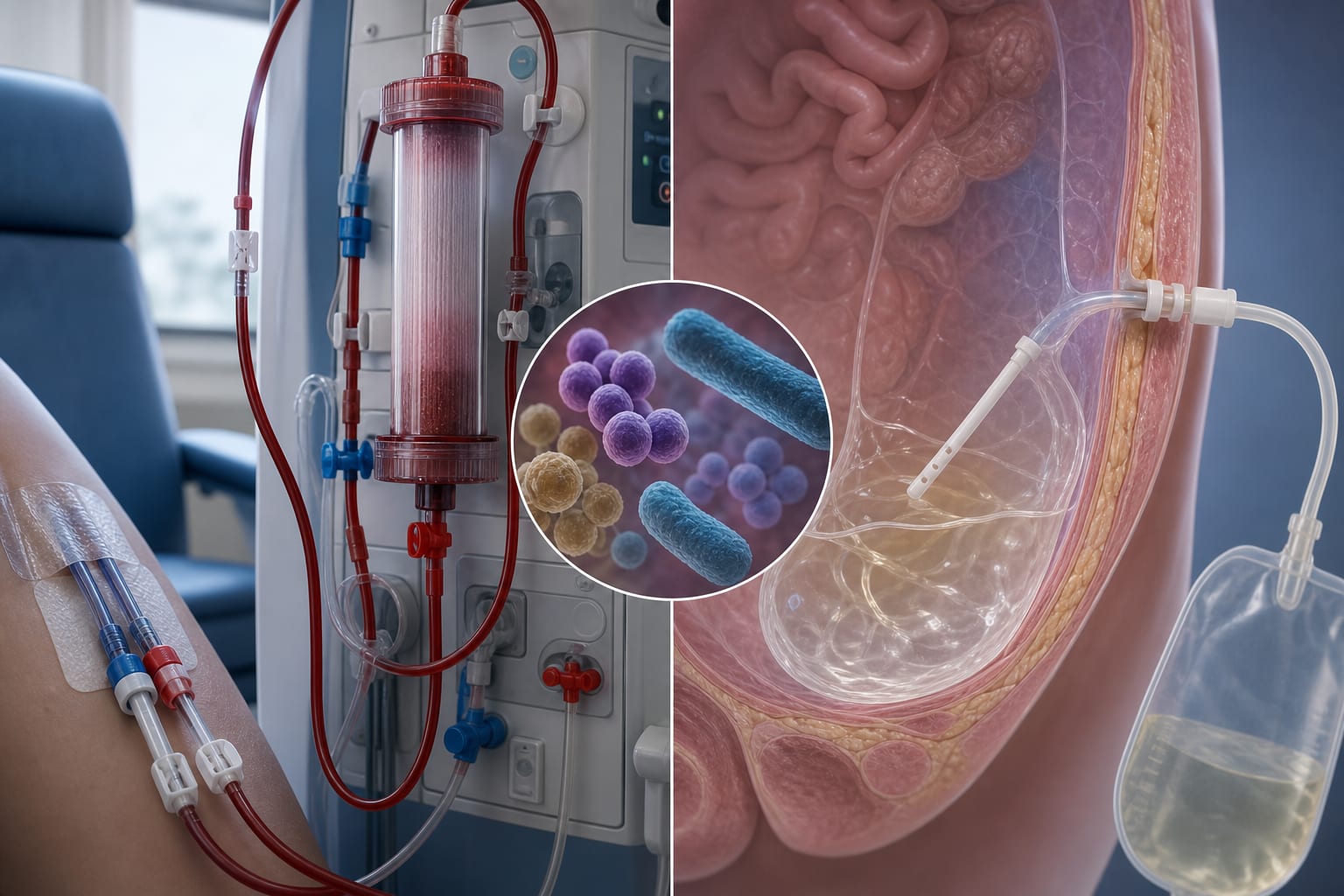
Infection risk varies between hemodialysis (HD) and peritoneal dialysis (PD) due to differences in access type and exposure to healthcare environments.
Target Population
Adults aged 18 years or older with ESRD receiving maintenance dialysis.
Care Setting
Tertiary dialysis center in the Hail region of Saudi Arabia.
Key Highlights
Infection frequency was 18% in HD patients and 9% in PD patients.
HD patients had higher rates of bloodstream infections, while PD patients had higher rates of peritonitis.
Infection-related hospitalization was higher in HD (12%) compared to PD (6%).
Staphylococcus aureus was more prevalent in HD, whereas Staphylococcus epidermidis was more prevalent in PD.
Infection rates decreased slightly over the study period.
Guideline-Based Recommendations
Diagnosis
Standardized definitions for infection types in dialysis settings.
Management
Implementation of infection-prevention protocols specific to dialysis modality.
Monitoring & Follow-up
Strict monitoring of water quality, dialysate purity, and environmental cleaning.
Risks
CVC use identified as a strong modifiable risk factor for infections in HD.
Patient & Prescribing Data
267 eligible patients, including 216 on HD and 51 on PD.
Patients were included if they had received dialysis for at least 3 months to reduce confounding.
Clinical Best Practices
Multidisciplinary infection-prevention programs should be implemented consistently.
Adherence to evidence-based infection-prevention measures is crucial.