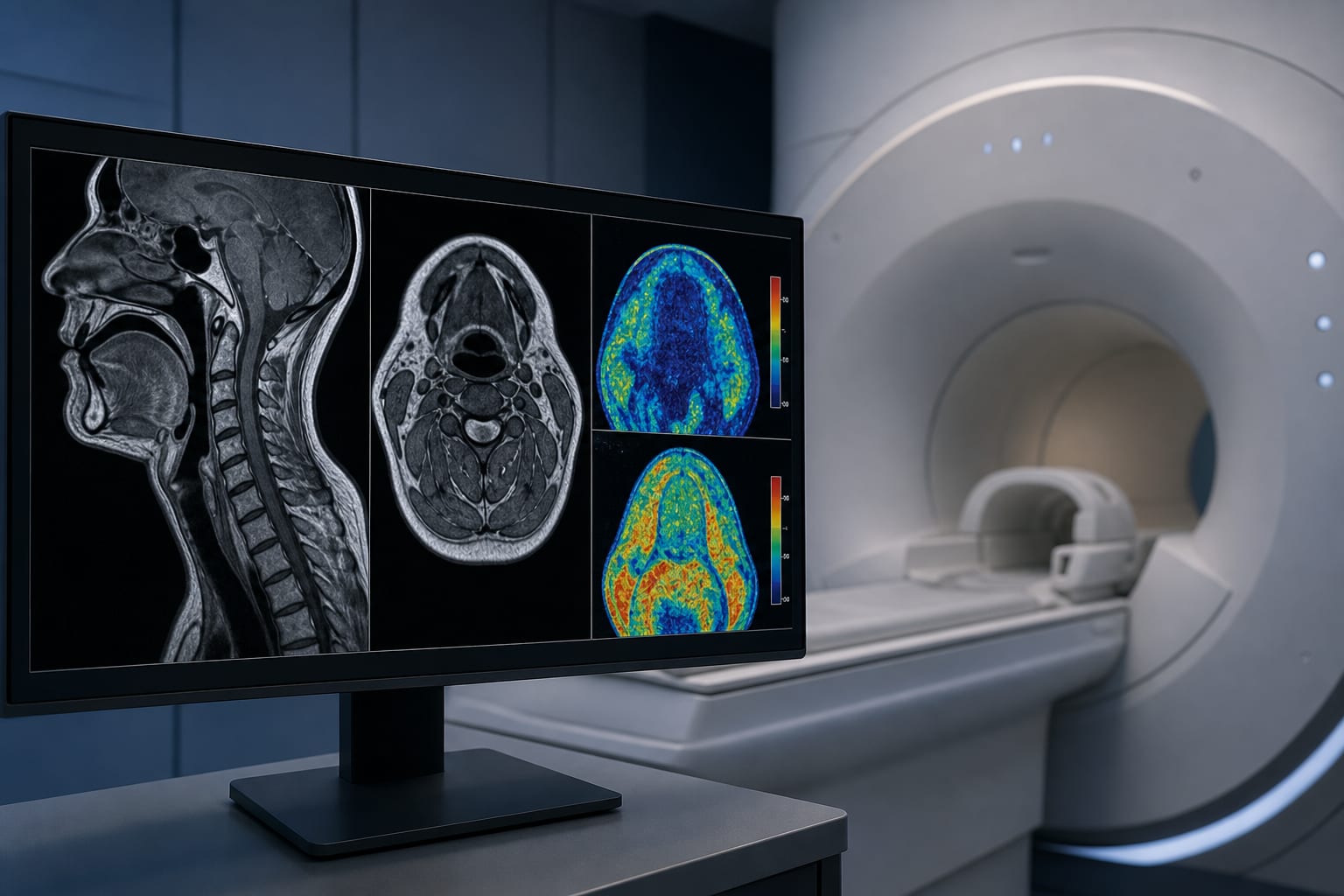
Assessment Instruments for Fibrosis Induced by Radiation in Head and Neck Cancer: A Comprehensive Review
By
Vanessa Helou
Pooja D. Reddy
Purva H. Rumde
Mary L. Klem
Sagar G. Kansara
Oldrich Virag
Yvonne M. Mowery
Nicole N. Scheff
Matthew E. Spector
Shaum Sridharan
Marci L. Nilsen
Kevin J. Contrera
July 2, 2026
Clinical Scorecard: Assessment Instruments for Fibrosis Induced by Radiation in Head and Neck Cancer: A Comprehensive Review
At a Glance
Category Detail
Condition Radiation-Induced Fibrosis (RIF) Key Mechanisms RT-induced inflammation, fibroblast differentiation, excessive collagen deposition, cellular senescence. Target Population Adults (≥ 18 years) with head and neck cancer treated with radiation therapy. Care Setting Oncology and rehabilitation settings.
Key Highlights
RIF prevalence can exceed 40% at 10 years post-treatment. RIF is characterized by tissue hardening and loss of elasticity. No consensus on a valid, reliable, and non-invasive assessment tool for RIF. Assessment tools include subjective measures (PROMs) and objective imaging techniques. RIF-related complications significantly impair quality of life. Guideline-Based Recommendations
Diagnosis
Utilize both subjective and objective measurement tools for assessing RIF. Management
Monitor RIF progression and its impact on quality of life. Monitoring & Follow-up
Regular assessments of fibrosis severity and functional impairments. Risks
Increased risk of severe subcutaneous fibrosis in patients with prior neck dissection or high radiation doses. Patient & Prescribing Data
Patients with head and neck squamous cell carcinoma undergoing radiation therapy.
RIF may develop months to years after radiation therapy, necessitating long-term follow-up.
Clinical Best Practices
Implement a combination of assessment tools for comprehensive evaluation of RIF. Educate patients on the potential long-term effects of radiation therapy. Related Resources & Content