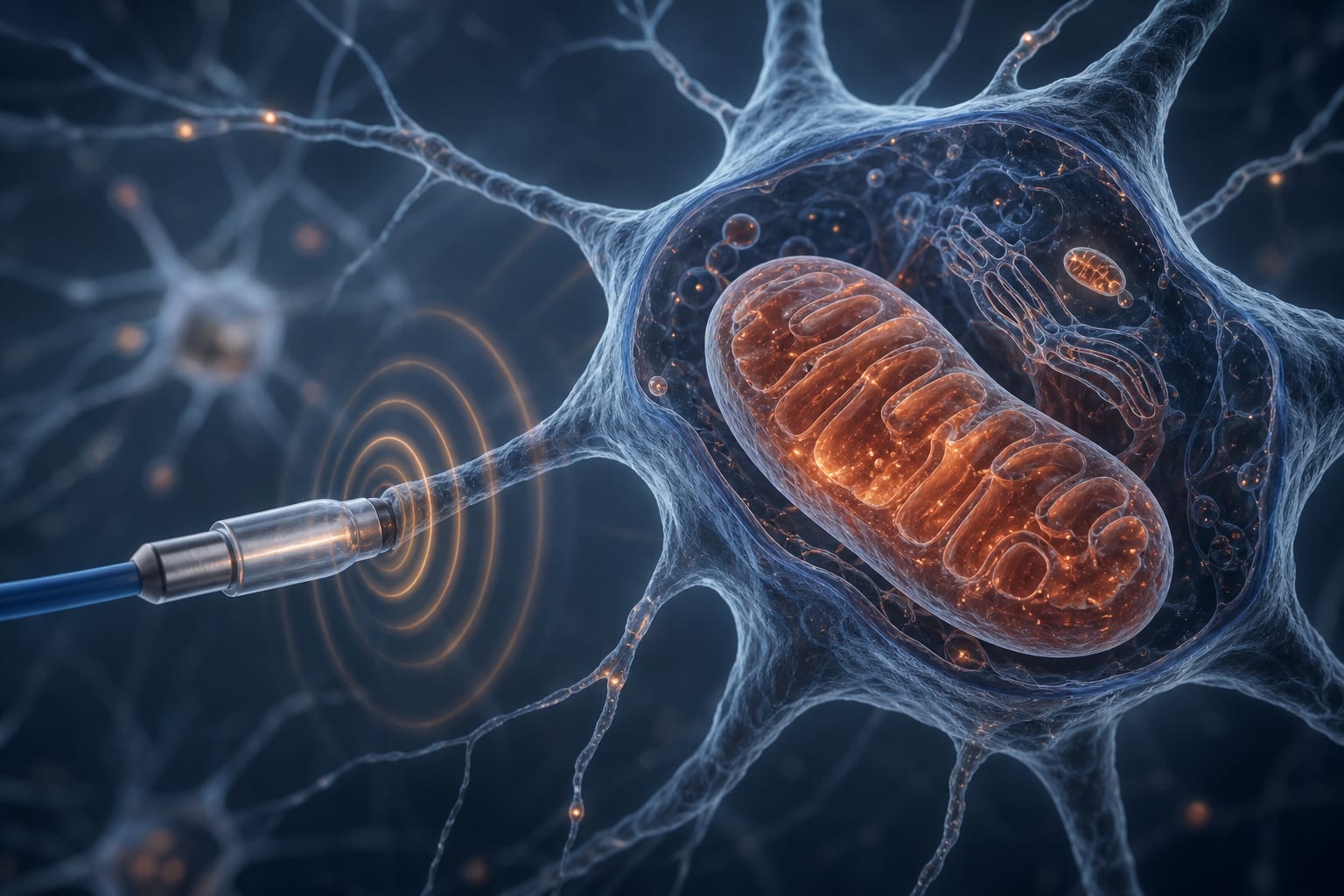
The effects of pulsed radiofrequency stimulation on mitochondrial function in neurons: a mini review
By
Lukas D. Linde
Paul Potgieter
Petra van Blerk
Corlius F. Birkill
June 22, 2026
Clinical Scorecard: Impact of Pulsed Radiofrequency Stimulation on Neuronal Mitochondrial Activity: A Brief Review
At a Glance
Category Detail
Condition Neuropathic Pain Key Mechanisms Mitochondrial modulation, analgesia, nerve regeneration Target Population Patients with neuropathic pain and peripheral neuropathies Care Setting Interventional pain therapy
Key Highlights
PRF preserves mitochondrial ultrastructure compared to CRF. PRF decreases mitochondrial membrane potential while increasing cytosolic ATP. PRF is associated with mitochondrial hyperplasia, potentially aiding structural repair. PRF exerts effects through acute analgesic and sub-acute neuroregenerative phases. Further exploration of PRF's impact on mitochondrial health is warranted. Guideline-Based Recommendations
Diagnosis
Consider PRF for patients with neuropathic pain. Management
Utilize PRF as a non-destructive alternative to CRF ablation. Monitoring & Follow-up
Assess mitochondrial function and pain relief post-PRF treatment. Risks
Monitor for potential adverse effects related to nerve stimulation. Patient & Prescribing Data
Individuals experiencing neuropathic pain, including diabetic peripheral neuropathy.
PRF may offer a non-invasive option for pain management with potential benefits in mitochondrial function.
Clinical Best Practices
Employ PRF with careful consideration of patient-specific factors. Monitor treatment outcomes and adjust strategies based on patient response. Related Resources & Content