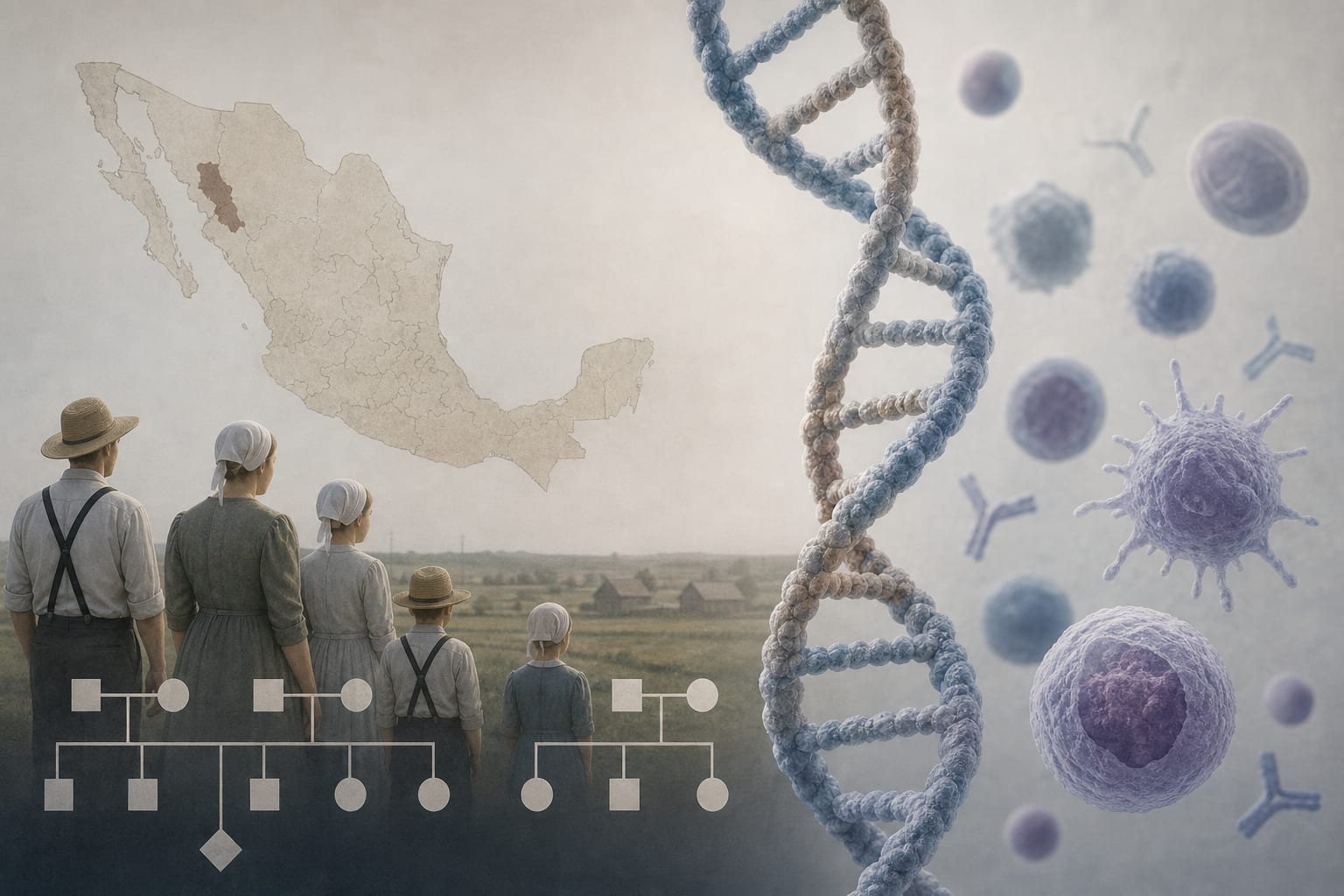
Inborn errors of immunity in Low German Mennonite communities in Mexico: a case series and narrative literature review
By
Luisa Berenise Gámez-González
Saúl Oswaldo Lugo-Reyes
Rogelio Guzmán-Cotaya
Sara Elva Espinosa-Padilla
Luis Enrique Murguía-Favela
Marco Antonio Yamazaki-Nakashimada
June 24, 2026
Clinical Scorecard: Genetic Immunity Disorders in Low German Mennonite Populations in Mexico: A Case Series and Comprehensive Literature Review
At a Glance
Category Detail
Condition Inborn Errors of Immunity (IEI) Key Mechanisms Genetic heterogeneity with increased prevalence in consanguineous and endogamous populations due to founder effects. Target Population Low German Mennonite communities in Mexico. Care Setting Tertiary pediatric referral centers.
Key Highlights
Four novel clinical cases of IEI identified in LGM patients. Conditions included G6PC3 deficiency, X-linked agammaglobulinemia, and severe combined immunodeficiency. All patients required disease-specific therapy including immunoglobulin replacement and hematopoietic cell transplantation. Literature review revealed a broad spectrum of IEI in LGM populations. Guideline-Based Recommendations
Diagnosis
Diagnosis of IEI according to the International Union of Immunological Societies (IUIS) 2024 classification. Management
Disease-specific therapy including granulocyte colony-stimulating factor and immunoglobulin replacement. Monitoring & Follow-up
Regular immunological workup and genetic testing when feasible. Risks
Increased risk of infections, autoimmunity, autoinflammation, malignancy, and allergies due to immune dysfunction. Patient & Prescribing Data
Timely clinical intervention and accessible genetic testing.
Clinical Best Practices
Early diagnosis through newborn screening. Integration of clinical, immunological, and genetic data for comprehensive patient management. Related Resources & Content