Molecular and cellular adaptations to extended hypothermic oxygenated perfusion in donation-after-circulatory-death hearts in a porcine model - Scorecard - MDSpire
Advertisement
Cellular and Molecular Responses to Prolonged Hypothermic Oxygenated Perfusion in Porcine Hearts from Donation After Circulatory Death
Clinical Scorecard: Cellular and Molecular Responses to Prolonged Hypothermic Oxygenated Perfusion in Porcine Hearts from Donation After Circulatory Death
At a Glance
Category
Detail
Condition
Key Mechanisms
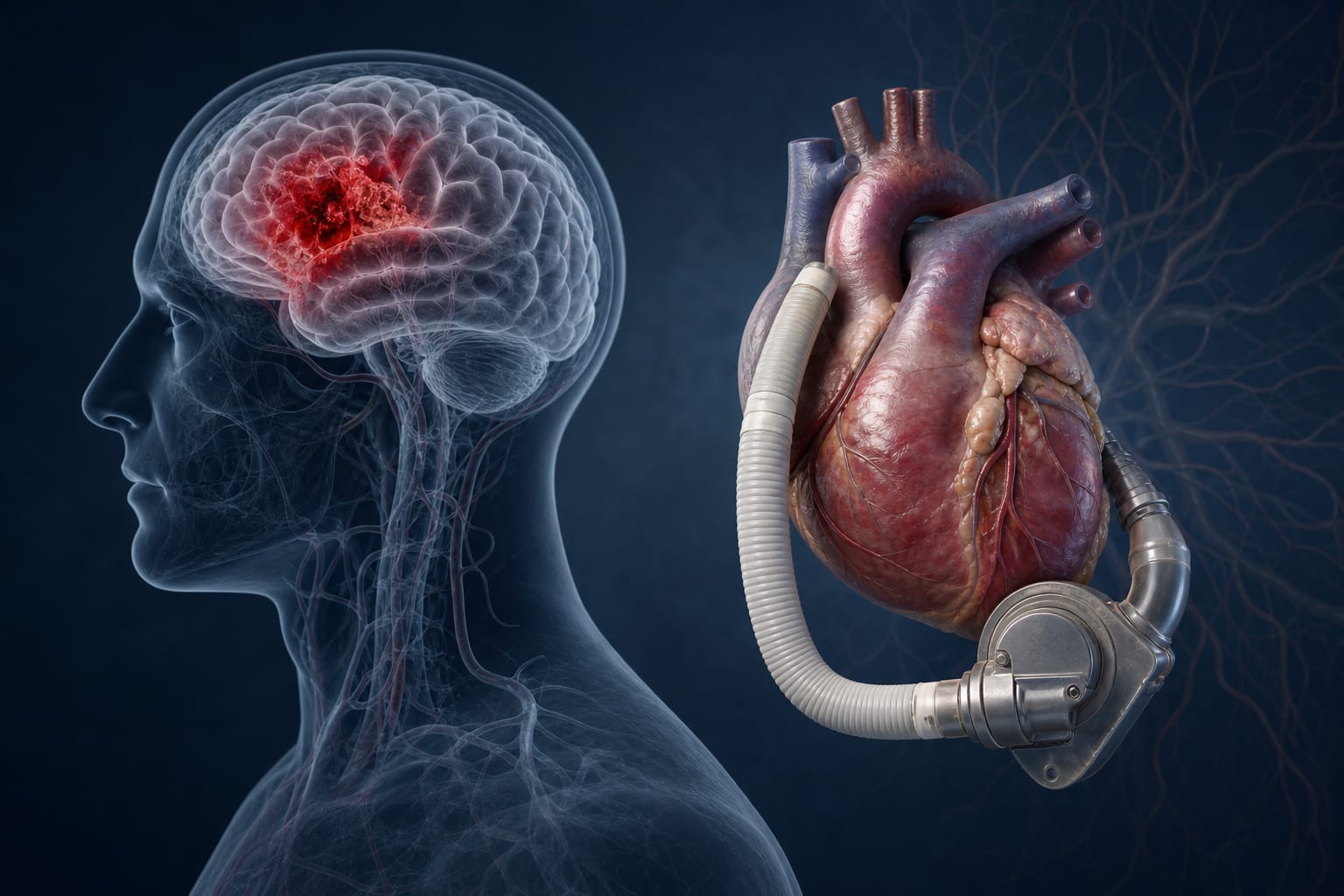
Extended hypothermic oxygenated perfusion (HOPE) preserves cardiomyocyte viability and metabolic stability, particularly when combined with normothermic regional perfusion (NRP).
Target Population
Care Setting
Key Highlights
HOPE for 24 hours maintains cardiomyocyte viability compared to 2 hours of static cold storage (SCS).
Minimal transcriptional and metabolic shifts observed between 2-hour SCS and 24-hour HOPE hearts.
Omission of normothermic regional perfusion (NRP) during procurement leads to significant loss of contractility.
NRP is critical for maintaining contractility and cardiomyocyte integrity.
Guideline-Based Recommendations
Diagnosis
Management
Monitoring & Follow-up
Monitor post-preservation myocardial function and metabolic parameters.
Risks
Prolonged warm ischemic times can accelerate endothelial and cardiomyocyte injury.
Patient & Prescribing Data
Porcine hearts used in experimental DCD procurement.
Extended HOPE may enhance myocardial and metabolic integrity post-circulatory death.
Clinical Best Practices
Implement NRP prior to organ harvest to improve cardiomyocyte integrity and function.
Consider HOPE for extended preservation of DCD hearts, especially when NRP is utilized.
by Morgan K. Moroi, Yaagnik Kosuri, Cary Karcher, Diana Albino, Anthony Campbell, Arianna Adamo, Emre Bektik, Christine Chan, Kenmond Fung, Miroslav Sekulic, Shaheer K. Faruqi, Craig J. Goergen, Melissa Tamimi, Koji Takeda, Giovanni Ferrari