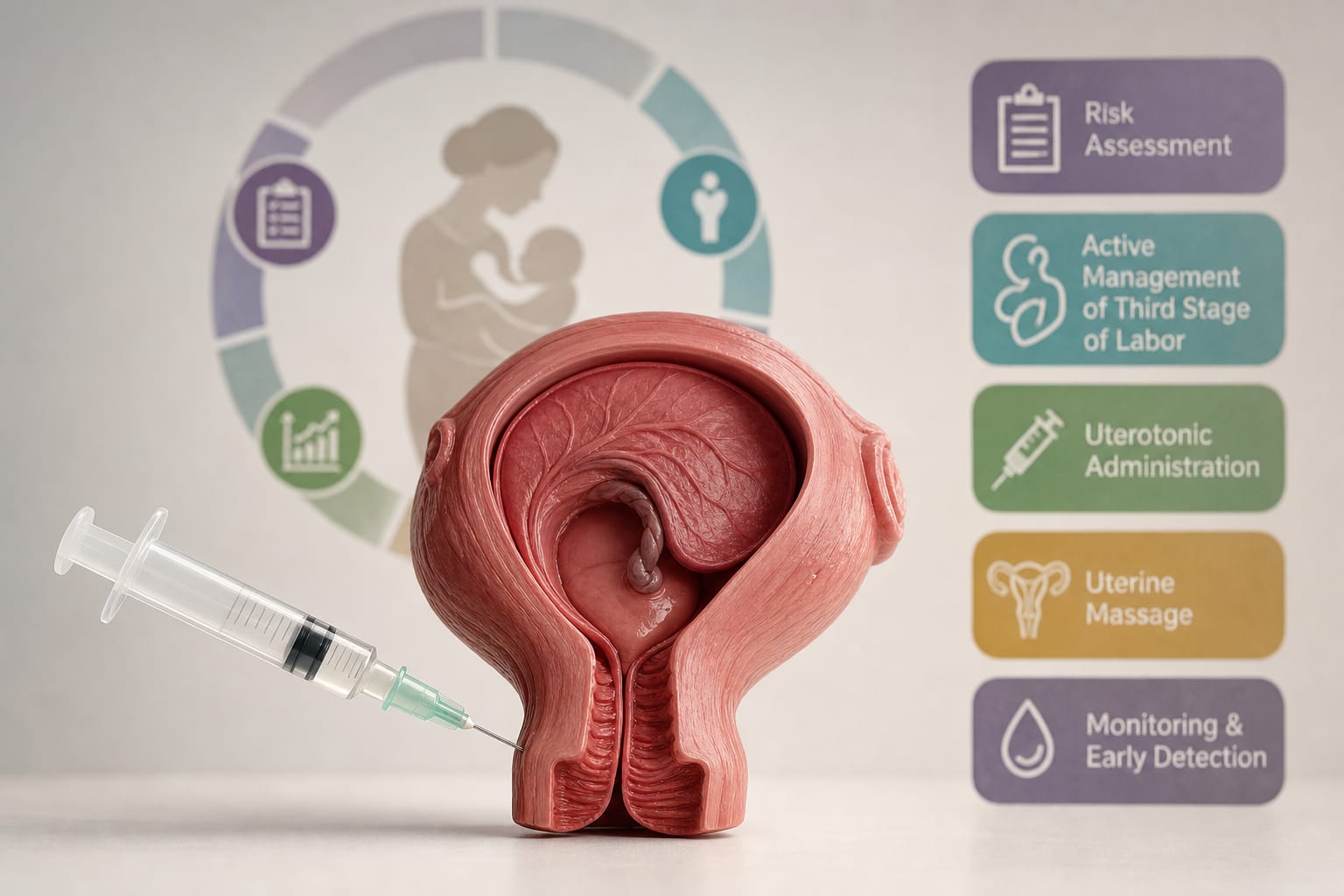
Evidence summary of best practices for prevention and management of postpartum hemorrhage in obstetric clinical practice
-
By
-
Yue Bai
-
Qing Hu
-
Jianqing Zhang
-
June 24, 2026
-
Clinical Scorecard: Comprehensive Review of Optimal Strategies for Preventing and Managing Postpartum Hemorrhage in Obstetric Care
At a Glance
| Category | Detail |
|---|
| Condition | Postpartum Hemorrhage |
| Key Mechanisms | Risk assessment, timely identification, and active intervention for severe postpartum hemorrhage. |
| Target Population | Pregnant women at potential risk of PPH. |
| Care Setting | Birthing units at all levels of care. |
Key Highlights
- Postpartum hemorrhage accounts for approximately 27% of all maternal deaths worldwide.
- Defined as blood loss ≥500 mL for vaginal delivery or ≥1,000 mL for cesarean section.
- Twenty-three best practice recommendations for PPH prevention and management were synthesized.
- Emphasis on the standardization and systematic training of healthcare professionals.
- Active management of the third stage of labor is crucial in PPH prevention.
Guideline-Based Recommendations
Diagnosis
- Blood loss exceeding 1,000 mL constitutes severe postpartum hemorrhage.
Management
- Implement active management of the third stage of labor.
- Conduct risk assessments for high-risk factors.
Monitoring & Follow-up
- Monitor vital signs and vaginal blood loss.
- Assess uterine contractions.
Risks
- Inadequate diagnosis and treatment of postpartum hemorrhage can lead to severe complications and mortality.
Patient & Prescribing Data
Parturients with bleeding tendencies.
Healthcare workers should develop scientific and effective medical and nursing measures.
Clinical Best Practices
- Promote health education regarding PPH.
- Enhance professional competence through diverse training formats.
- Utilize computerized decision support systems for clinical decisions.
Related Resources & Content