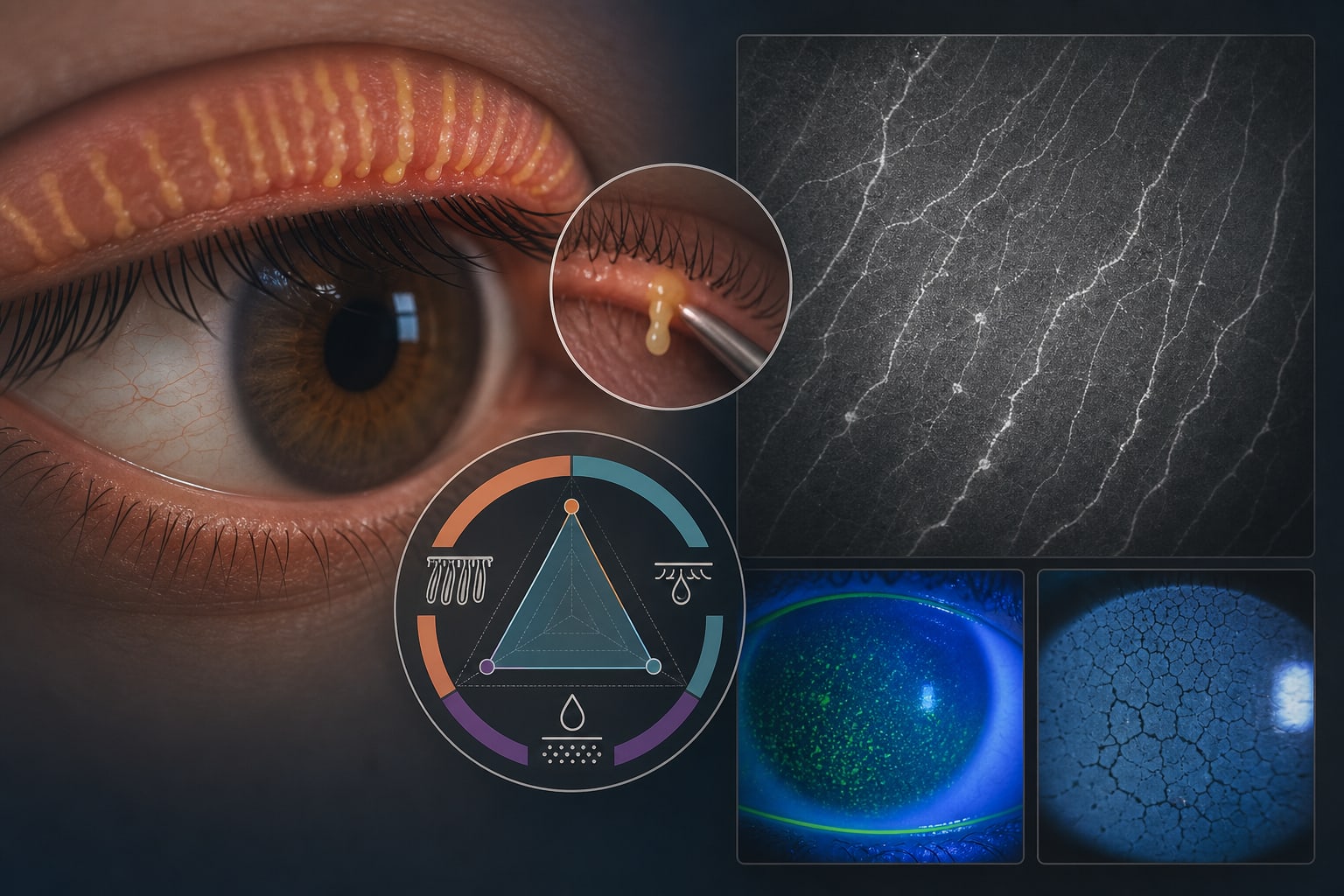
Association of a novel meibomian gland dysfunction composite score with corneal nerve parameters and ocular surface symptoms in dry eye disease - Scorecard - MDSpire

Association of a novel meibomian gland dysfunction composite score with corneal nerve parameters and ocular surface symptoms in dry eye disease

  • By

  • Yao Yao

  • Zhaoxiang Xu

  • Yanhao Ma

  • Lijin Cui

  • Xiaotong Ren

  • Jian Guo

  • July 10, 2026

Share

Clinical Scorecard: Correlation of a New Composite Score for Meibomian Gland Dysfunction with Corneal Nerve Metrics and Ocular Surface Symptoms in Patients with Dry Eye Disease

At a Glance

CategoryDetail
ConditionDry Eye Disease (DED)
Key MechanismsMeibomian gland dysfunction (MGD) involving gland dropout, expressibility, and meibum quality.
Target PopulationPatients diagnosed with dry eye disease (DED).
Care SettingOphthalmology clinics.

Key Highlights

  • MGD composite score correlates with ocular surface symptoms and corneal nerve metrics.
  • Higher MGD grades are associated with shorter corneal nerve length and increased symptom severity.
  • Corneal nerve abnormalities may explain symptom-sign discordance in DED.

Guideline-Based Recommendations

Diagnosis

  • Use a composite MGD score integrating gland dropout, expressibility, and meibum quality.

Management

  • Assess corneal nerve parameters to understand the relationship between MGD and symptoms.

Monitoring & Follow-up

  • Evaluate symptom severity using OSDI and visual analogue scales.

Risks

  • Consider the impact of corneal nerve abnormalities on symptom perception in DED patients.

Patient & Prescribing Data

137 patients with dry eye disease (274 eyes) included in the study.

The study highlights the need for comprehensive assessment of MGD and nerve parameters in DED management.

Clinical Best Practices

  • Perform in vivo confocal microscopy to assess corneal nerve parameters.
  • Utilize the MGD composite score for a holistic evaluation of meibomian gland function.

Related Resources & Content

Original Source(s)

Related Content