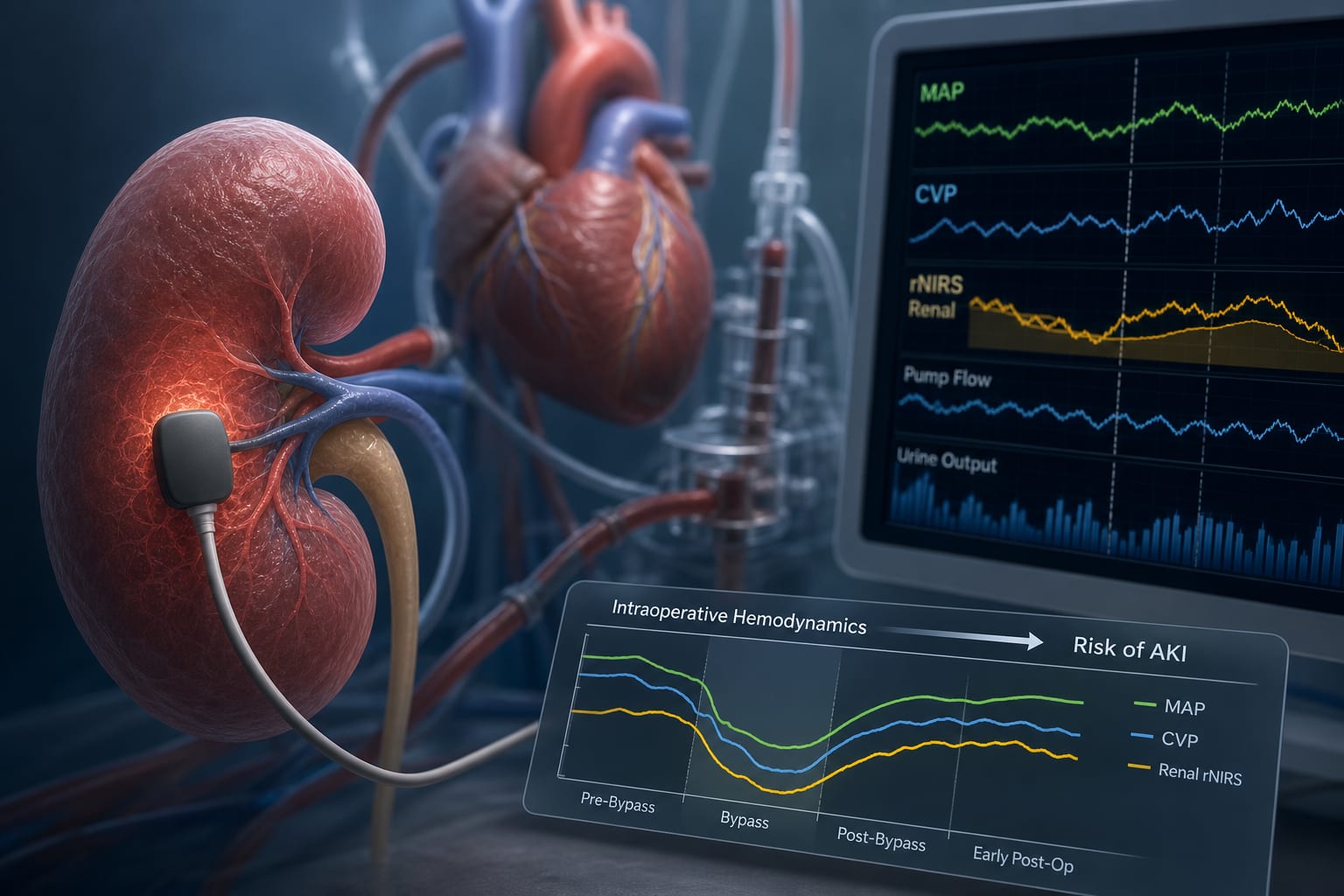
Acute Kidney Injury After Pediatric Heart Transplant: The Impact of Intraoperative Hemodynamics Using High-Fidelity Data
By
Matthew Cummins
Brian Madden
Philip T. Thrush
Rajit Basu
Rohit S. Loomba
July 16, 2026
Clinical Scorecard: Intraoperative Hemodynamics and Their Influence on Acute Kidney Injury Following Heart Transplantation in Children: Insights from High-Fidelity Data
At a Glance
Category Detail
Condition Acute Kidney Injury following Heart Transplantation in Children
Key Mechanisms Intraoperative mean arterial pressure, central venous pressure, and renal near infrared spectroscopy
Target Population Pediatric patients undergoing heart transplantation
Care Setting Single-center, retrospective study at a pediatric hospital
Key Highlights
Incidence of acute kidney injury post-heart transplant in children ranges from 49% to 66%. Nearly 10% of patients may require dialysis post-transplant. Intraoperative monitoring may help predict postoperative renal dysfunction.
Guideline-Based Recommendations
Diagnosis
Use creatinine criteria set forth by the Kidney Disease: Improving Global Outcomes initiative for staging acute kidney injury.
Management
Monitor intraoperative hemodynamics to assess risk for acute kidney injury.
Monitoring & Follow-up
Collect serum creatinine values pre- and post-transplant for acute kidney injury assessment.
Risks
Risk factors for acute kidney injury include underlying cardiac diagnosis, vasoactive requirement, and cardiopulmonary bypass time.
Patient & Prescribing Data
Patients under 18 years old undergoing orthotopic heart transplant.
Intraoperative physiologic data may inform management strategies to reduce acute kidney injury risk.
Clinical Best Practices
Utilize renal near infrared spectroscopy for real-time assessment of renal perfusion. Implement strategies to optimize intraoperative mean arterial pressure and central venous pressure.
Related Resources & Content