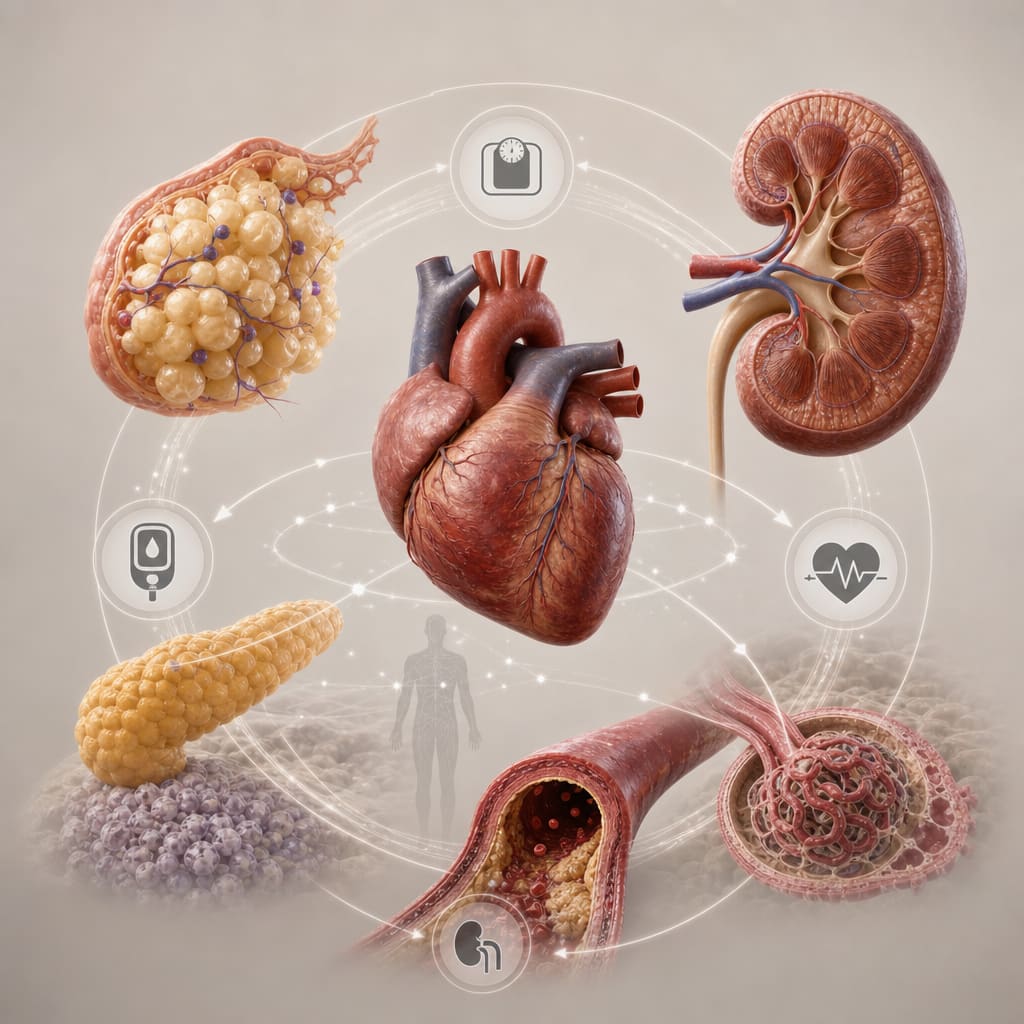
Clinical Scorecard: Relationship between Visceral Adipose Index and Stress Urinary Incontinence in Adult Women in the United States: A Cross-Sectional Analysis
At a Glance
Category
Detail
Condition
Stress Urinary Incontinence (SUI)
Key Mechanisms
Visceral adipose tissue accumulation measured by Visceral Adipose Index (VAI) correlates with SUI risk; VAI incorporates waist circumference, BMI, triglycerides, and HDL to assess visceral fat function beyond BMI alone.
Target Population
Adult women aged 20 years and older in the United States
Care Setting
Primary care and epidemiological health assessment settings
Key Highlights
SUI affects approximately 40–46% of adult women in the USA and significantly impairs quality of life.
Obesity, particularly visceral fat accumulation, is an independent risk factor for SUI.
Visceral Adipose Index (VAI) provides a more sensitive and specific measure of visceral fat function than BMI or waist circumference alone.
Guideline-Based Recommendations
Diagnosis
Diagnose SUI based on patient self-report of involuntary urine loss during physical exertion, coughing, or sneezing within the past 12 months.
Assess SUI severity by frequency of episodes (weekly or daily).
Use anthropometric and biochemical data (waist circumference, BMI, triglycerides, HDL) to calculate VAI for visceral fat assessment.
Management
Address modifiable risk factors including overweight and obesity, focusing on reducing visceral adiposity.
Incorporate lifestyle interventions targeting weight reduction and physical activity to potentially reduce SUI symptoms.
Monitoring & Follow-up
Monitor changes in VAI and SUI symptom frequency over time to assess intervention effectiveness.
Regularly evaluate comorbid conditions such as diabetes, hypertension, and depression that may influence SUI.
Risks
Increased visceral adiposity is associated with higher odds of SUI, independent of BMI.
Obesity-related metabolic dysfunction may exacerbate SUI severity.
Patient & Prescribing Data
Adult women aged 20 years and older with or at risk for SUI in the United States
Targeting visceral adiposity as measured by VAI may improve SUI outcomes; traditional BMI measures alone may underestimate risk.
Clinical Best Practices
Utilize VAI as a routine clinical tool to assess visceral fat distribution and related SUI risk in women.
Incorporate comprehensive patient history including lifestyle, comorbidities, and socioeconomic factors when evaluating SUI.
Apply multidisciplinary approaches including diet, exercise, and behavioral interventions to manage obesity-related SUI.