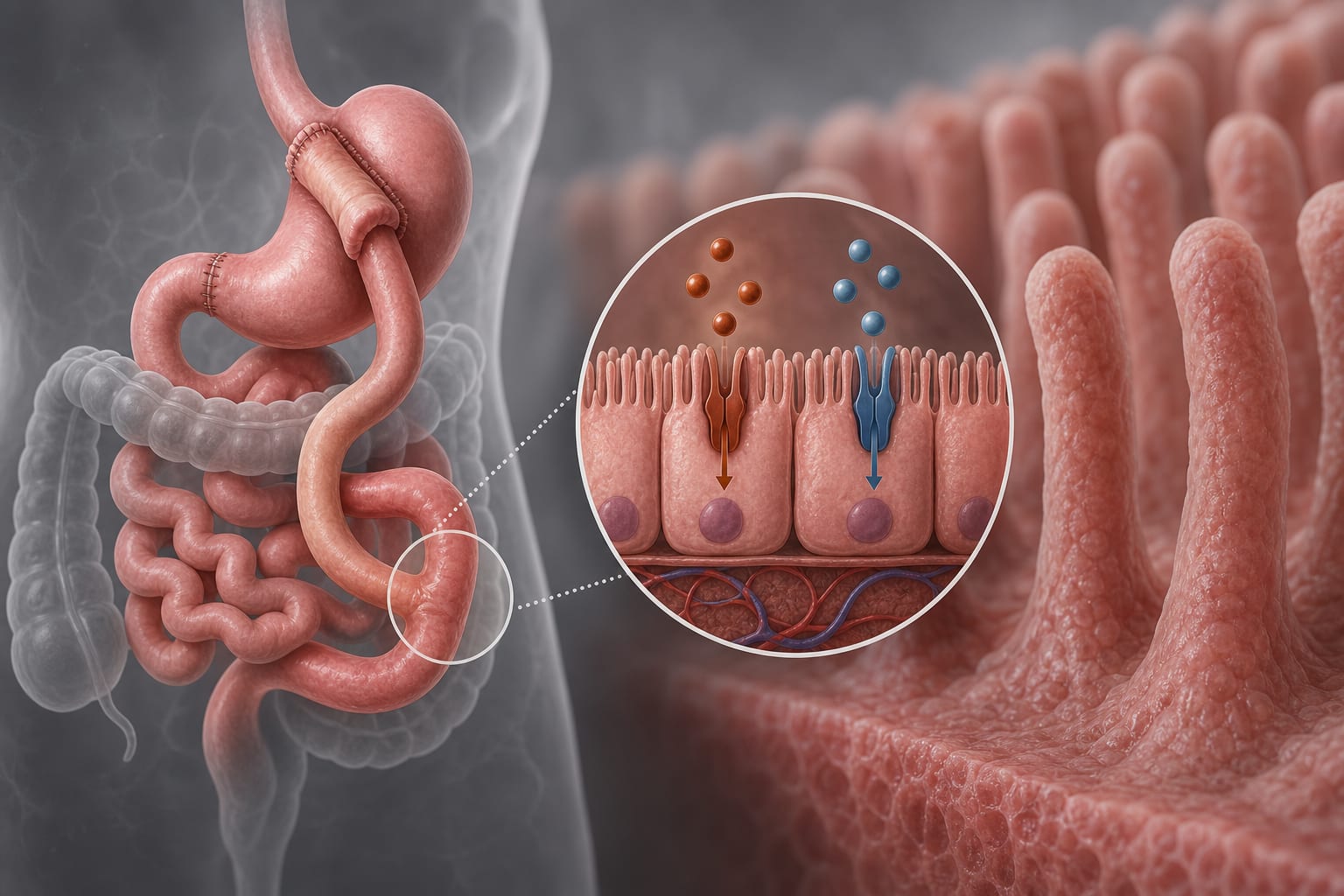
Surgical Aspects of Sleeve Gastrectomy Are Related to Weight Loss and Gastro-esophageal Reflux Symptoms
-
By
-
Hannu S. Lyyjynen
-
John R. Andersen
-
Ronald S. L. Liem
-
Tom Mala
-
Simon W. Nienhuijs
-
Johan Ottosson
-
Magnus Sundbom
-
Anders Thorell
-
Villy Våge
-
February 8, 2024
-
Clinical Scorecard: Technical Factors in Sleeve Gastrectomy Influence Weight Reduction and Gastroesophageal Reflux Symptoms
At a Glance
| Category | Detail |
|---|
| Condition | Obesity and gastroesophageal reflux disease (GERD) post-sleeve gastrectomy |
| Key Mechanisms | Variations in surgical technique of sleeve gastrectomy affecting weight loss and de novo GERD |
| Target Population | Patients undergoing primary sleeve gastrectomy for obesity |
| Care Setting | Bariatric surgery centers across Norway, Sweden, and the Netherlands |
Key Highlights
- Weight loss after sleeve gastrectomy varies significantly across institutions, likely due to differences in surgical technique.
- More extensive gastric resection may lead to greater weight loss but could influence the prevalence of de novo GERD.
- Use of acid reducing medication at 2 years post-surgery serves as a proxy for new-onset GERD.
Guideline-Based Recommendations
Diagnosis
- Define GERD as daily use of acid reducing medication for the last 30 days.
- Identify de novo GERD as new use of acid reducing medication at 2 years post-sleeve gastrectomy.
Management
- Optimize surgical technique variables such as bougie size and resection distances to improve weight loss outcomes.
- Consider potential risk of GERD when planning the extent of gastric resection.
Monitoring & Follow-up
- Follow-up at 2 years post-surgery to assess percent total weight loss and new-onset use of acid reducing medication.
- Use standardized registries for data collection and quality auditing.
Risks
- Potential development of de novo GERD after sleeve gastrectomy.
- Surgical complications classified by Clavien-Dindo grade IIIb or higher require intervention under general anesthesia.
Patient & Prescribing Data
Patients undergoing primary sleeve gastrectomy with bougie size 28–40 Ch and specified resection distances.
Weight loss outcomes and GERD incidence vary with surgical technique; acid reducing medication use at 2 years indicates GERD development.
Clinical Best Practices
- Standardize surgical technique parameters including bougie size and resection margins to optimize weight loss.
- Use national bariatric surgery registries with high capture rates for consistent data and outcome monitoring.
- Apply shared decision-making between surgeons and patients considering risks of GERD and expected weight loss.
- Exclude patients undergoing sleeve gastrectomy as part of planned duodenal switch to maintain cohort homogeneity.
- Monitor patients longitudinally with consistent follow-up intervals (21–27 months) to accurately assess outcomes.
References