Analysis of Risk Factors for Heart Failure in Patients with Type 2 Diabetes Mellitus and Acute ST-Segment Elevation Myocardial Infarction after Percutaneous Coronary Intervention - Scorecard - MDSpire
Advertisement
Analysis of Risk Factors for Heart Failure in Patients with Type 2 Diabetes Mellitus and Acute ST-Segment Elevation Myocardial Infarction after Percutaneous Coronary Intervention
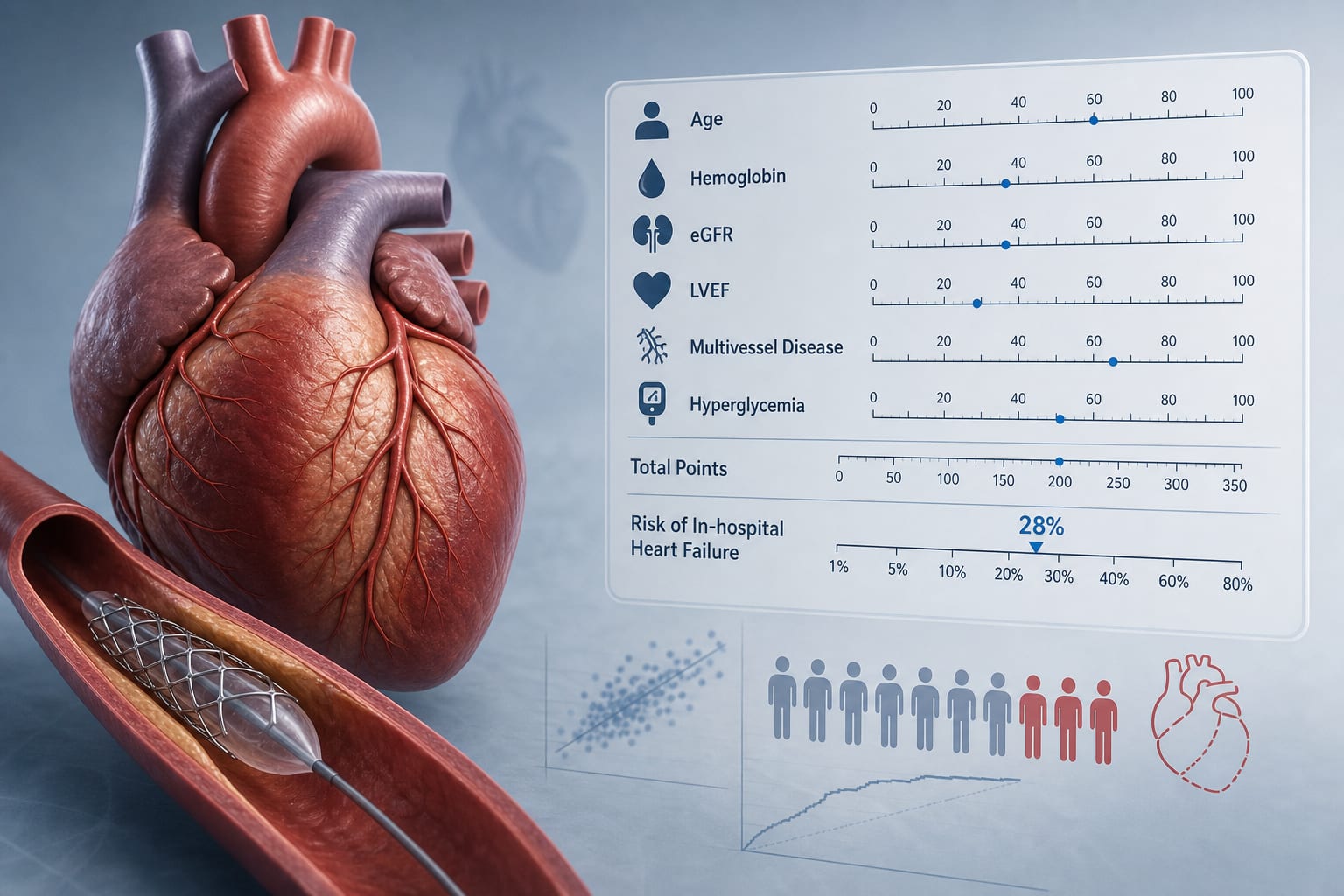
Clinical Scorecard: Evaluation of Independent Risk Factors for Heart Failure in Type 2 Diabetes Mellitus Patients with Acute ST-Segment Elevation Myocardial Infarction Following Percutaneous Coronary Intervention
At a Glance
Category
Detail
Condition
Heart Failure in Type 2 Diabetes Mellitus Patients with STEMI
Key Mechanisms
Independent risk factors identified through logistic regression analysis.
Target Population
Patients with Type 2 Diabetes Mellitus and Acute STEMI undergoing PCI.
Care Setting
In-hospital setting following Percutaneous Coronary Intervention.
Key Highlights
Seven independent risk factors for in-hospital heart failure identified.
Nomogram model developed with AUC of 0.845 for predictive capability.
Good calibration demonstrated by Hosmer-Lemeshow test (P=0.712).
Sensitivity analysis confirmed model stability and lack of multicollinearity.
External validation needed for clinical applicability.
Guideline-Based Recommendations
Diagnosis
Utilize logistic regression to identify risk factors for heart failure.
Management
Implement personalized risk prediction models for high-risk patients.
Monitoring & Follow-up
Monitor identified risk factors such as left ventricular ejection fraction and white blood cell count.