Clinical Scorecard: Lateral Ventricular Lesion as a Presentation of Von Hippel-Lindau Syndrome: A Case Study
At a Glance
Category
Detail
Condition
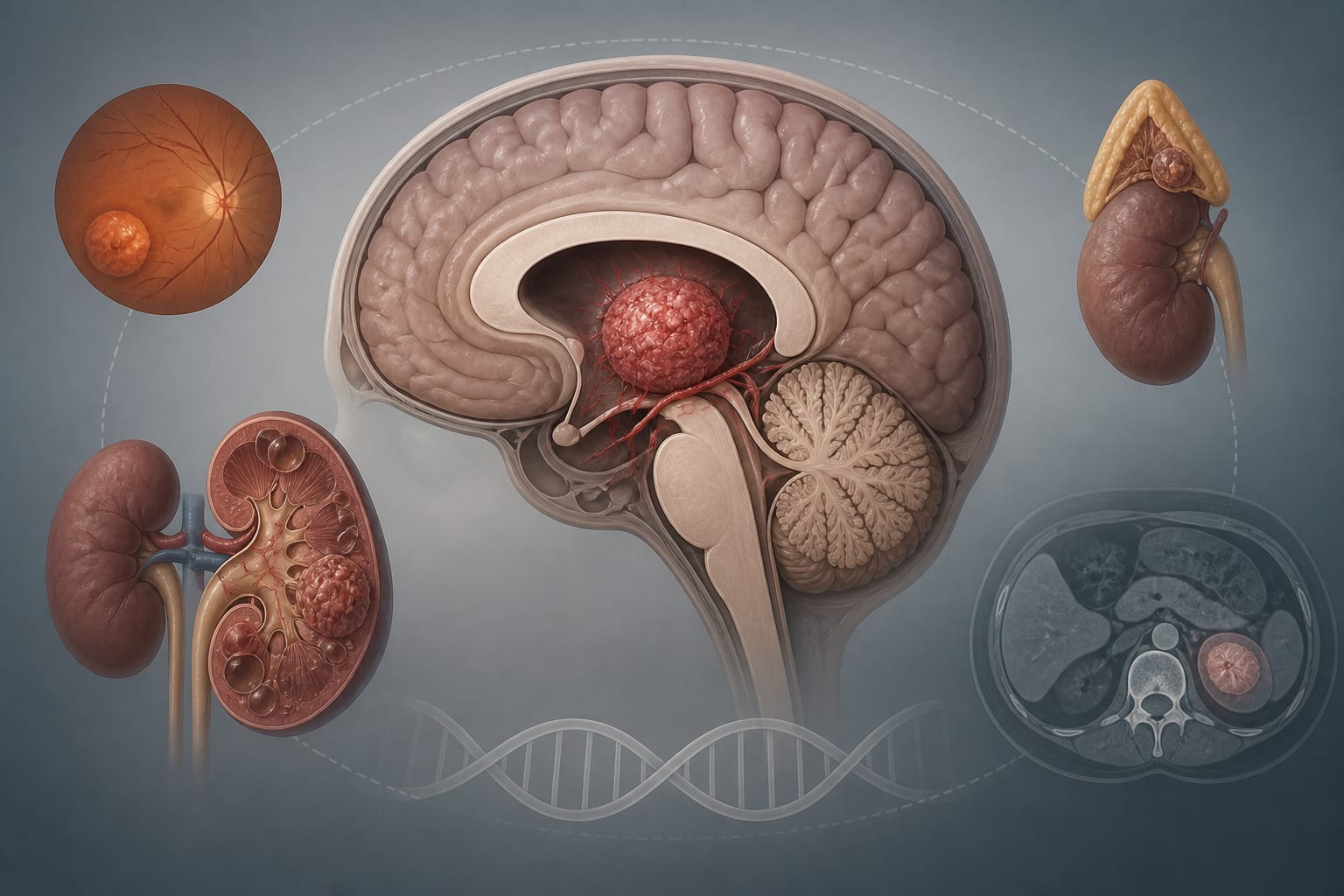
Von Hippel-Lindau Syndrome
Key Mechanisms
Germline deletion or mutation of the VHL tumor suppressor gene leading to abnormal accumulation of hypoxia-inducible factor (HIF), facilitating angiogenesis and tumorigenesis.
Target Population
Individuals with a genetic predisposition to VHL syndrome, particularly those presenting with central nervous system lesions.
Care Setting
Multidisciplinary management in a clinical setting for rare genetic disorders.
Key Highlights
VHL syndrome is characterized by multicentric tumors and familial transmission.
Diagnosis can be challenging; genetic testing is the gold standard.
Surgical resection is the primary treatment for symptomatic central nervous system lesions.
HIF-2α inhibitor belzutifan has been approved for treatment of associated tumors.
The case illustrates the complexities and risks associated with managing VHL syndrome.
Guideline-Based Recommendations
Diagnosis
Genetic testing for VHL mutations is recommended for definitive diagnosis.
Management
Surgical resection is indicated for symptomatic or rapidly progressive lesions.
Monitoring & Follow-up
Regular imaging and clinical evaluations are necessary to monitor for new lesions or tumor progression.
Risks
High risk of complications from surgical intervention due to the vascular nature of hemangioblastomas.
Patient & Prescribing Data
Adults diagnosed with VHL syndrome and associated tumors.
Belzutifan is effective for treating renal cell carcinoma and CNS hemangioblastomas in VHL patients.
Clinical Best Practices
Utilize a multidisciplinary approach for management of VHL syndrome.
Consider genetic counseling for affected families.
Implement regular surveillance for tumor development in at-risk individuals.