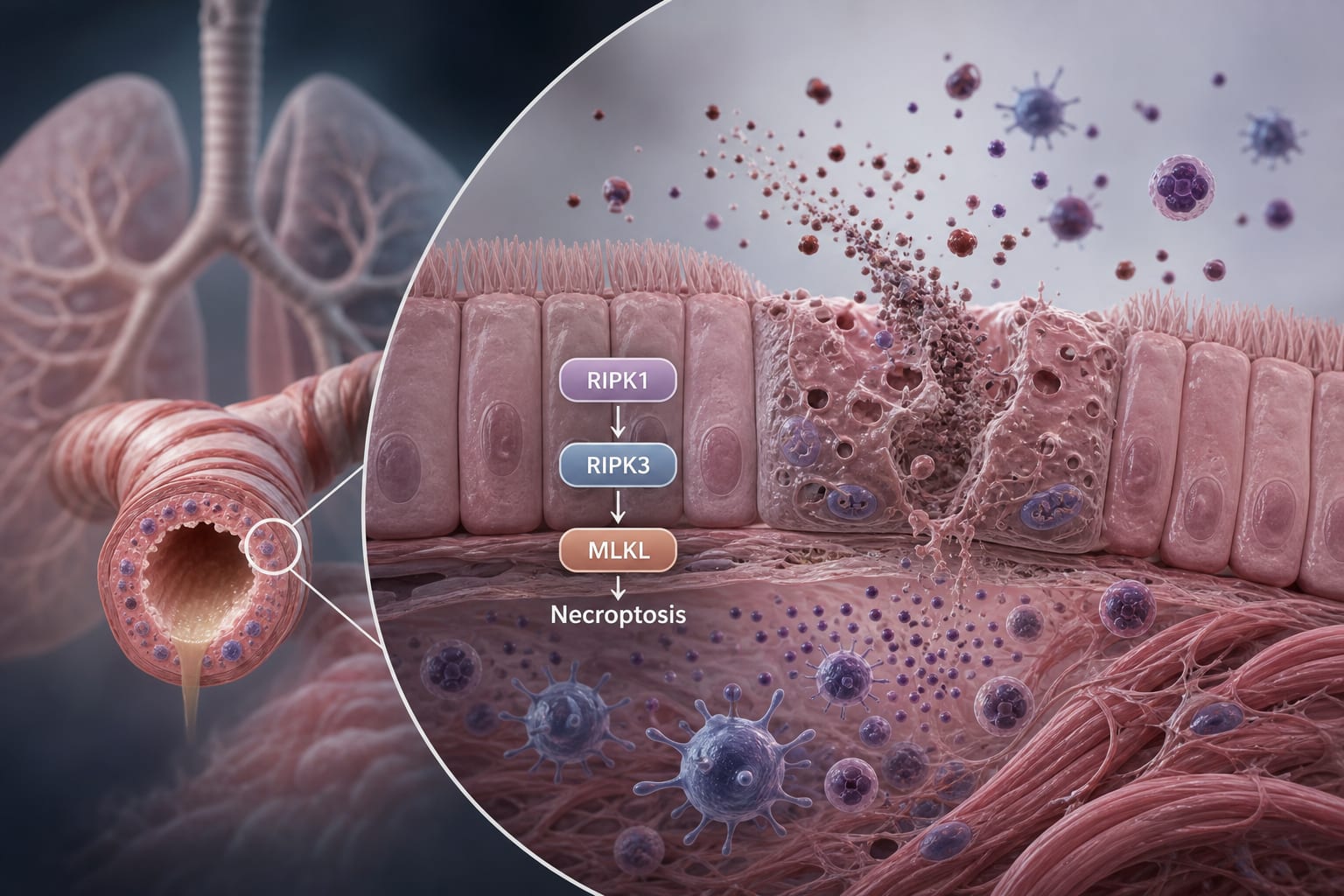
Necroptosis in Asthma: A Key Factor in Immune Dysfunction and Airway Structural Changes
-
By
-
Feng-Xian Ni
-
Shao-Cong Ren
-
Jie Hu
-
Pei-Sheng Chen
-
Hui-Hui Chen
-
Dong-Hui Huang
-
Ze-Bo Jiang
-
June 23, 2026
Clinical Scorecard: Necroptosis in Asthma: A Key Factor in Immune Dysfunction and Airway Structural Changes
At a Glance
| Category | Detail |
|---|
| Condition | Asthma |
| Key Mechanisms | Necroptosis, a regulated form of lytic cell death, contributes to immune dysfunction and airway remodeling. |
| Target Population | Patients with asthma, particularly those with severe, steroid-resistant, or non-eosinophilic asthma. |
| Care Setting | Clinical research and therapeutic development. |
Key Highlights
- Necroptosis is an active pathogenic hub in asthma, influencing inflammation and tissue remodeling.
- Triggers such as allergens, viruses, and pollutants activate necroptosis in a cell-specific manner.
- Damage-associated molecular patterns (DAMPs) released during necroptosis amplify type 2 inflammation.
- Necroptosis contributes to a neutrophilic, steroid-refractory environment in asthma.
- Integration of necroptosis with other regulated cell death pathways (e.g., pyroptosis) is crucial for understanding asthma pathophysiology.
Guideline-Based Recommendations
Diagnosis
- Consider necroptosis biomarkers for patient stratification in asthma.
Management
- Evaluate novel pharmacological inhibitors targeting necroptosis.
Monitoring & Follow-up
- Monitor necroptotic activity in asthma patients through emerging studies.
Risks
- Recognize the limitations of current evidence primarily from preclinical models.
Patient & Prescribing Data
Patients with asthma, especially those unresponsive to standard therapies.
Necroptosis may serve as a target for new disease-modifying therapies.
Clinical Best Practices
- Integrate understanding of necroptosis into the asthma pathophysiological framework.
- Utilize a multidisciplinary approach to assess the role of necroptosis in asthma.
Related Resources & Content