Clinical Scorecard: Development of a Machine Learning Model for Early Risk Prediction of Acute Kidney Injury in Critically Ill Pediatric Patients: A Retrospective Cohort Analysis
At a Glance
Category
Detail
Condition
Acute Kidney Injury (AKI)
Key Mechanisms
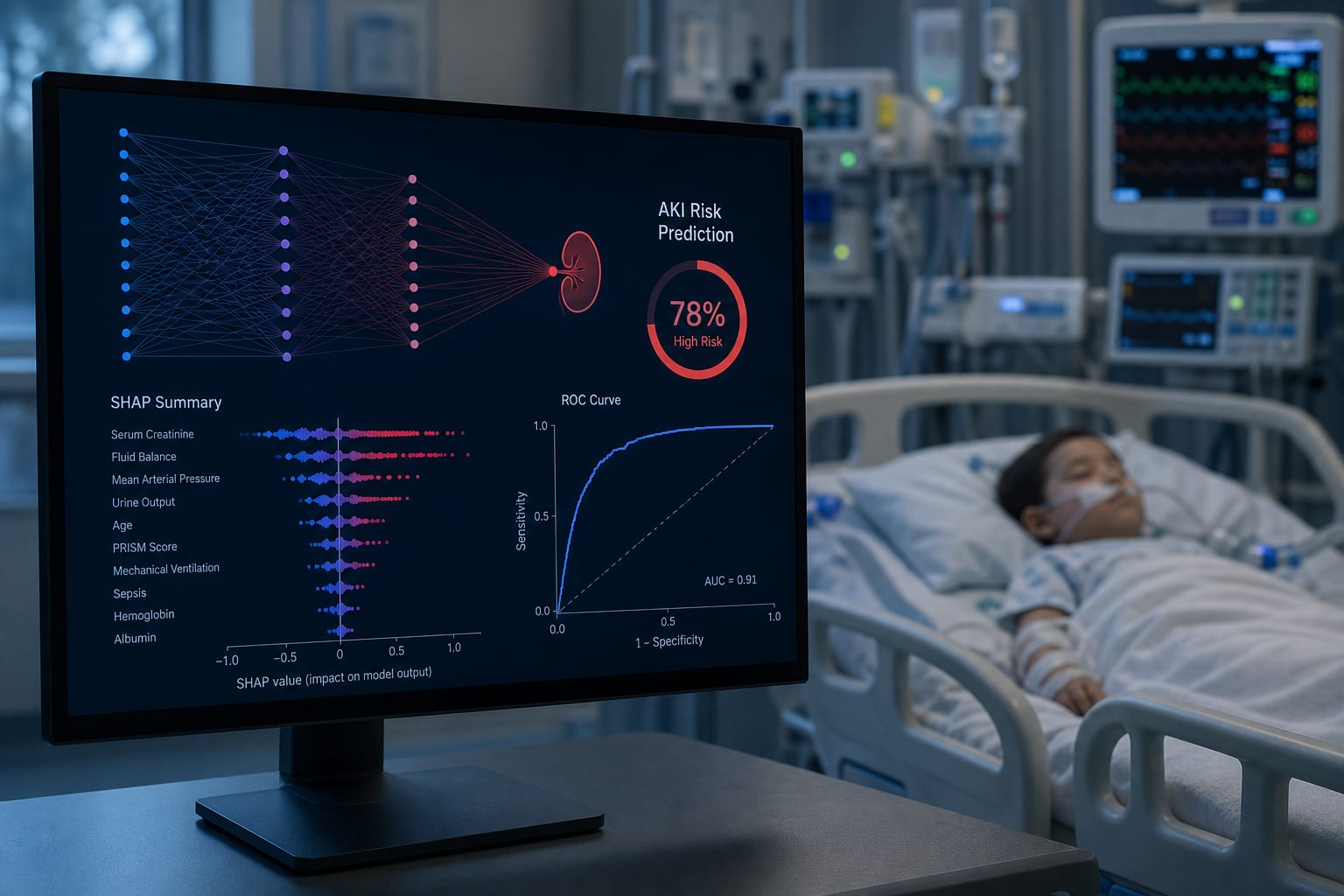
Machine learning algorithms for risk prediction based on clinical data.
Target Population
Critically ill pediatric patients aged 1 month to 18 years.
Care Setting
Pediatric Intensive Care Unit (PICU)
Key Highlights
AKI incidence in ICU pediatric patients is approximately 30% to 50%.
The XGBoost model showed the best risk stratification performance.
Key predictive features include bicarbonate, magnesium, and lymphocyte count.
Machine learning enhances early identification of AKI risk.
SHAP analysis provides interpretability of model predictions.
Guideline-Based Recommendations
Diagnosis
Utilize machine learning models for early risk assessment of AKI.
Management
Implement early interventions based on risk predictions from the model.
Monitoring & Follow-up
Regularly assess key clinical variables identified by the model.
Risks
Failure to identify AKI early can lead to multiple organ dysfunction and increased mortality.
Patient & Prescribing Data
Children admitted to the ICU with potential AKI risk.
Early identification and intervention strategies based on machine learning predictions.
Clinical Best Practices
Incorporate machine learning tools in clinical workflows for AKI risk assessment.
Use SHAP analysis to enhance understanding of individual risk factors.