Mortality trends and disparities in older U.S. adults with atrial fibrillation and COPD: a 1999–2020 CDC WONDER analysis with forecast to 2030 - Scorecard - MDSpire
Advertisement
Mortality trends and disparities in older U.S. adults with atrial fibrillation and COPD: a 1999–2020 CDC WONDER analysis with forecast to 2030
Clinical Scorecard: Trends and Disparities in Mortality Among Older Adults in the U.S. with Atrial Fibrillation and COPD: An Analysis of CDC WONDER Data from 1999 to 2020 with Projections for 2030
At a Glance
Category
Detail
Condition
Atrial Fibrillation and Chronic Obstructive Pulmonary Disease
Key Mechanisms
Chronic hypoxemia, systemic inflammation, oxidative stress, autonomic imbalance, pulmonary hypertension, and hyperinflation-related atrial stretch promote AF initiation and persistence.
Target Population
U.S. adults aged 65 and older with both AF and COPD
Care Setting
Geriatric care planning and management
Key Highlights
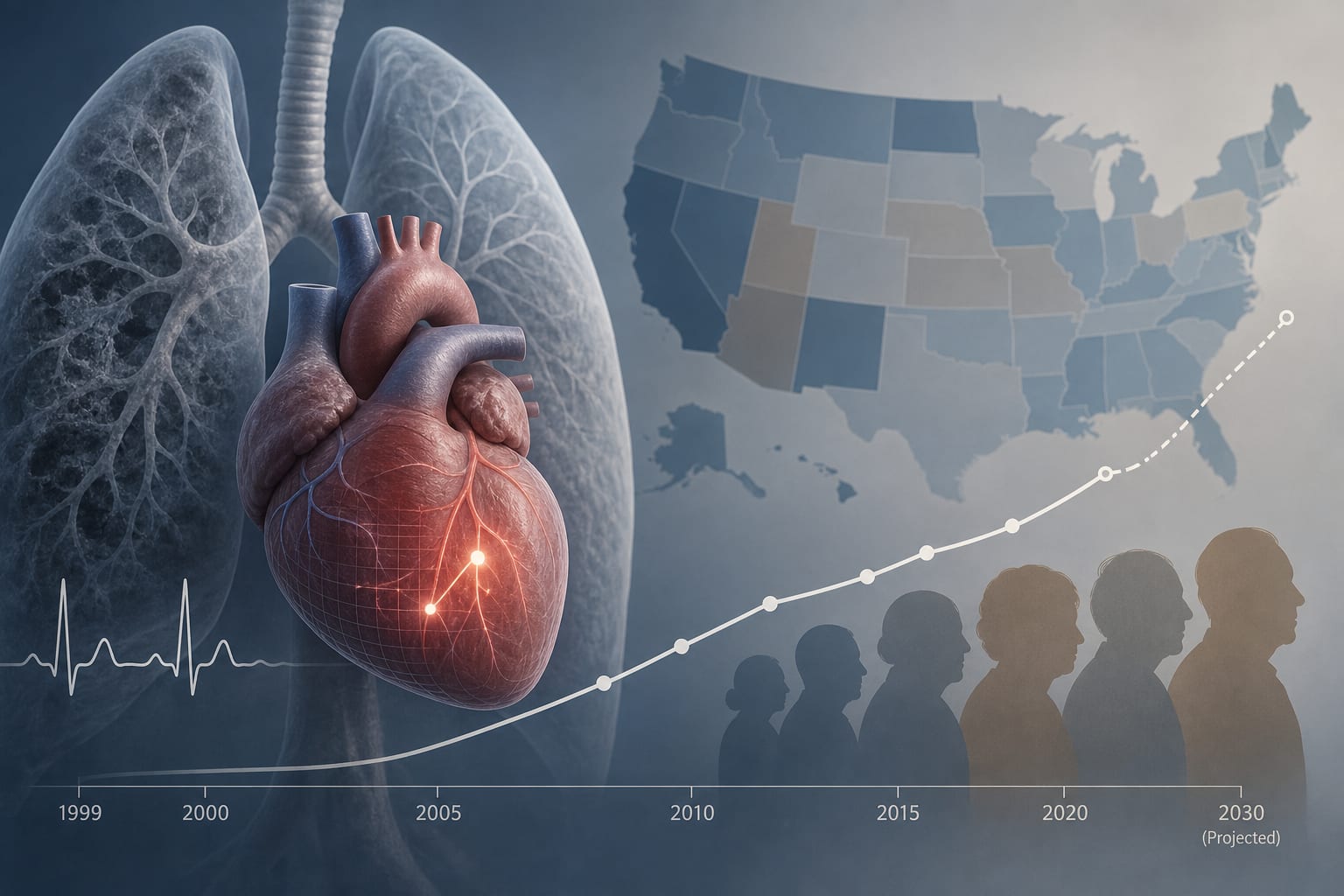
AAMR increased from 27.39 in 1999 to 65.29 in 2020.
Men had a higher AAMR (57.01) than women (34.96).
Non-Hispanic White individuals had an AAMR 2.8 times higher than Hispanics.
Projections suggest AAMR will reach 92.62 by 2030.
The leading causes of death were COPD, ischemic heart disease, and cancer.
Guideline-Based Recommendations
Diagnosis
Identify deaths with both AF and COPD listed on the death certificate.
Management
Consider integrated geriatric management strategies for high-risk populations.
Monitoring & Follow-up
Track mortality trends and disparities across demographics.
Risks
Higher mortality risk associated with coexisting AF and COPD.
Patient & Prescribing Data
Older adults with comorbid AF and COPD.
Management challenges include lower use of beta blockers and variable treatment patterns.
Clinical Best Practices
Focus on multimorbidity and frailty in older patients with AF and COPD.
Implement targeted interventions in high-risk populations.
Genetically predicted triglyceride levels were associated with higher odds of psoriasis, while genetically predicted total fatty acid levels were not, in a two-sample Mendelian randomization analysis.