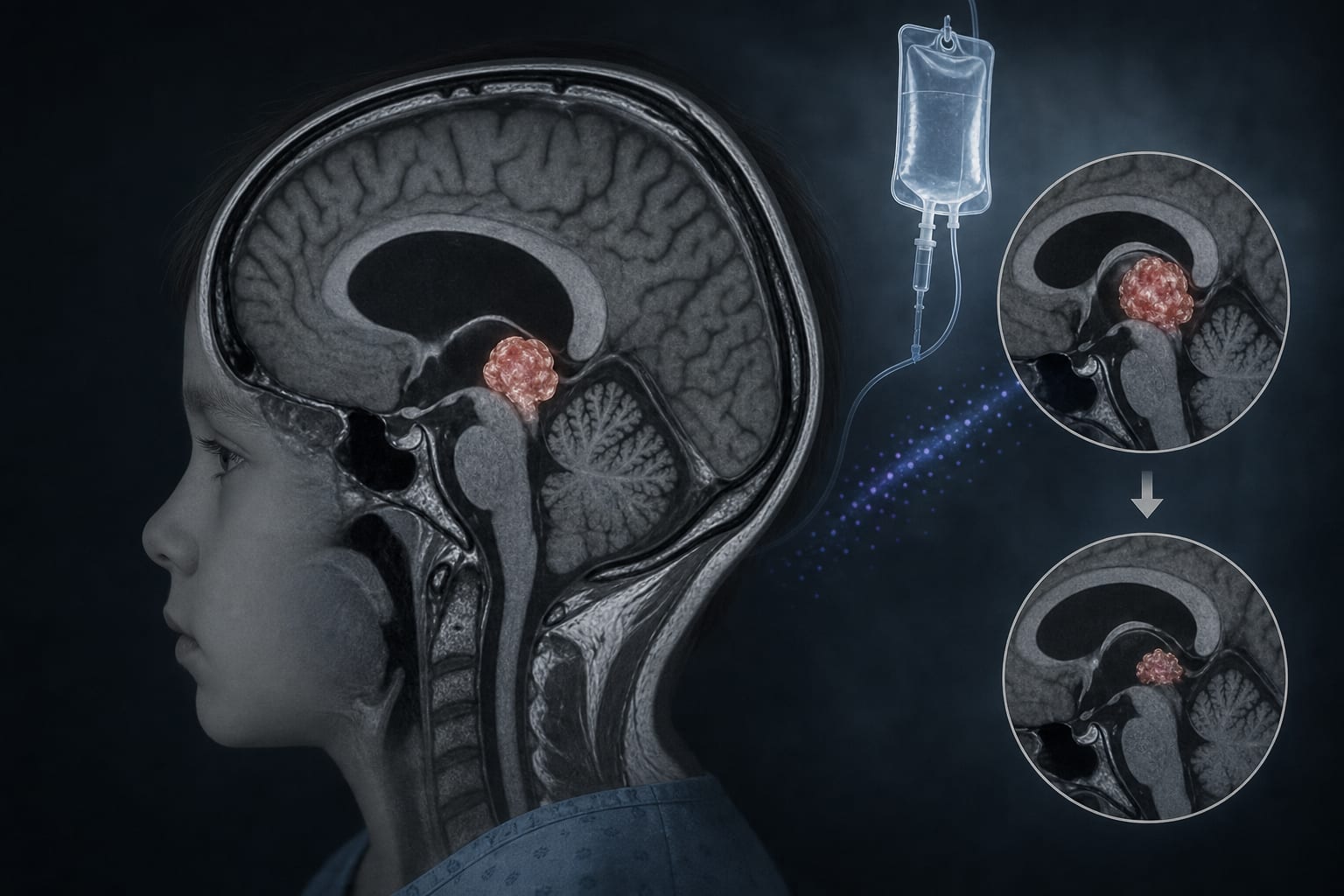
Neoadjuvant chemotherapy for pineal region tumors
By
Christopher Troy
David G. Laird
Cameron Brimley
Soniya Pinto
Sean Himel
Carlos Osorno-Cruz
Mustafa Motiwala
Emal Lesha
Kelly Chamberlin
Giles Robinson
Amar Gajjar
Jason Chiang
Nir Shimony
David S. Hersh
Paul Klimo
June 3, 2026
Clinical Scorecard: Preoperative Chemotherapy for Tumors in the Pineal Region
At a Glance
Category Detail
Condition Key Mechanisms Neoadjuvant chemotherapy to reduce tumor vascularity, induce necrosis, and decrease overall tumor volume. Target Population Care Setting
Key Highlights
Pineal tumors represent 3–11% of pediatric brain tumors. Neoadjuvant chemotherapy may improve surgical outcomes by reducing tumor size and vascularity. Multidisciplinary treatment strategies are emphasized due to tumor complexity and histologic heterogeneity. Hydrocephalus management may involve endoscopic third ventriculostomy (ETV). Gross total resection (GTR) is correlated with improved survival in certain cases. Guideline-Based Recommendations
Diagnosis
Use high-resolution MRI to assess tumor size and relationship to surrounding structures. Consider serum (AFP, β-hCG) and CSF tumor markers to guide diagnosis. Management
Monitoring & Follow-up
Risks
Patient & Prescribing Data
Patients typically receive 2 rounds of chemotherapy including carboplatin and etoposide, with specific dosing to be determined by oncologist.
Clinical Best Practices
Conduct a risk-benefit analysis before ETV in cases of hydrocephalus. Discuss treatment plans in a multidisciplinary tumor board. Consider timing of chemotherapy to optimize surgical outcomes. Related Resources & Content