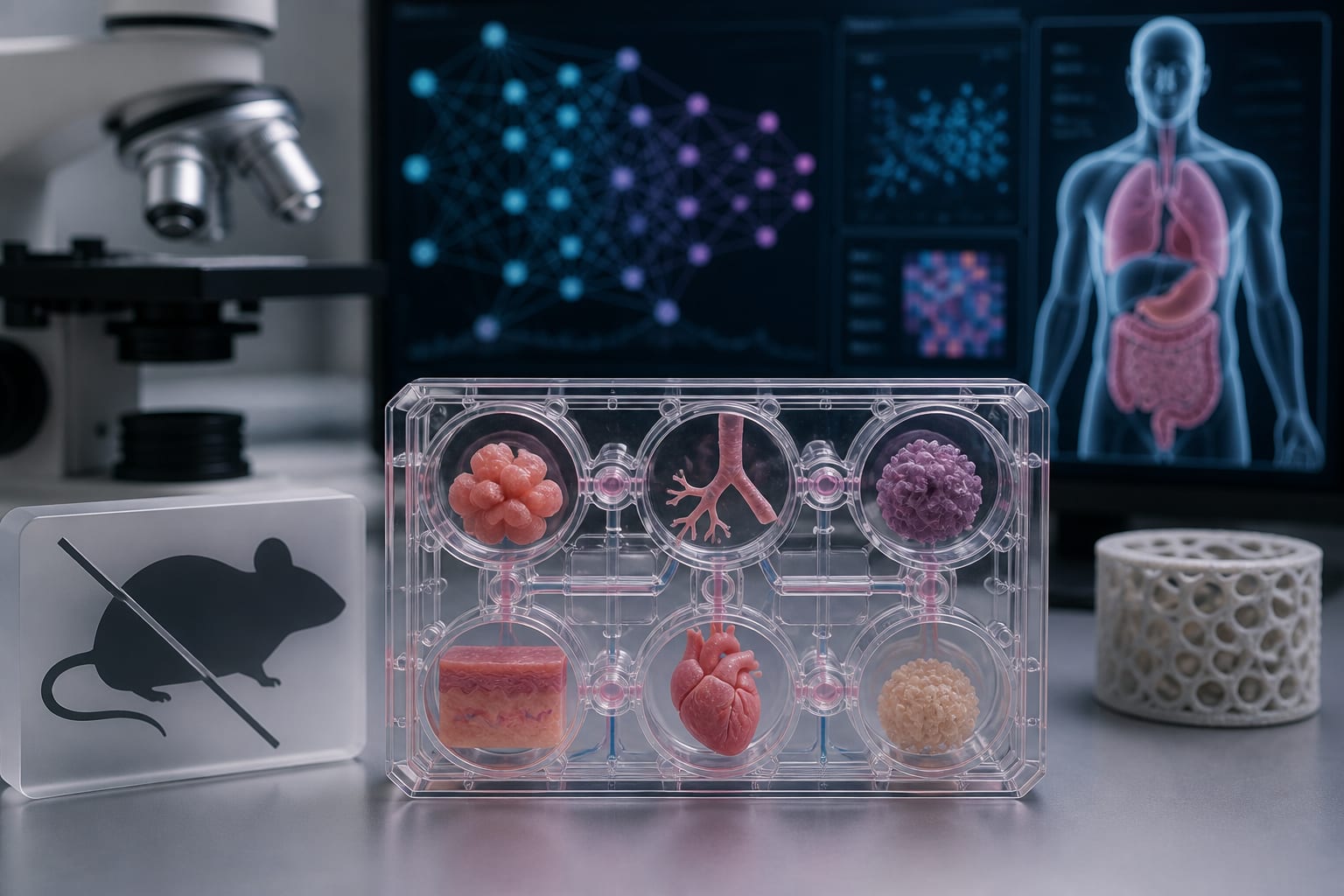
HHS Promotes Transition to Human-Centric Research Approaches, Minimizing Animal Testing
Clinical Scorecard: HHS Promotes Transition to Human-Centric Research Approaches, Minimizing Animal Testing
At a Glance
Category Detail
Condition Human-Centric Research Approaches Key Mechanisms Utilization of human organoids, tissue models, artificial intelligence, and computational modeling. Target Population Researchers and regulatory bodies in biomedical fields. Care Setting Biomedical research and regulatory review.
Key Highlights
HHS initiates over 20 efforts to reduce animal testing. NIH invests over $88 million in human-based biomedical infrastructure. FDA modernizes regulatory framework to incorporate nonanimal testing methods. CDC reduces laboratory animal colony and enhances review procedures. ARPA-H funds AI and computational modeling to improve drug safety predictions. Guideline-Based Recommendations
Diagnosis
Management
Implement human-based research methods and technologies. Monitoring & Follow-up
Risks
Potential reduction in animal testing may impact traditional research methodologies. Patient & Prescribing Data
Not specified; focuses on research and regulatory environments.
Emphasis on developing tools that enhance understanding of human disease.
Clinical Best Practices
Adopt New Approach Methodologies (NAMs) in research. Utilize advanced data capabilities and robotics in laboratory settings. Engage in rigorous review of proposed animal research. Related Resources & Content